Urban Infill Conservation Area | Kelso

Urban Infill Conservation Area | Kelso

Projects

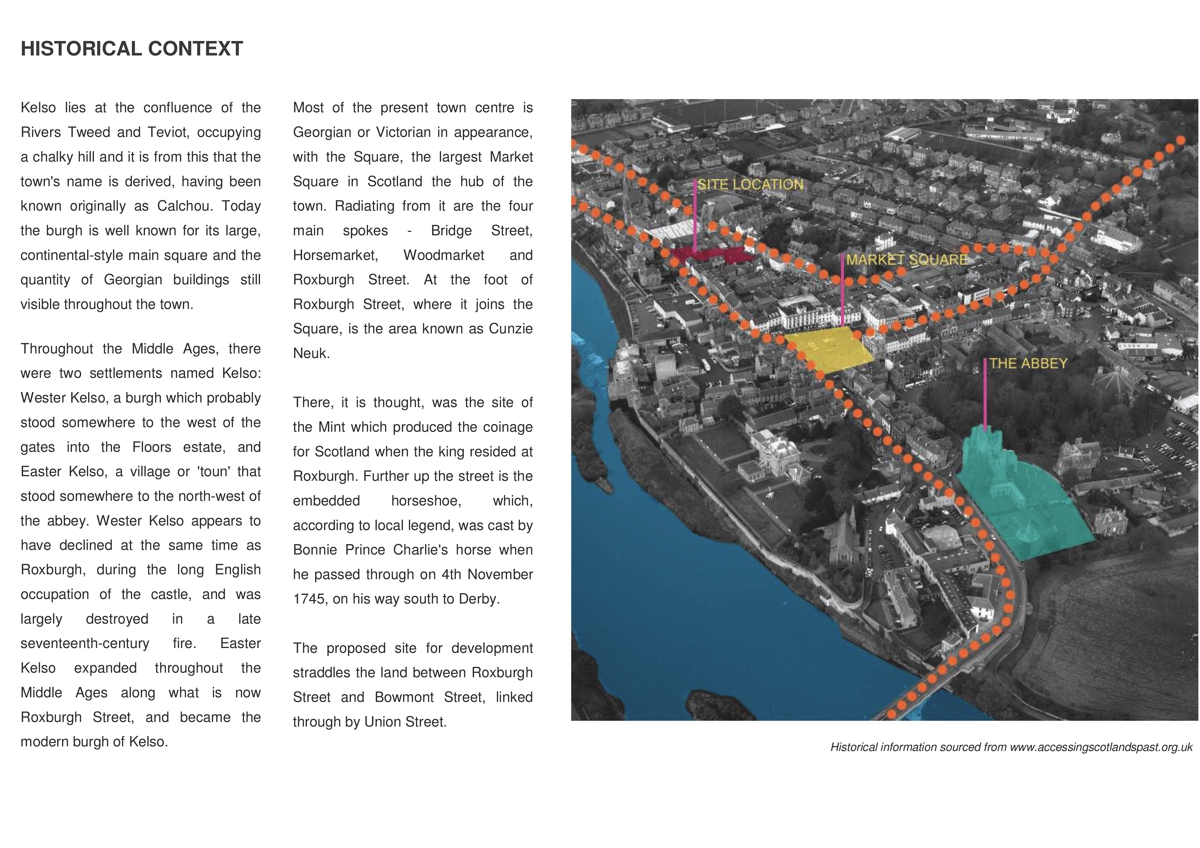
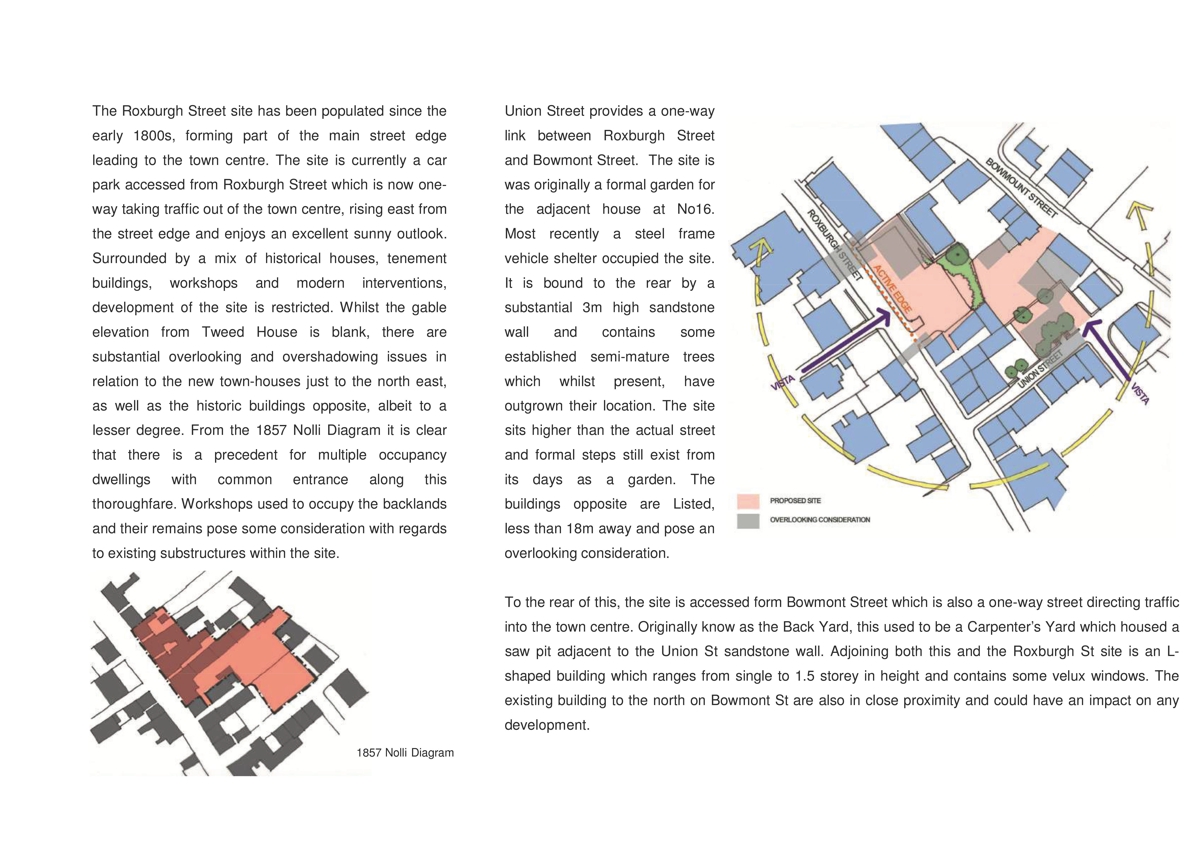
URBAN INFILL, CONSERVATION AREA, KELSO

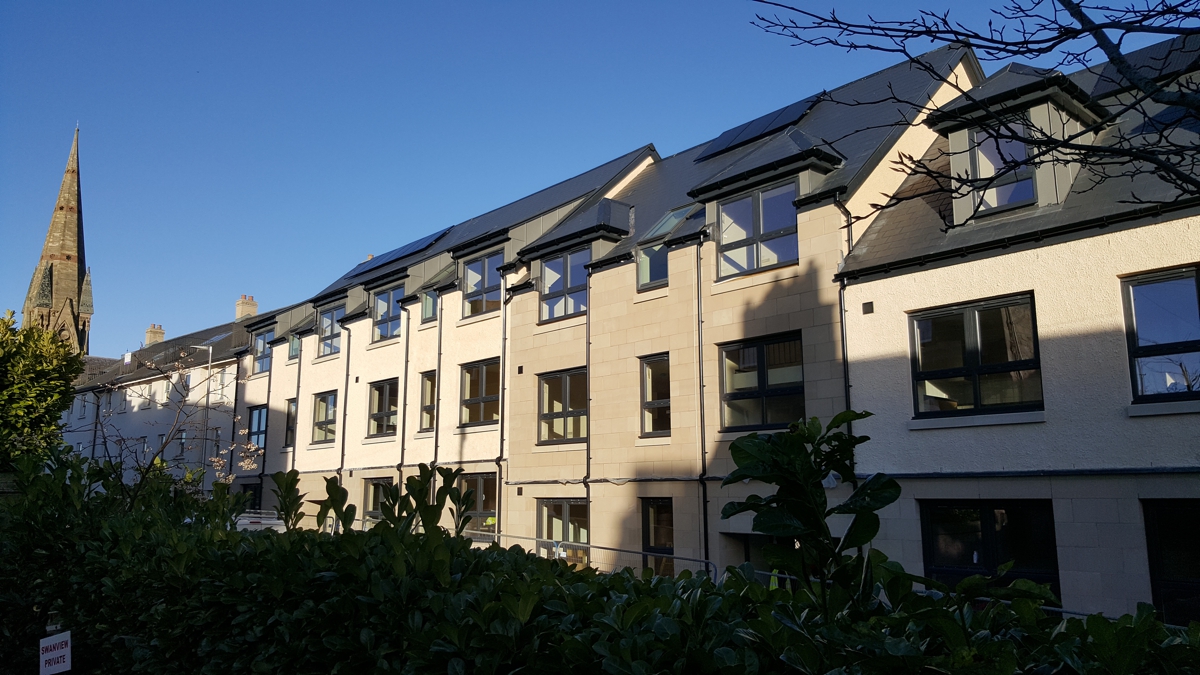
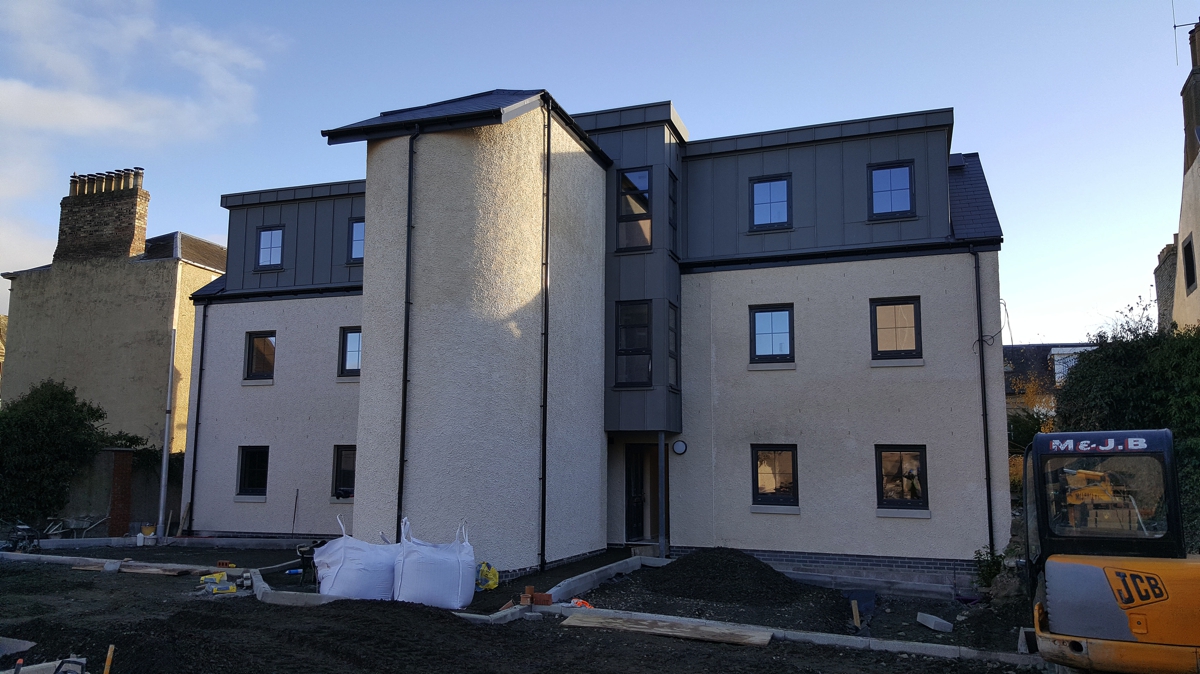
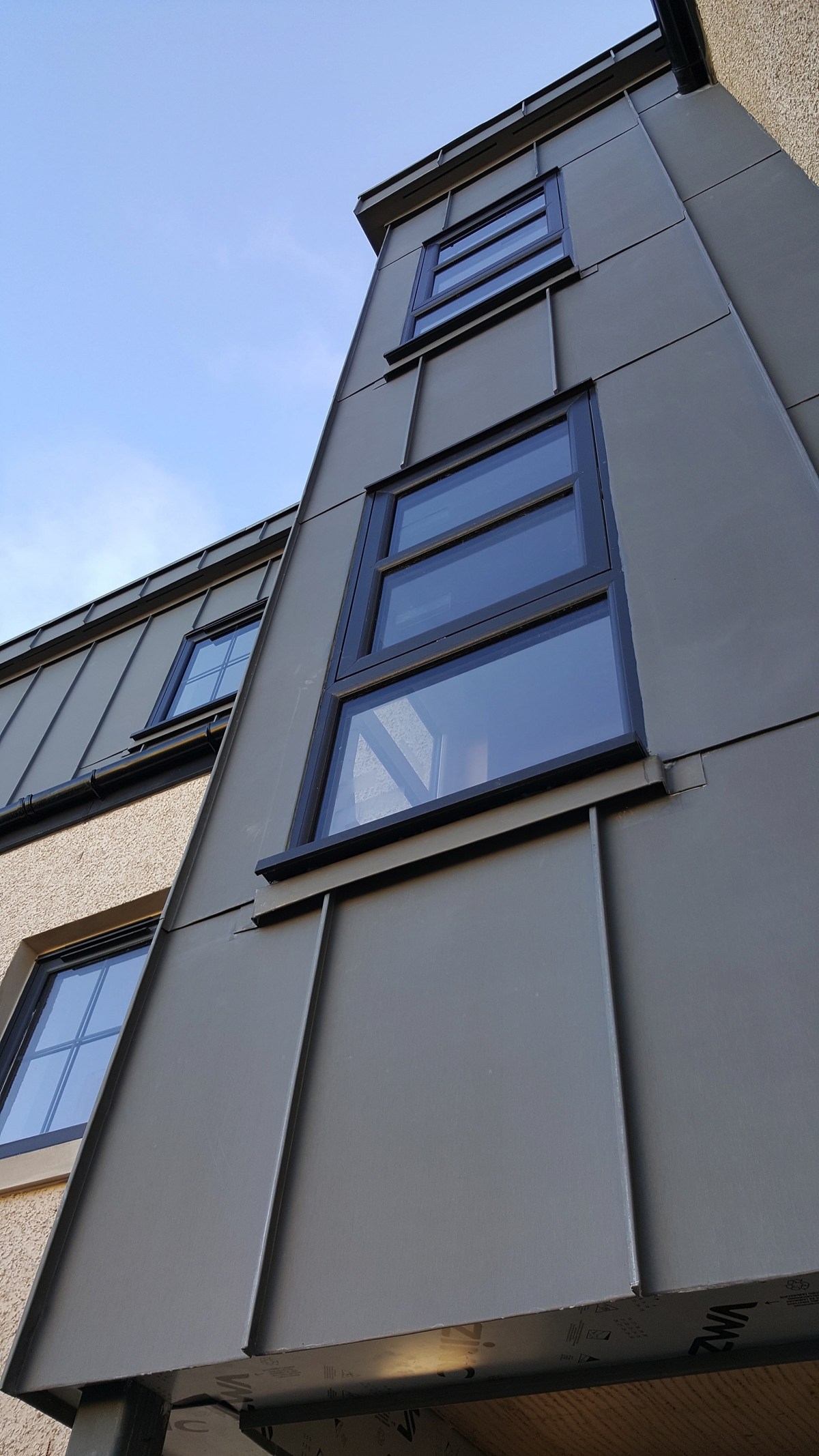
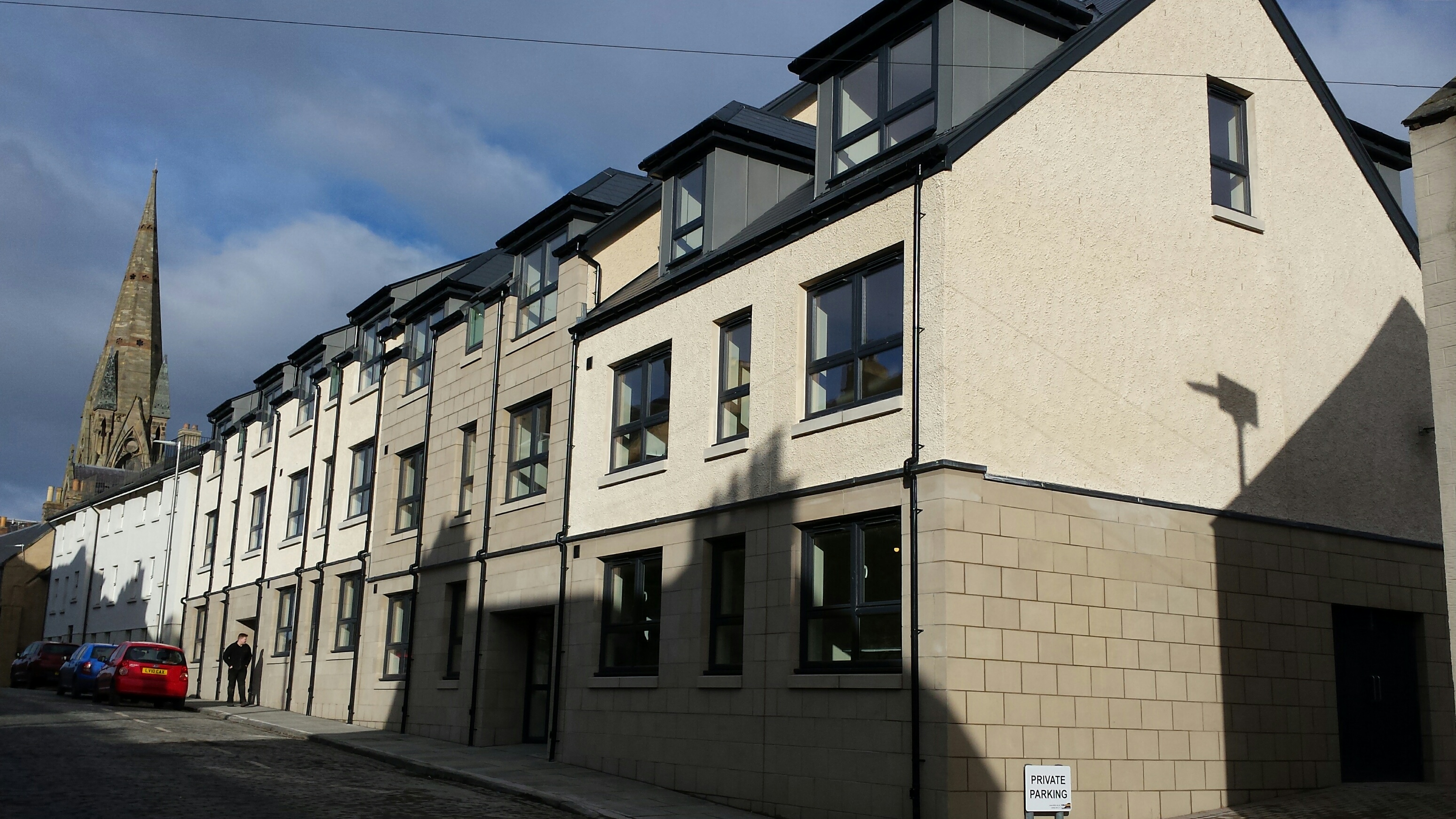
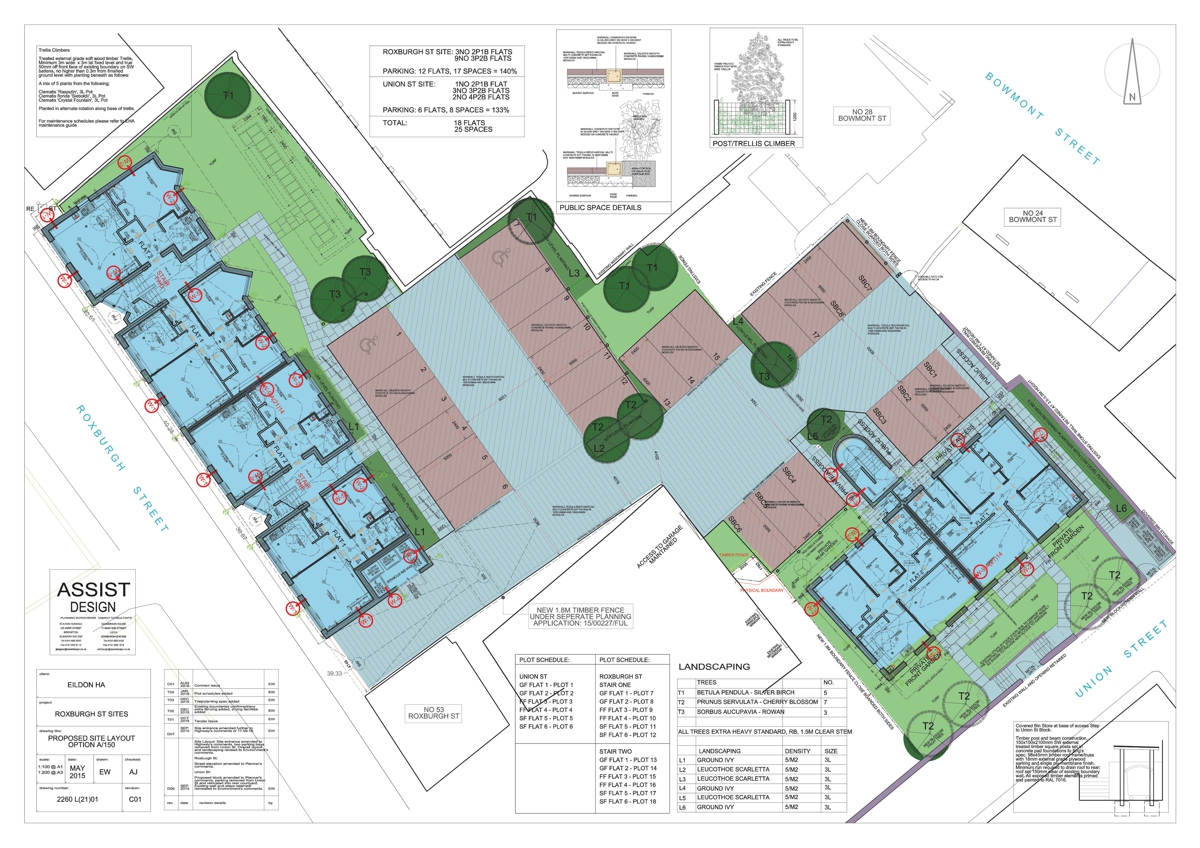
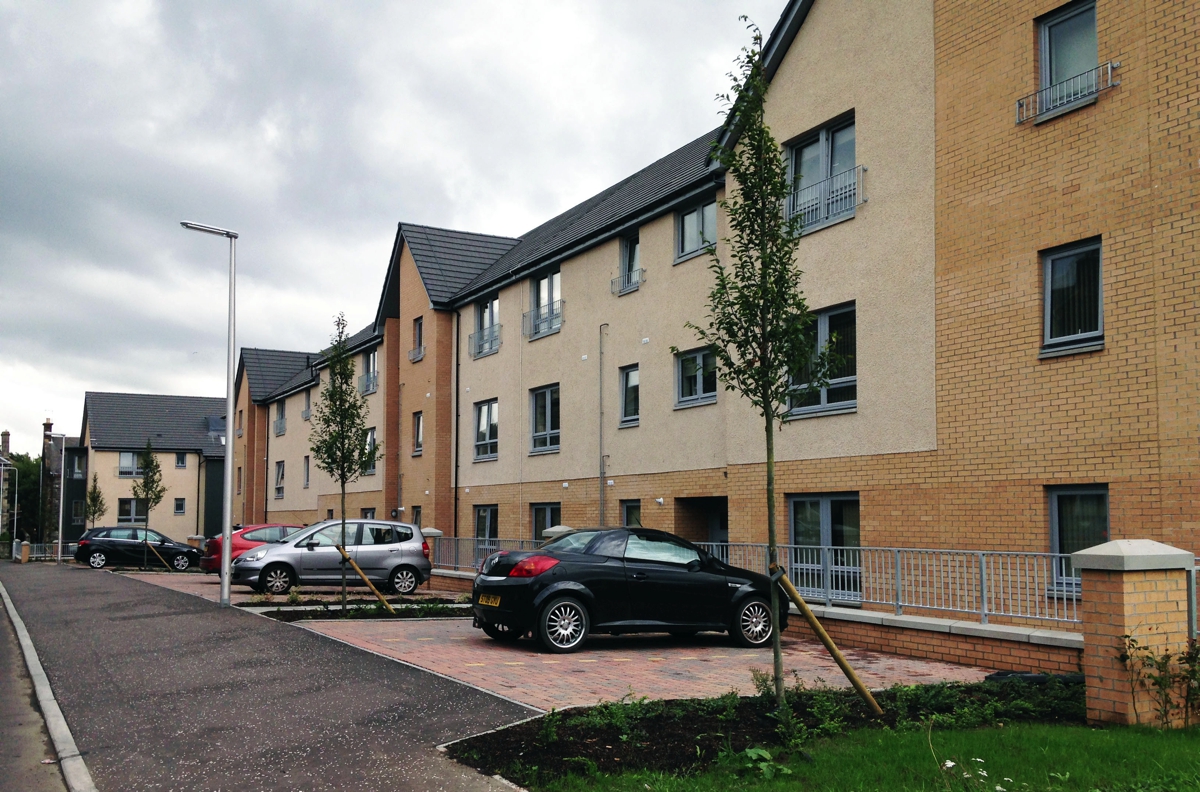
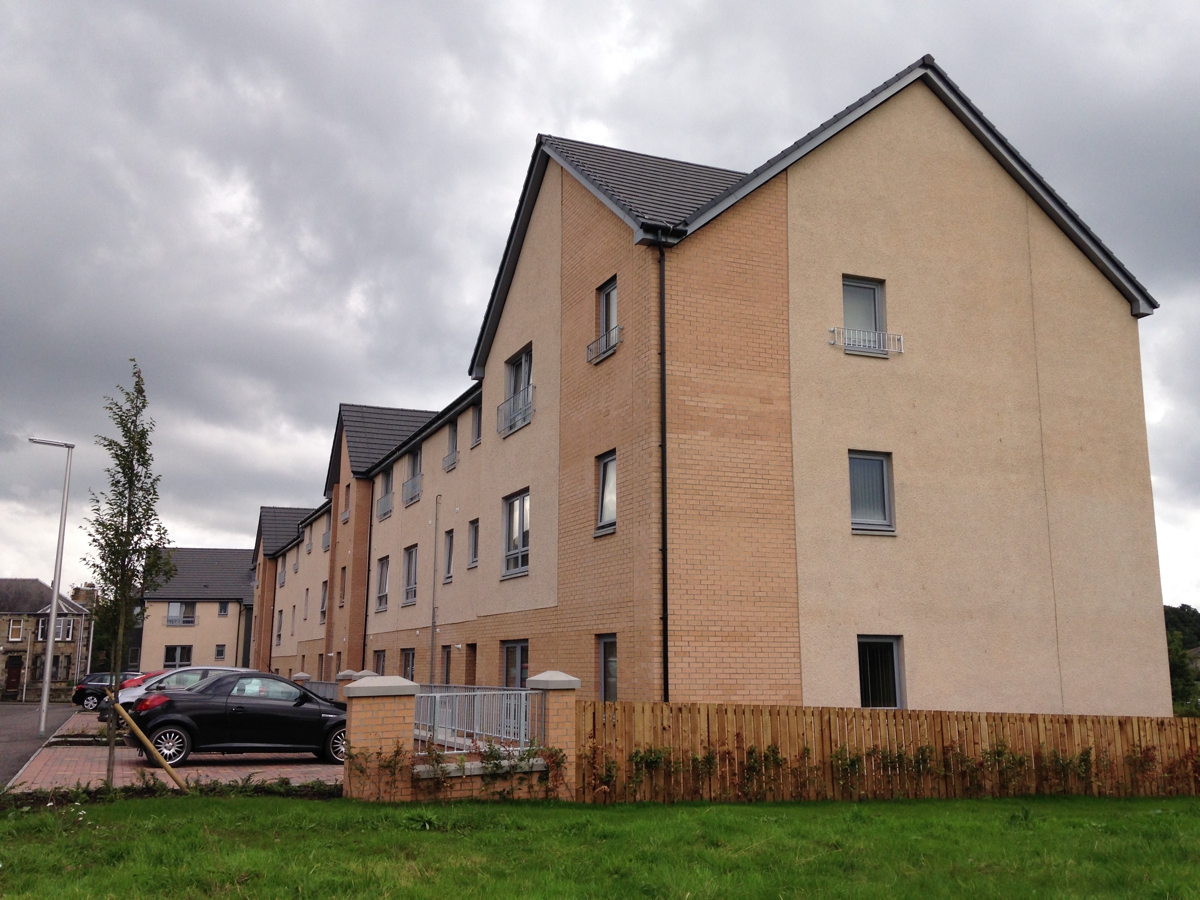
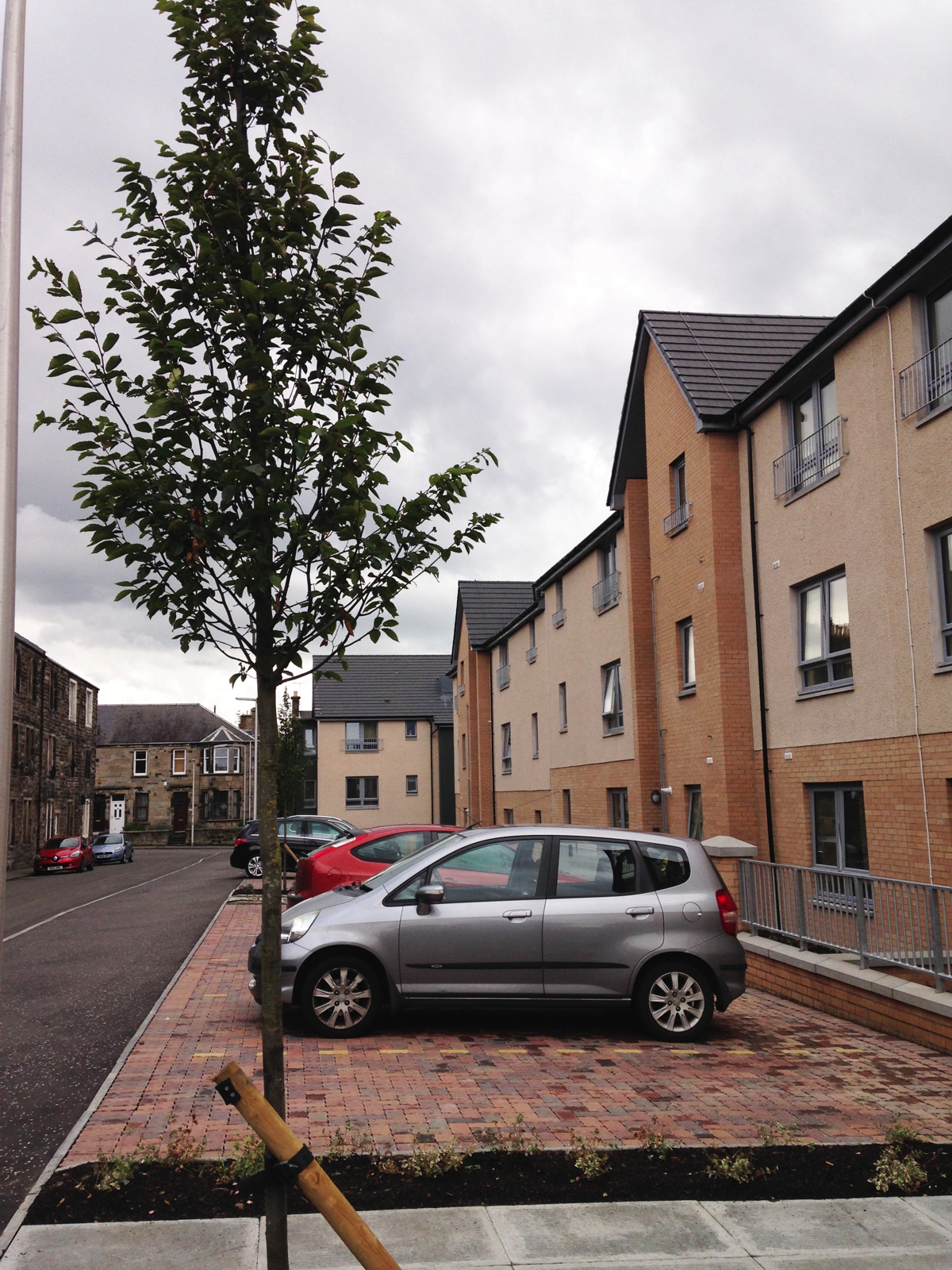
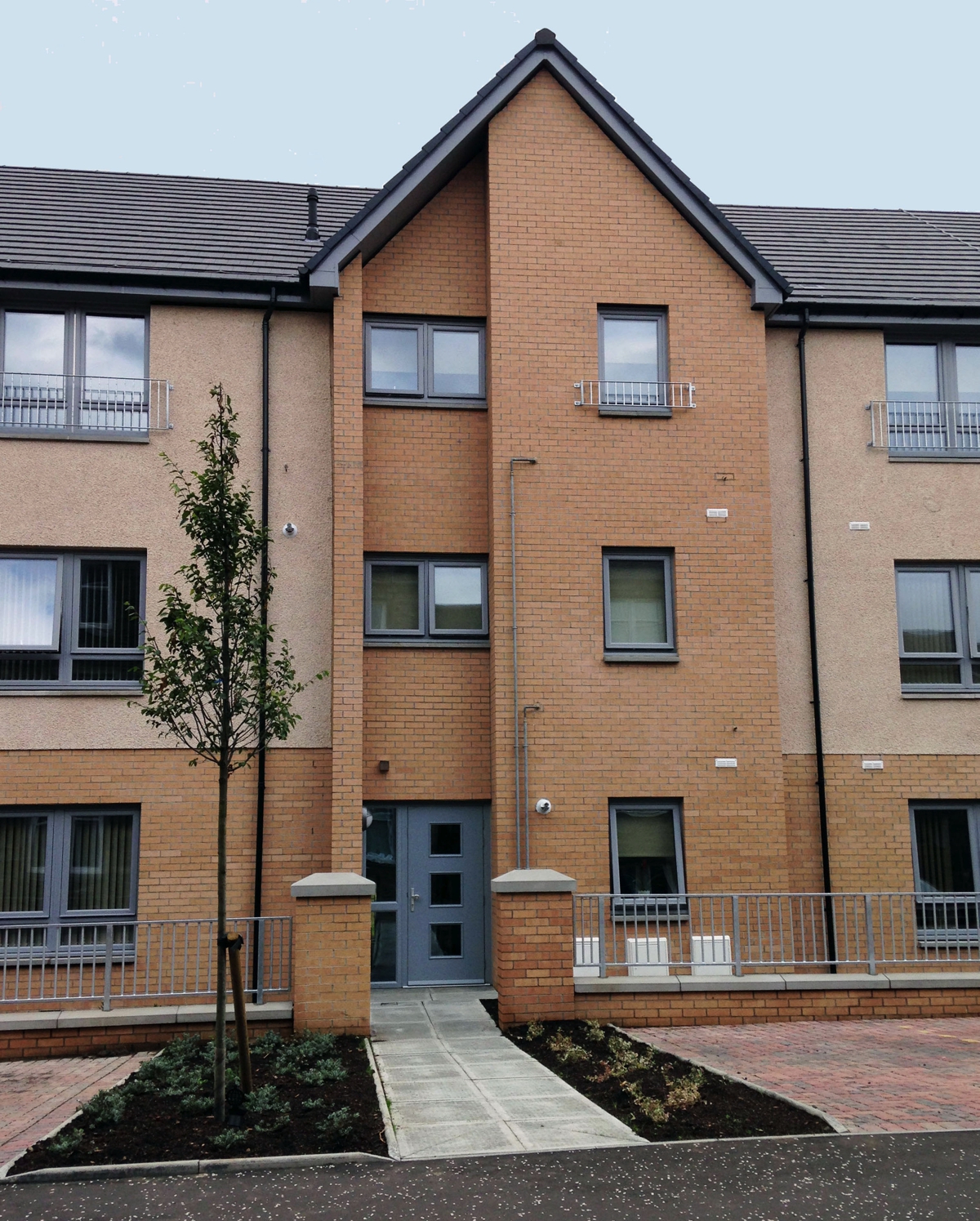
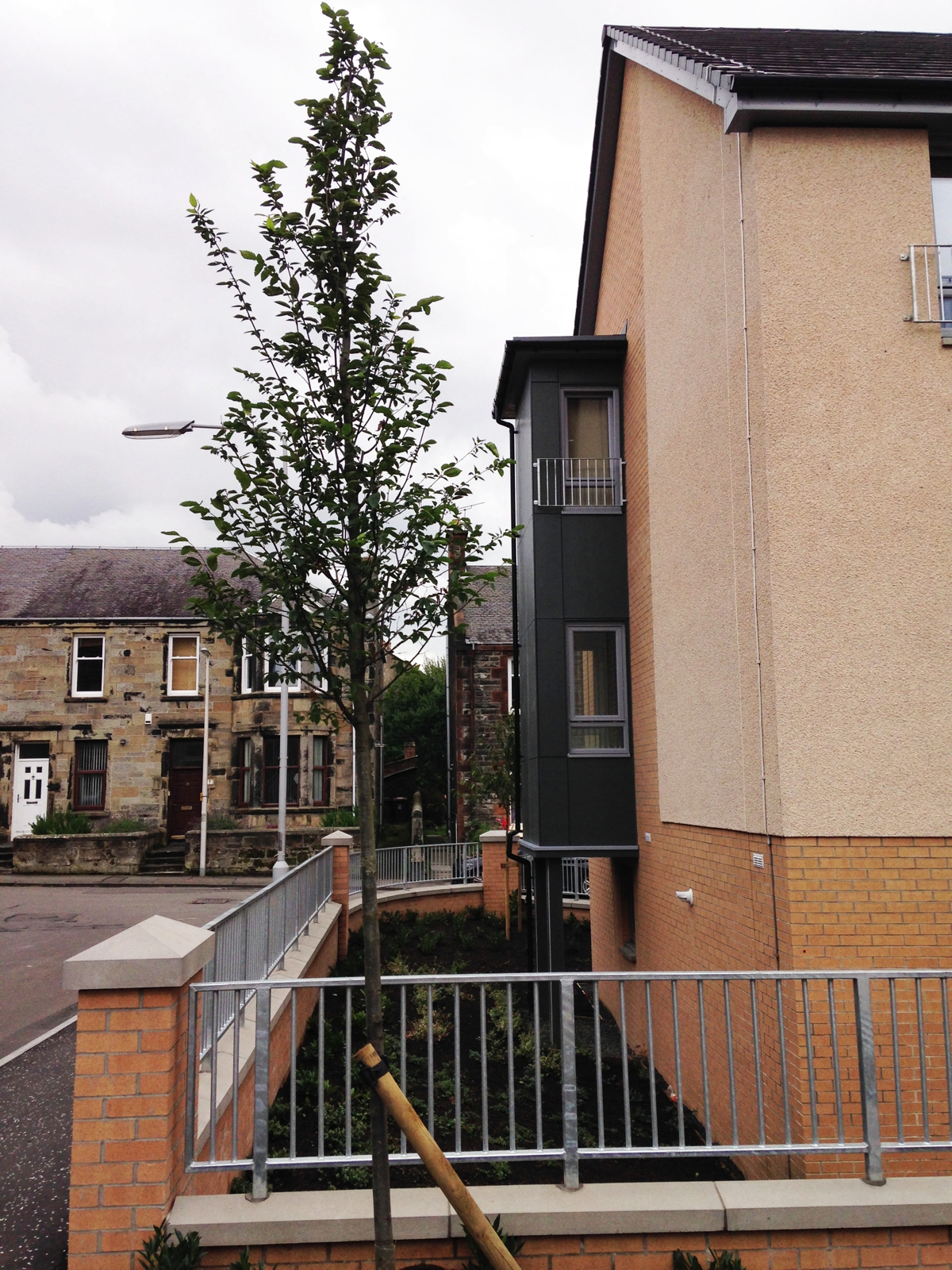
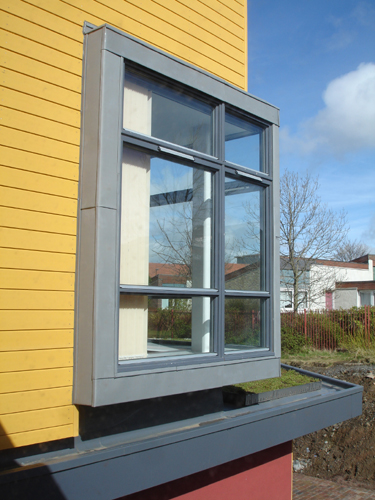
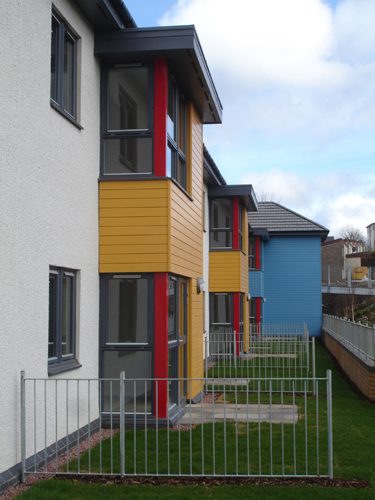
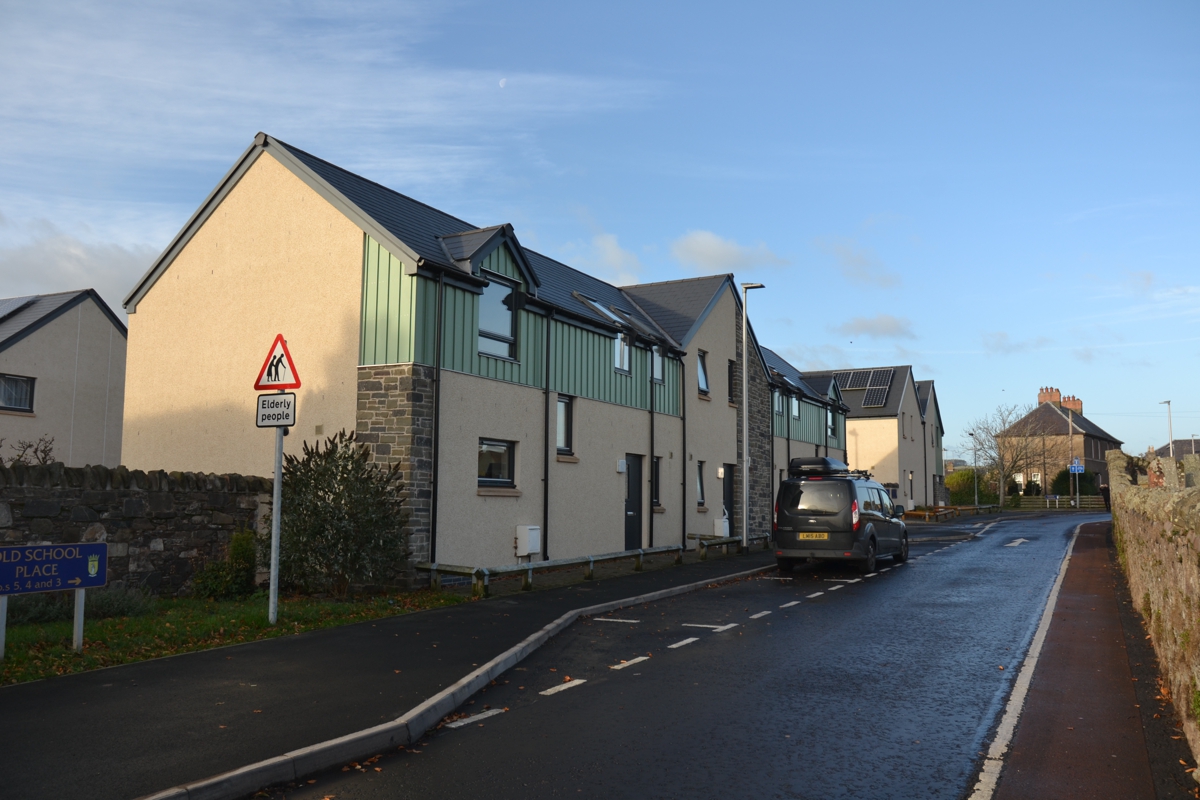
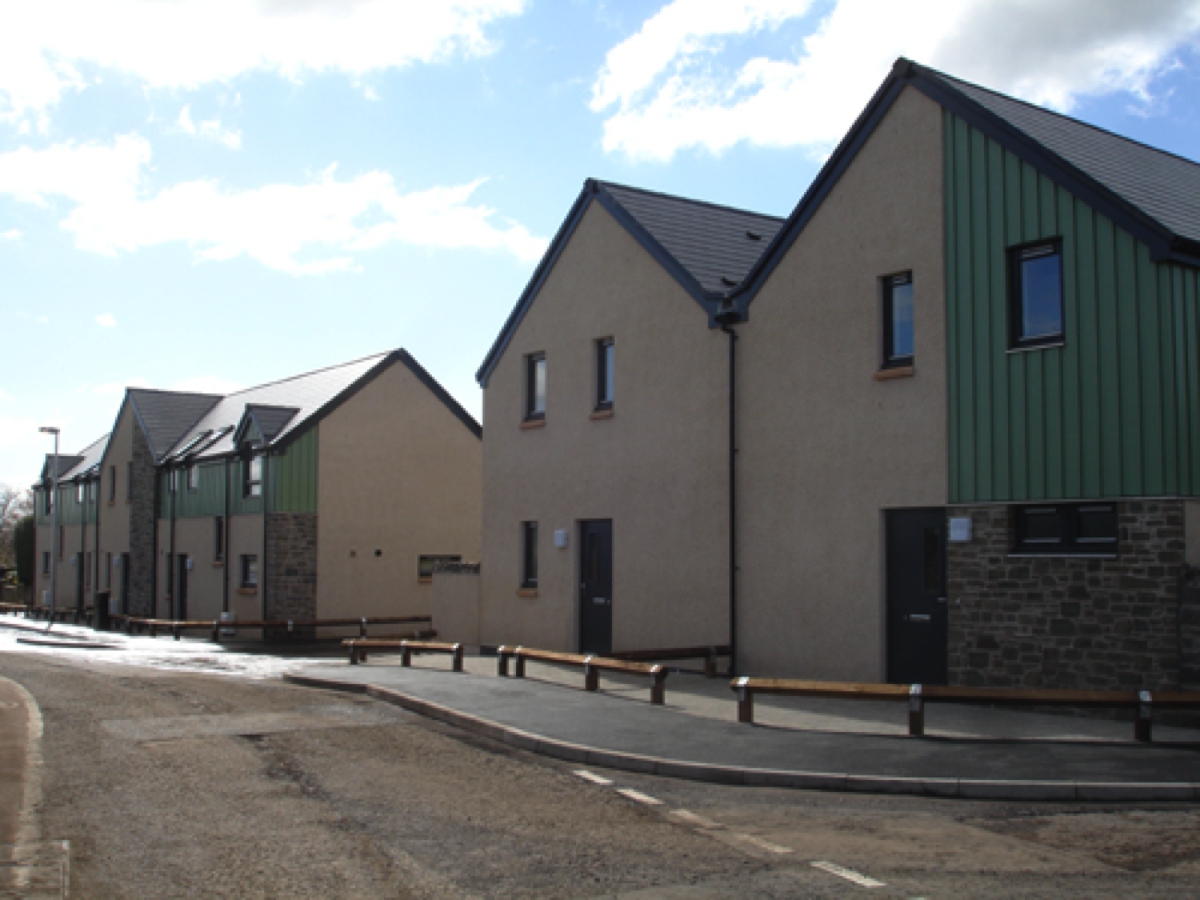
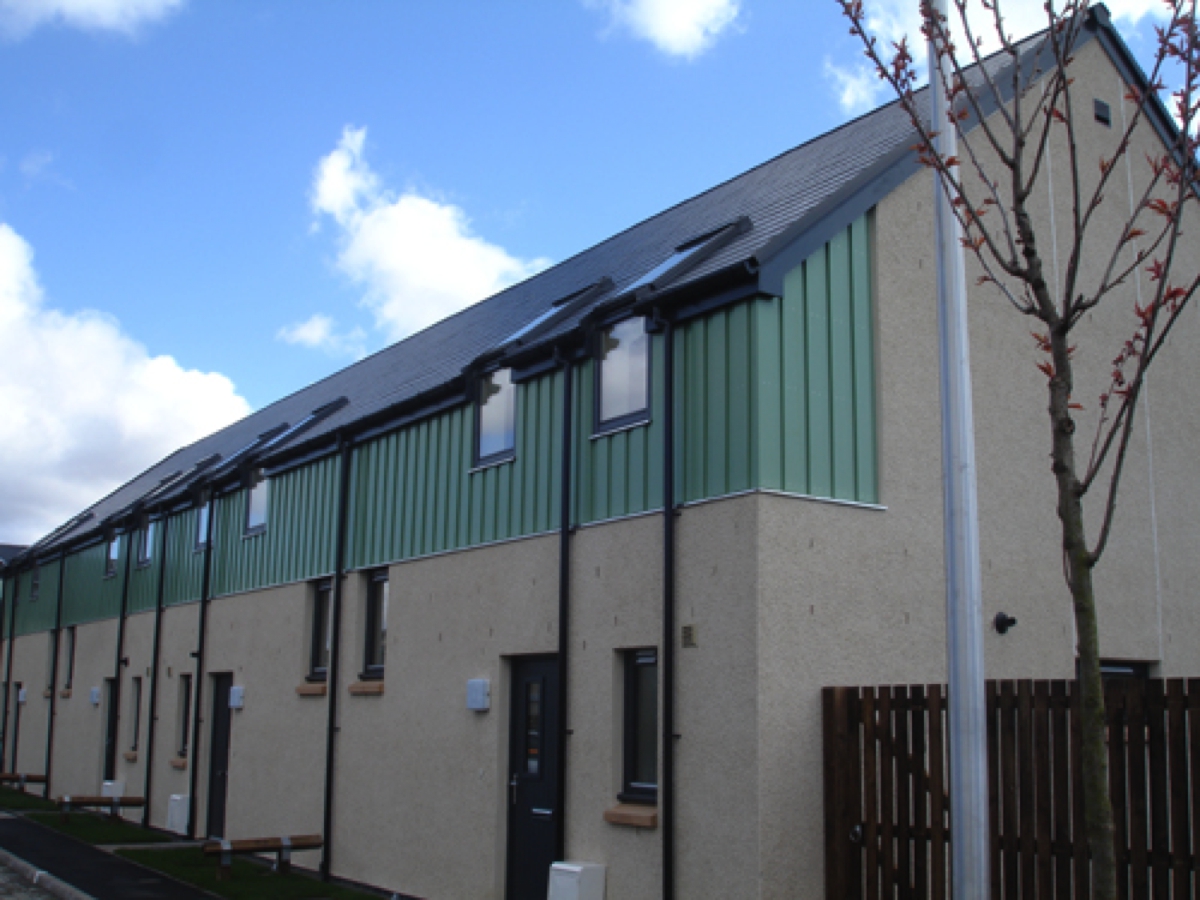
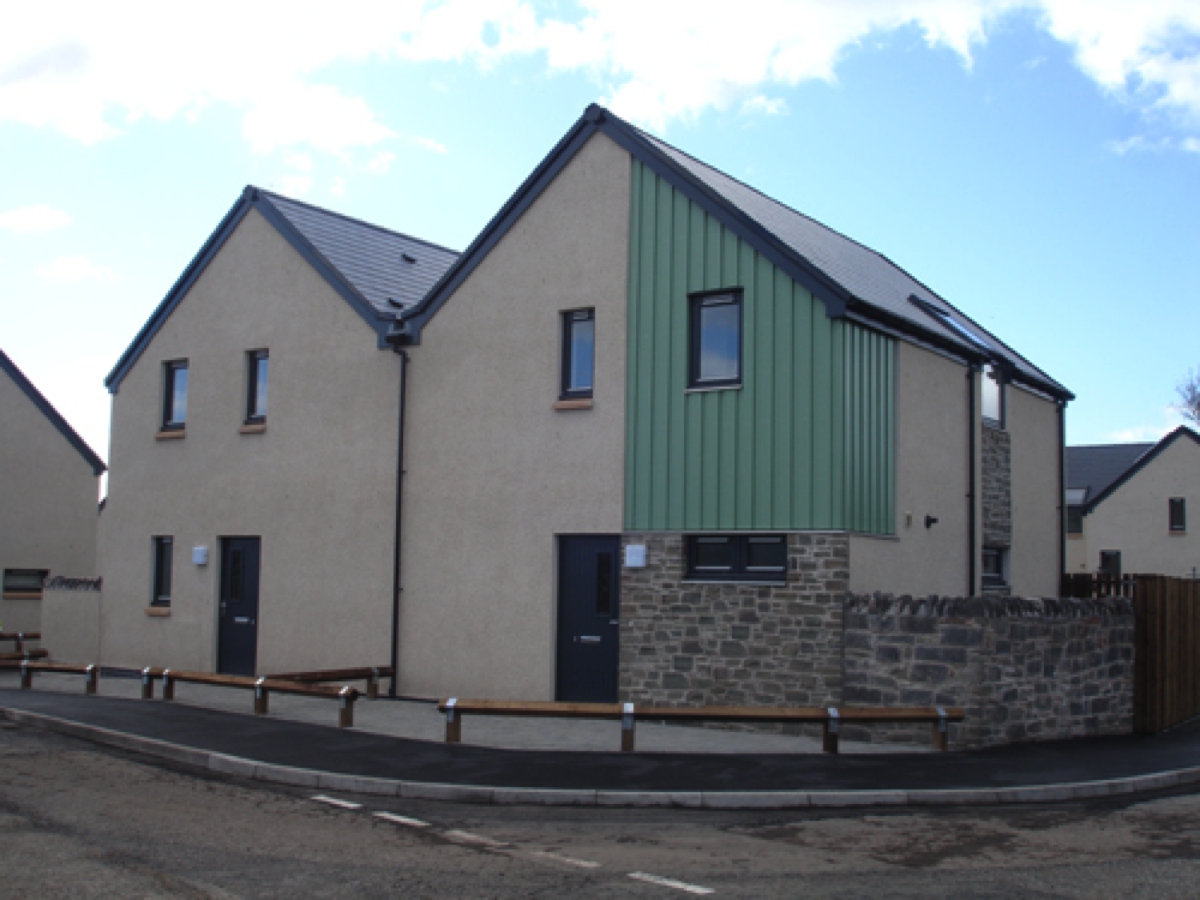
A development of three adjacent but individual brownfield gap sites in Kelso’s Conservation area which use high quality materials and design to generate 18 bespoke affordable flats.

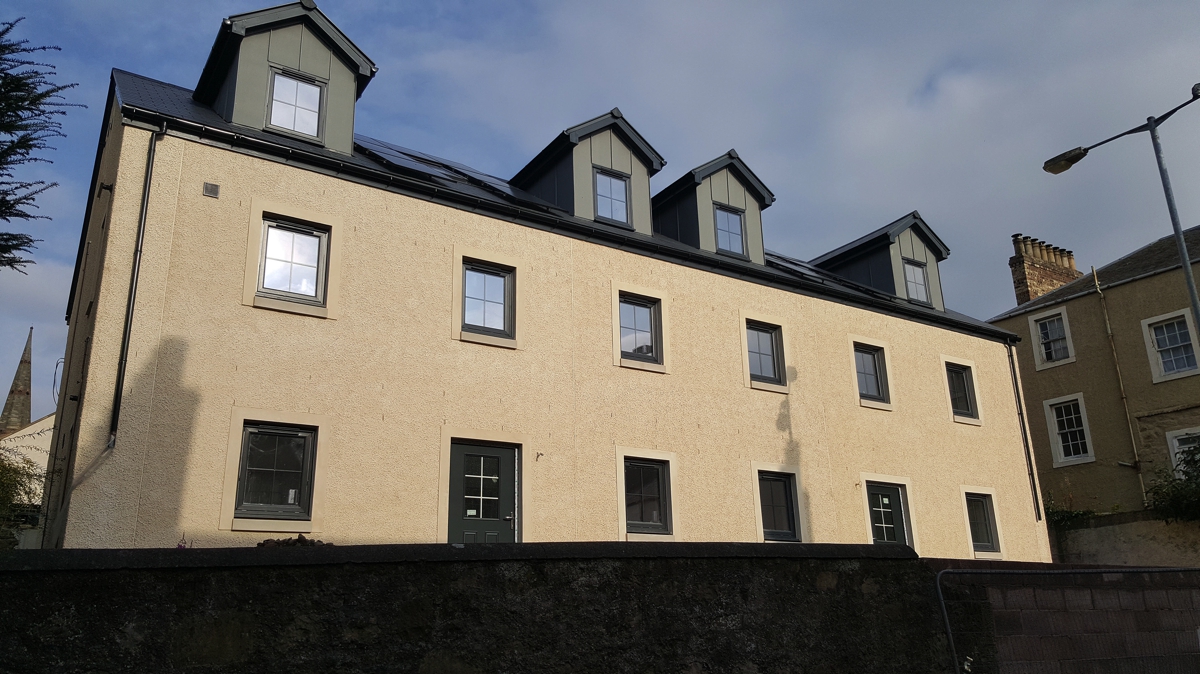
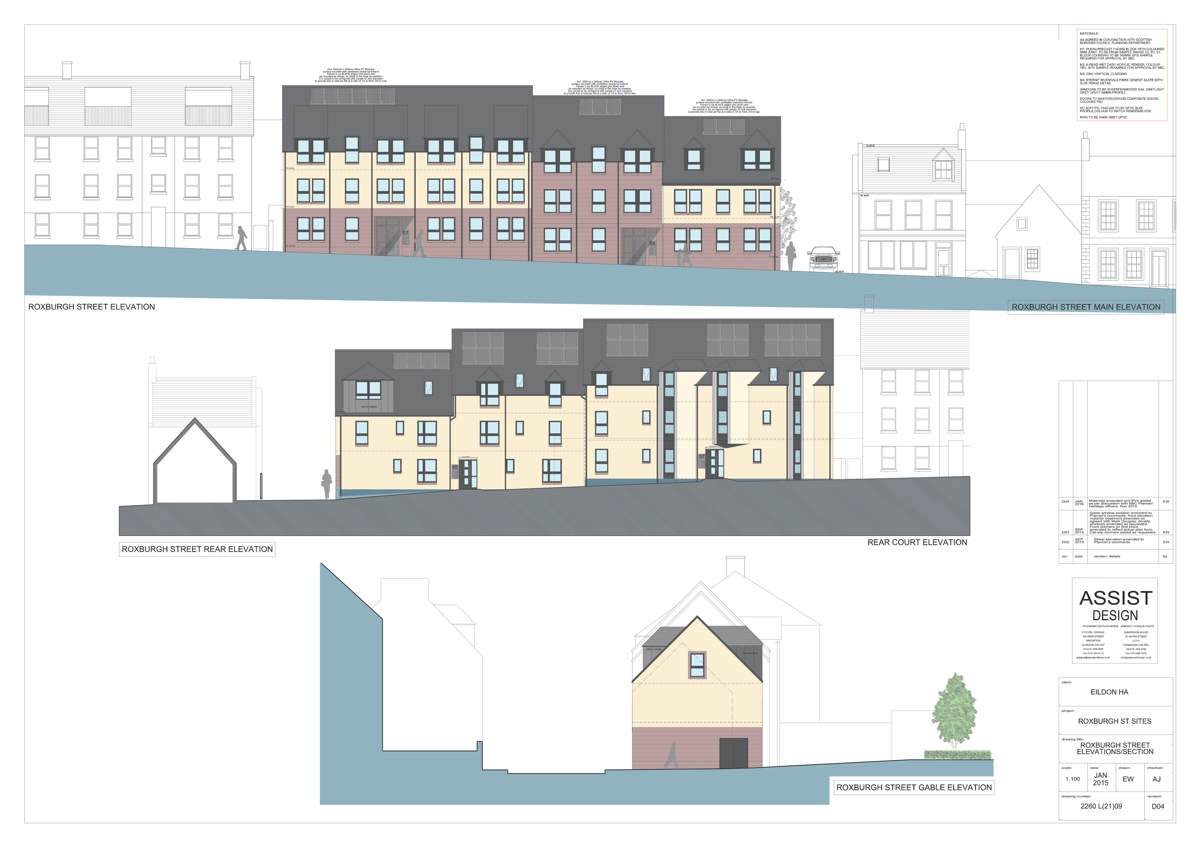
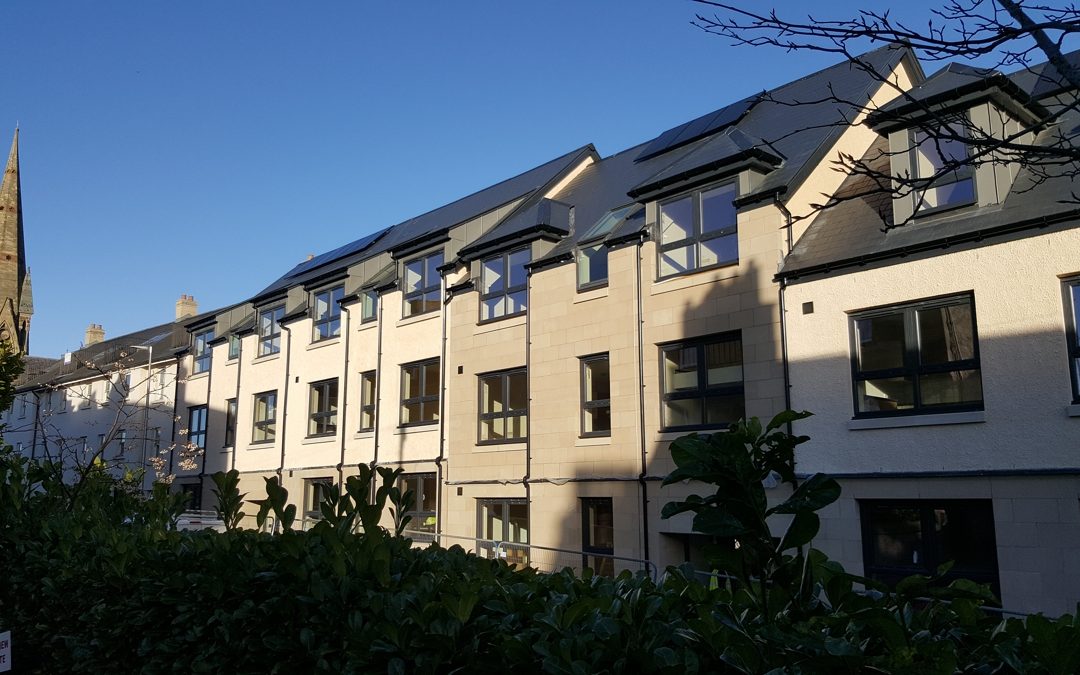
The approach is to meshes the three sites together and develops two distinct buildings, each responding to specific constraints/opportunities. Roxburgh St is a main road out of the town and the largest portion of the site addresses this frontage. The building reinforces the street frontage, relates to historic burgess plot widths and compliments the vista from the town centre; a key request of the Planners. Union St forms an historic link between Roxburgh St and Bowmont St. Here we located a second building set back to acknowledge the historic urban fabric. This draws reference from the multitude of buildings surrounding it in mass, form and roofscape. Both buildings are accessed from a pedestrian priority non-adopted courtyard set between the buildings.

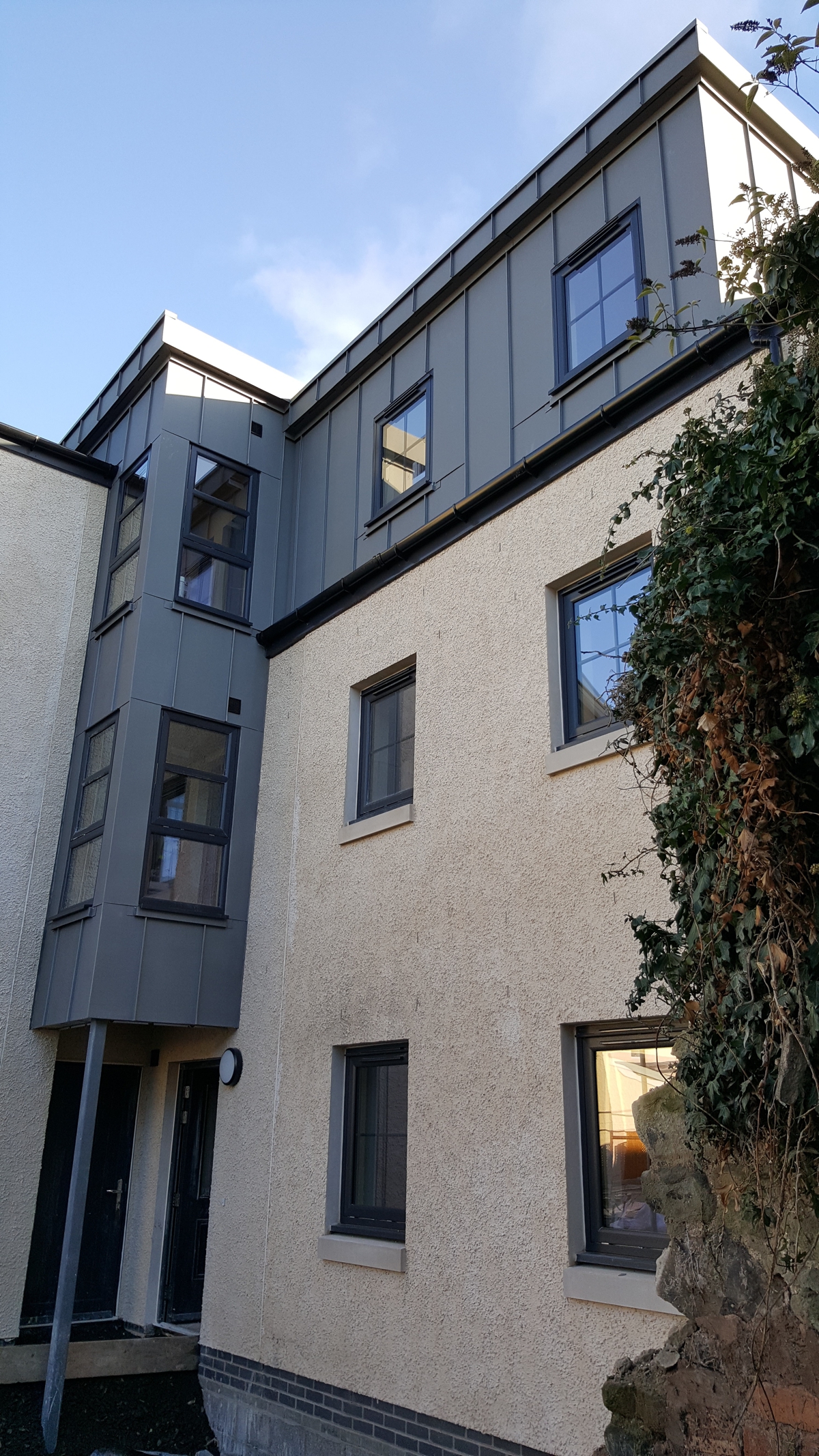
Detailed discussion with Planning/Heritage officers informed the layout, scale, mass and materials, particularly with regard to the Roxburgh St flats, designed to bridge the gap between the existing historic townscape of the town centre and modern flats further up the hill. Combining different eaves heights, catslip and traditional dormers, angled common entrances and generous stone coursing with wet dash render creates interest at street level, references historic burgess plot development and responds sympathetically to the palette of materials within this Conservation area.

Urban Infill Housing | Dunfermline

Urban Infill Housing | Dunfermline

Projects

URBAN INFILL AFFORDABLE HOUSING, DUNFERMLINE

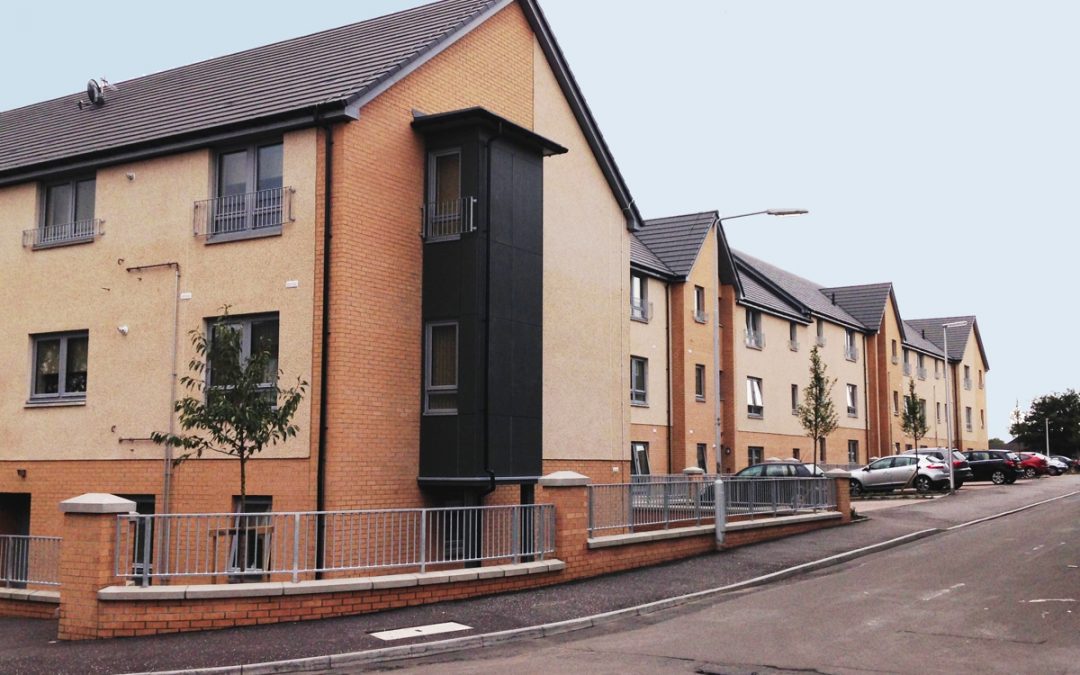
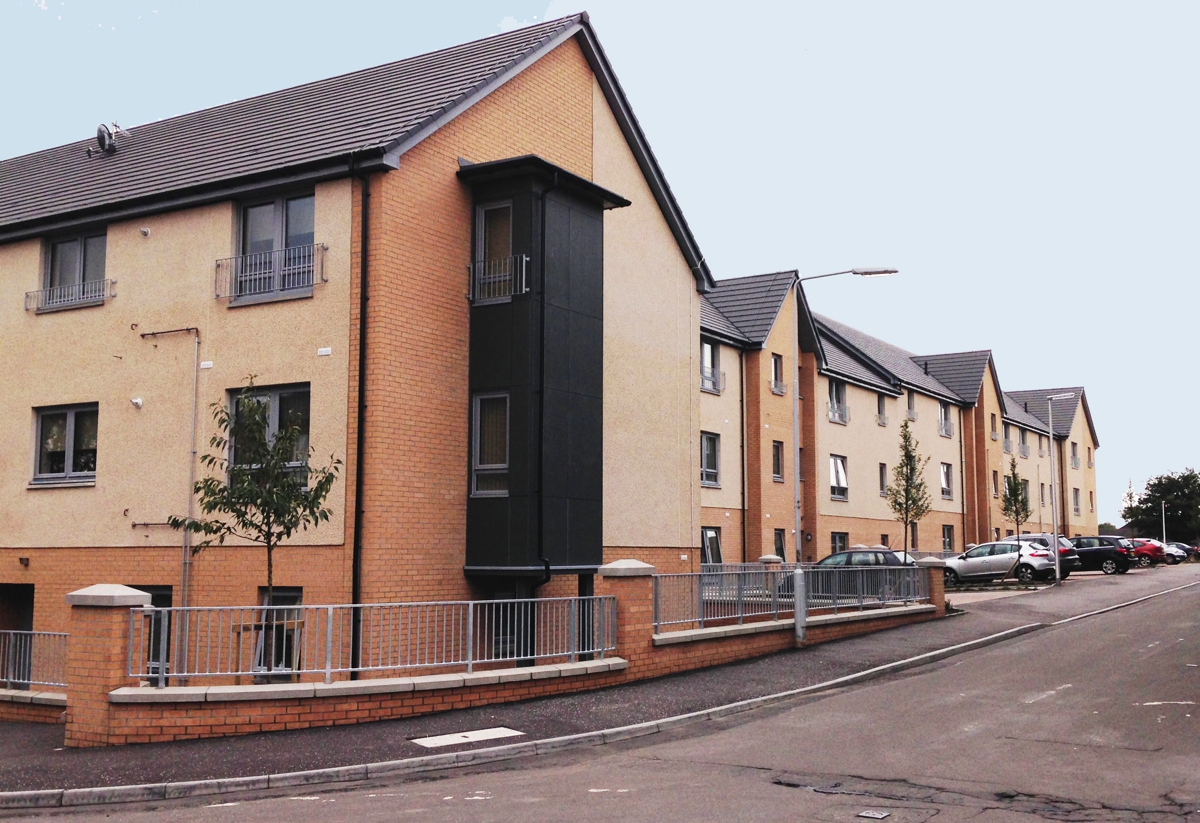
Commissioned by Fife Council to deliver 30 flats on a former brownfield site. The site layout is designed to create two individual blocks of affordable housing; a corner block which addresses Millhill Street and creates an entrance into Elliot Street, and the other, a linear block which forms a new street edge along Elliot Street.

The Millhill Street block contains 12 flats arranged around two stairs and sits close to Elliot Street to form an entrance into a new parking and landscaped area located between the existing housing on Elliot Street and the proposed new block apartments. 18 flats are arranged around three stairs, set back 18m from the existing properties. The scale of the blocks has been designed to sit comfortably within the existing built environment, matching the 3-storey flats on Elliot Street and modern materials which complement the existing masonry buildings has been used.

Community safety has been addressed through passive surveillance across both front and back communal areas with gables fenestrated to offer surveillance onto street edges and across adjacent open space.

Elderly Housing | Edinburgh

Elderly Housing | Edinburgh

Projects

THE QUARRIES ELDERY HOUSING, HYVOT LOAN REGENERATION, EDINBURGH

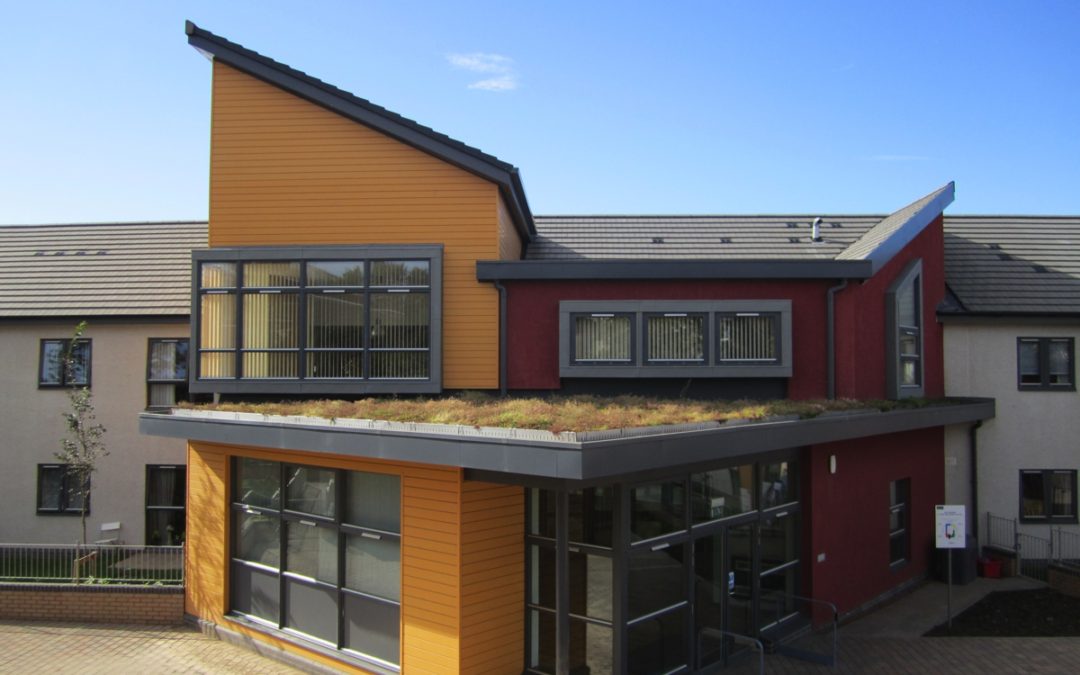
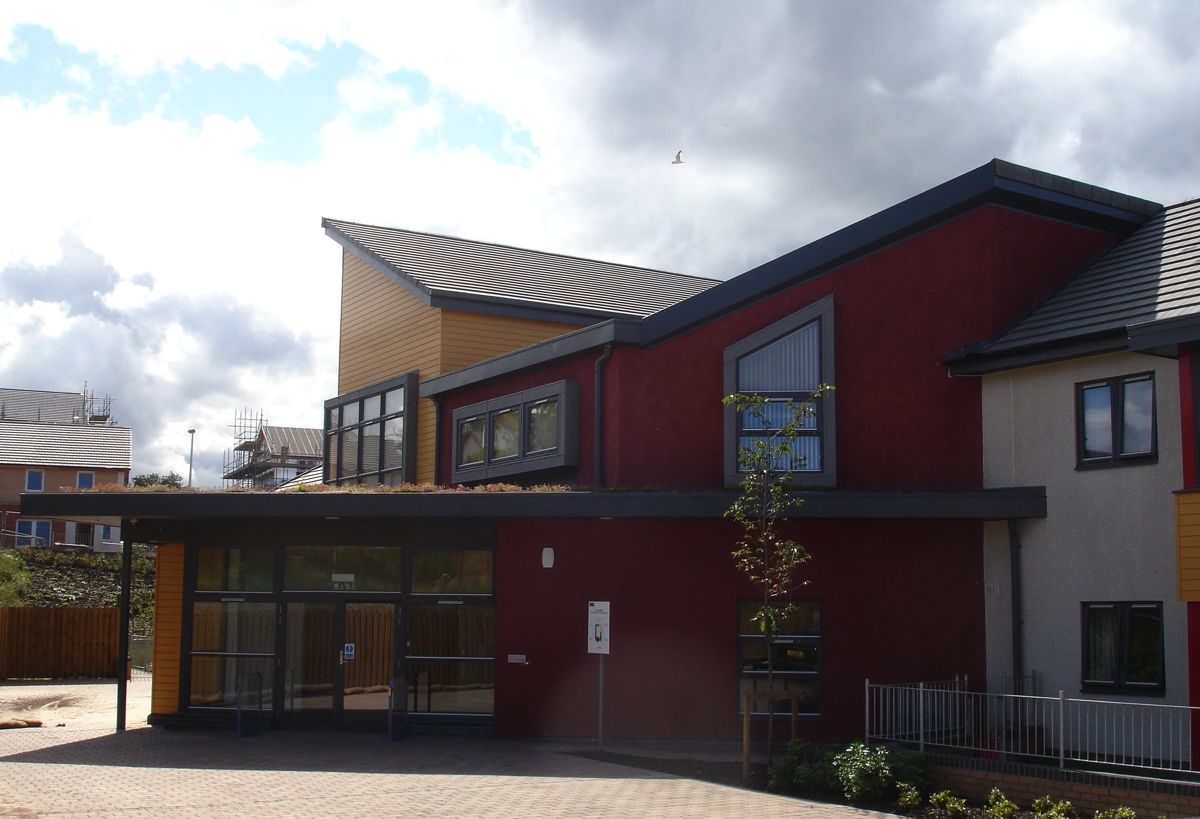
A sustainable approach to elderly housing with a community hub at the centre of the Hyvot Loan Neighbourhood Regeneration.

A recent study by HAPPI – the Housing our Ageing Population: Panel for Innovation – highlighted that housing for older people should become an exemplar for mainstream housing and meet higher design standards for space and quality. It also identified that meeting the needs and aspirations of our ageing population concerns the entire machinery of housing delivery, from planning to construction. Emphasising the space of the home, HAPPI identified ten key design elements:

  • Space and flexibility
  • Daylight in the home and in shared spaces
  • Balconies and outdoor space
  • Adaptability and ‘care ready’ design
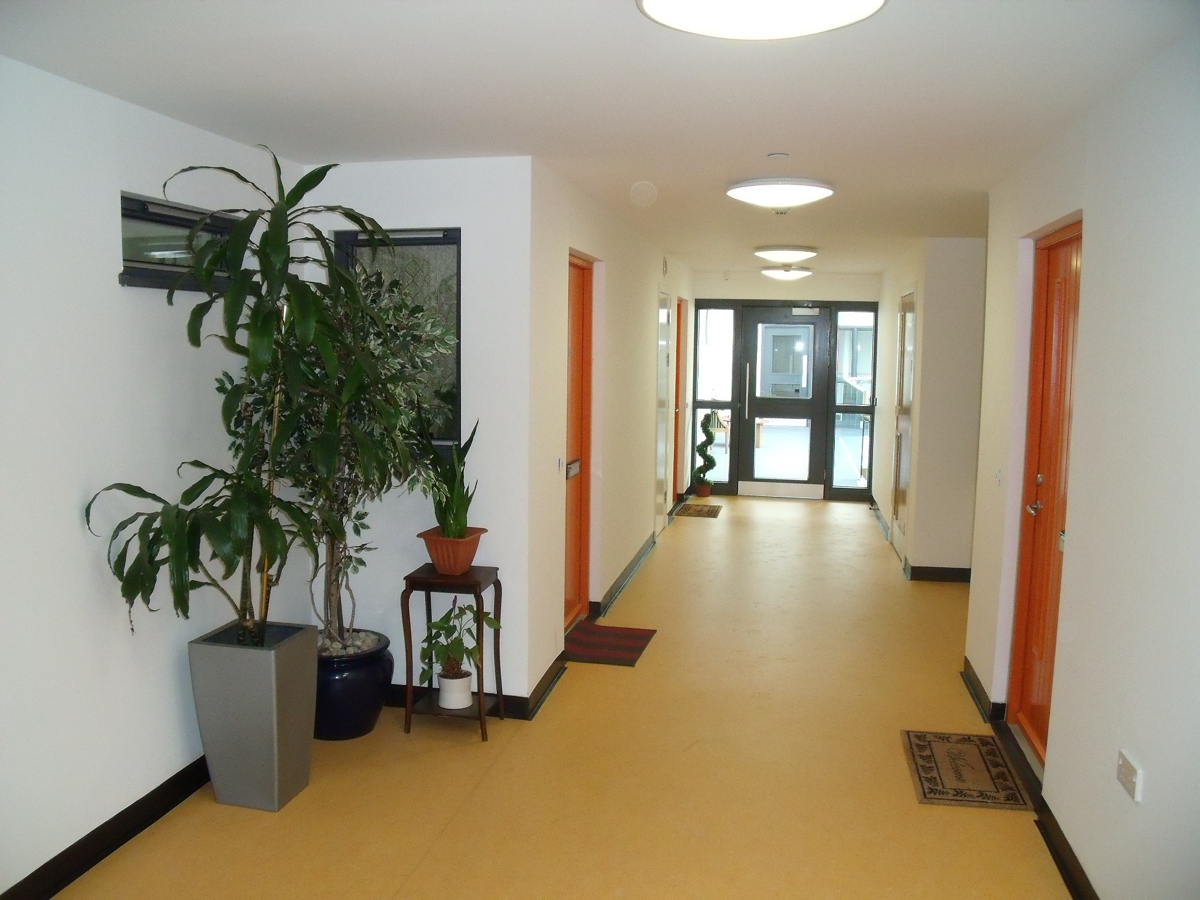
  • Positive use of circulation space
  • Shared facilities and ‘hubs’
  • Plants, trees, and the natural environment
  • Energy efficiency and sustainable design
  • Storage for belongings and bicycles
  • External shared surfaces and ‘home zones’

With these elements in mind, ASSIST designed this phase of the regeneration to provide new elderly housing accommodation to replace the rundown 1960s terrace bungalows that currently occupy an area at the centre of the regeneration masterplan and which housed the elderly residents of this neighbourhood. From a master-planning perspective, the proposal establishes links with the various phases of mainstream housing which surround the site, ensuring that the new flats and communal facilities are at the heart of the regeneration.

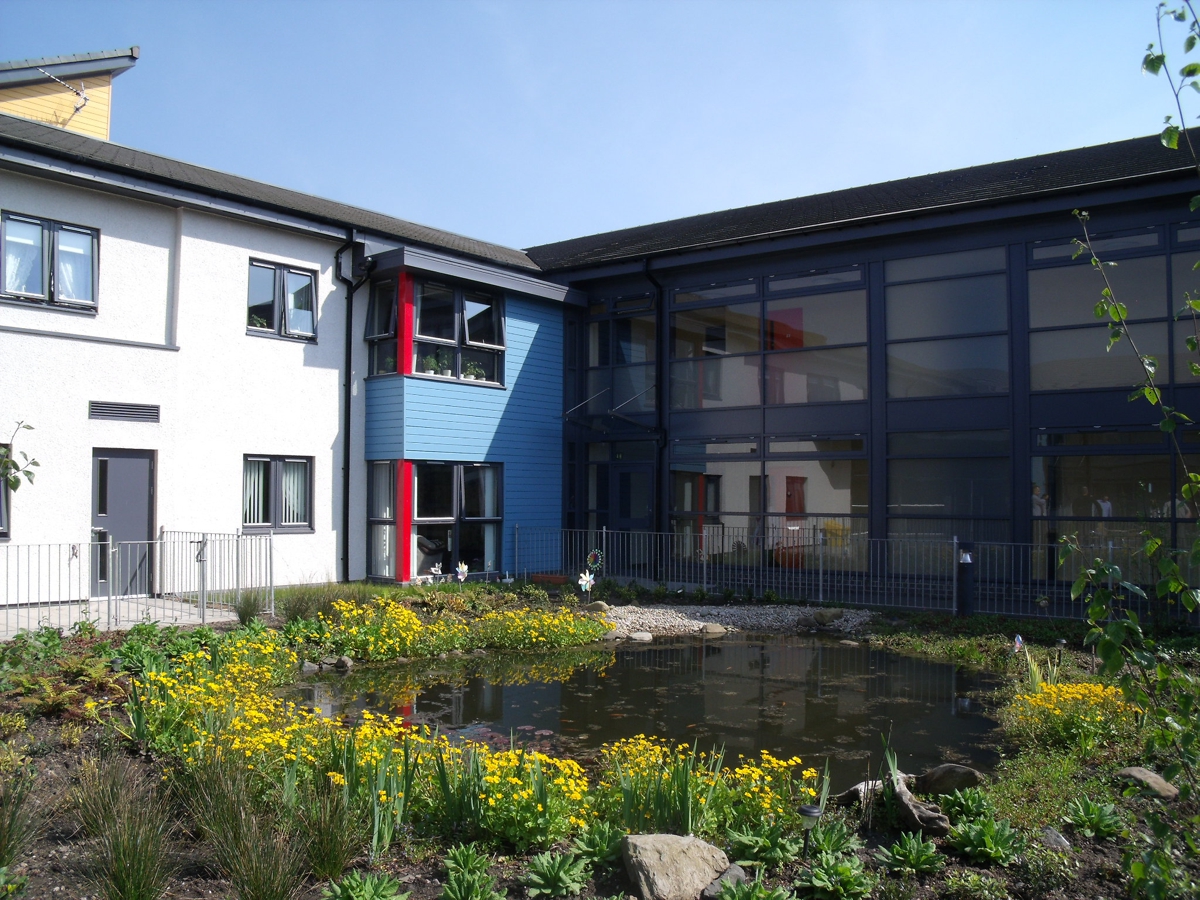
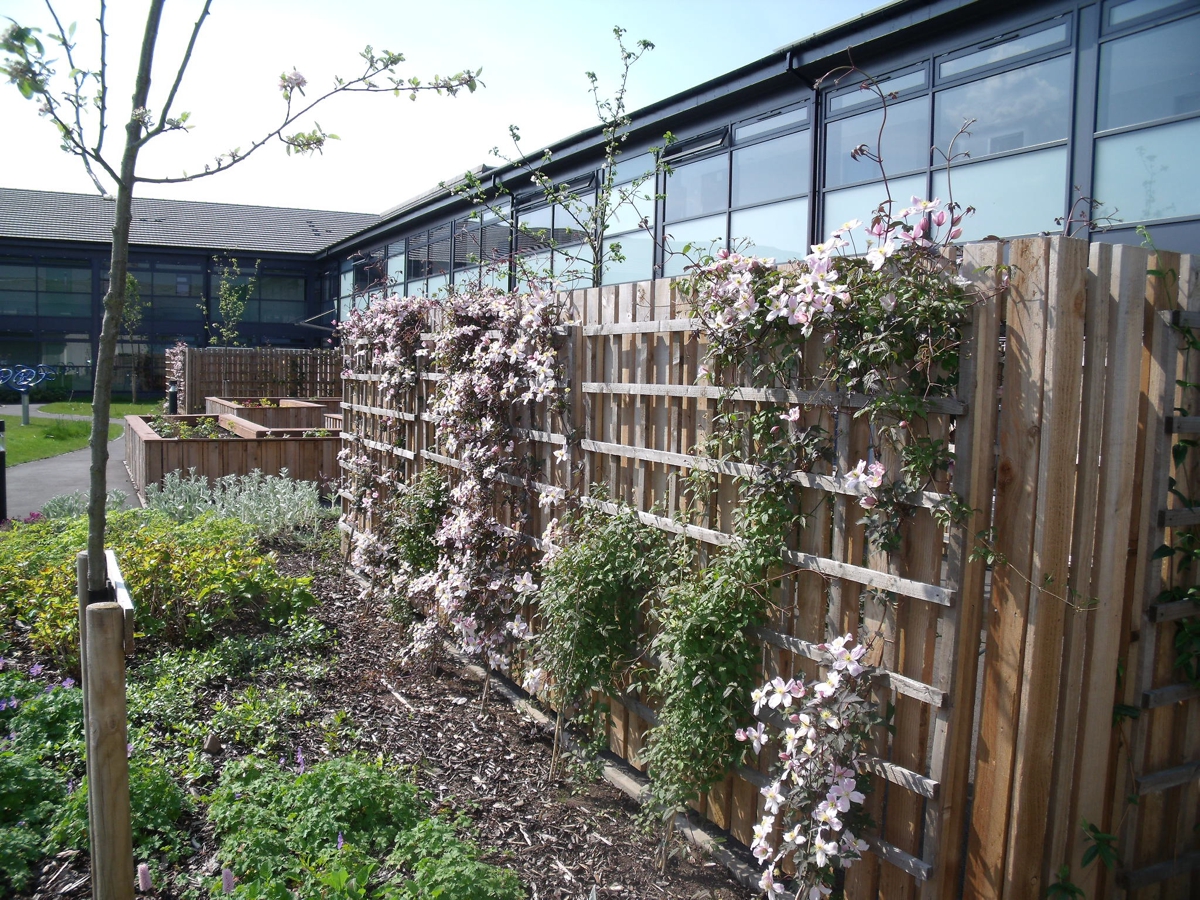
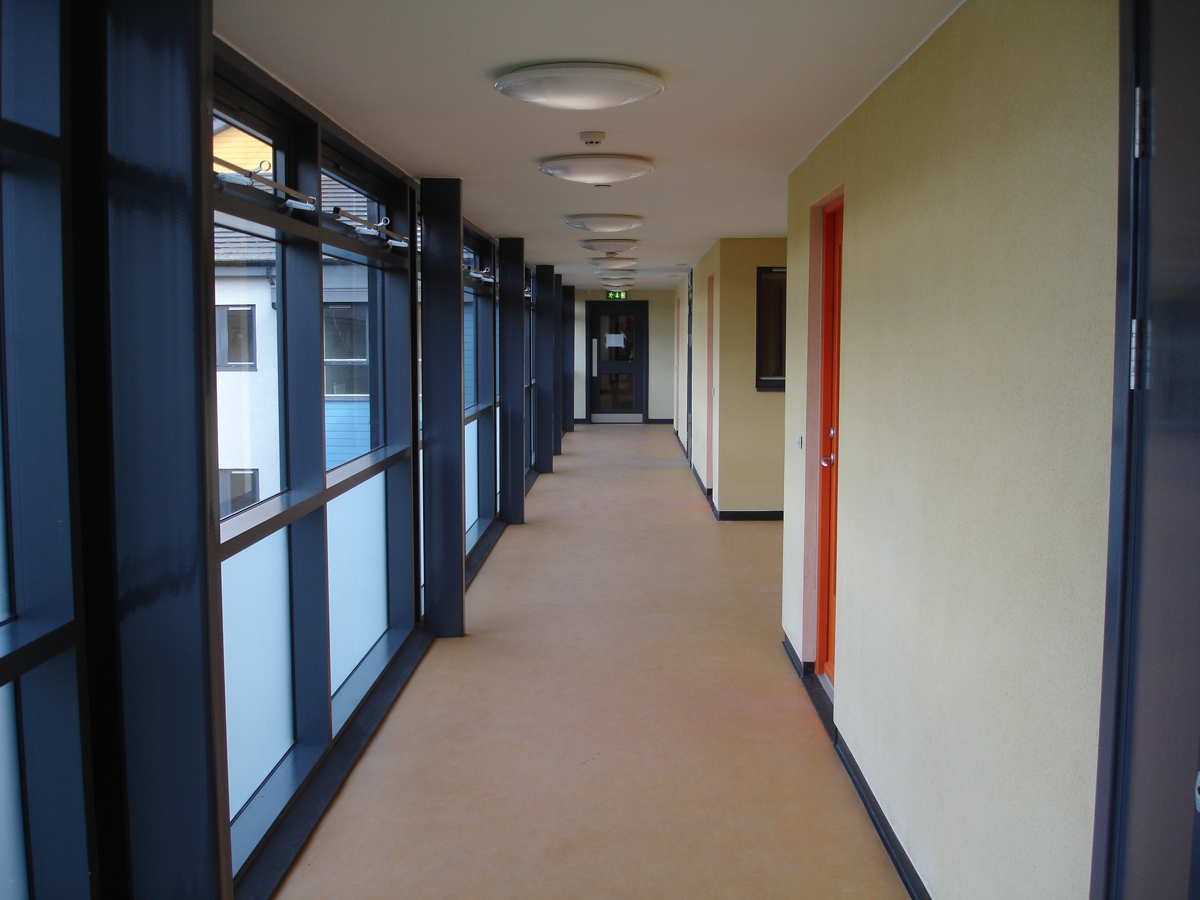
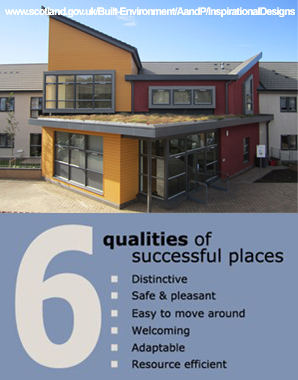
The building is arranged around a secure central courtyard garden with individual two-person flats on two levels accessed by a fully glazed walkway. This walkway features semi-private recesses for tenants to populate with plants and seats, ensuring that the circulation space doesn’t feel institutional and helping create a sense of personal identity. Combined with the courtyard garden, which includes private drying areas, raised allotment planters, exercise equipment, sensory planting, trees, shubs and a wildlife pond, the aim is to provide a broad choice of outdoor spaces and experiences to stimulate activity, good health and happiness.

All flats are wheelchair adaptable, meeting HFVNs and Lifetime Homes criteria. The plan is simple and flexible, designed to maximise natural light, provide ample storage and ensure ease of maintenance. Wet floor showers are installed throughout, as is a warden call system and an integrated sprinkler system for enhanced safety.

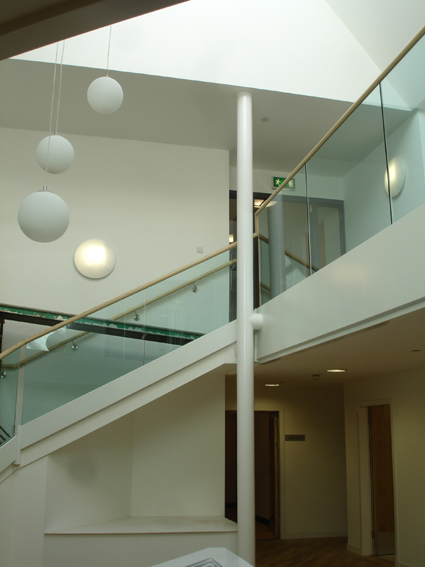
A community building hub addresses the public open space proposed to the front of the building on the site of the existing bungalows, providing a link between the public and private faces of the building. This houses a range of communal facilities including a meeting hall, separate meeting rooms, office space, a scooter store and re-charge room, a resident’s lounge and kitchen which opens out onto the courtyard garden, whilst upstairs there is a second lounge and games room with an IT room adjacent. All facilities are arranged around a bright and airy atrium which acts as a core for the overall building and a focal meeting point.

Overall, the concept has been to provide independent housing for elderly people, but with integrated facilities to be able to offer more support if required.

Sustainability

This building has been designed to exceed current SBSA standards through good design, the use of appropriate technology and whole-life engineering of materials.

Sustainable Design:

– The building envelope has been designed to achieve a 40% improvement on U-values than currently required by Building Standards whilst robust detailing and the inclusion of a service void within the 160mm timber kit, lined with thermally insulated plasterboard has improved air tightness to between 3.0m and 2.5  m3/(m2.h) at 50Pa.

– A communal gas-fired, low temperature heating system where three boilers heat all 58 flats and the communal hub instead of 59 separate boilers equating to a lower capital cost and less planned maintenance costs.

– A passive solar corridor provides access to all flats around the internal courtyard. Initially, the flats are heated by the communal heating system which loops round the scheme in the attic above the flats. But each flat also has a positive input whole house heat recovery and ventilation system which draws air in from the solar corridor and uses this, along with warm air from the kitchen and bathroom, to pre-warm fresh air. This reduces the amount of heating required from the communal boiler, and is designed to reduce fuel costs.

– We have also designed the structure of the communal building to take advantage of enhanced thermal mass with a super-insulated masonry wall U-value of 0.15w/m2K, and combined this with underfloor heating on pre-cast concrete flooring throughout.

Sustainable Technologies:

– An 80 sqm Photovoltaic array has been installed on the south-facing roof of the courtyard walkway to provide electricity to power the communal and stair lighting. This  whilst at the same time taking advantage of the Government’s Feed-in tariff. With a 10 year payback period the array has the potential to earn just under £65k over the next 25 years.

– The whole house ventilation system is a Greenwood Airvac Fusion HRV2, one of the UK’s best performing heat recovery products and is both SAP Appendix Q Eligible and EST Best Practice compliant. Its cutting edge performance helps reduce DER’s in SAP and the unit also incorporates the most sophisticated technology which enables an outstanding 93% heat transfer.

– Underfloor heating has used throughout the communal hub to provide high comfort levels – underfloor heating is the most comfortable form of heating because it is largely radiant, and people have evolved physiologically to prefer this form of heating. It is completely unobtrusive, generating more usable space in a room. There are no floor draughts and the temperature in all parts of the room is even.

– All lighting within the walkway, stairs, corridors and communal areas is energy efficient and motion detector activated to minimise energy use and wastage. Equally, this aids security within the building, detecting any intruder movement instantaneously.

Sustainable Materials:

– A lightweight render carrier has been used in place of standard block and render on the external wall of the flats, requiring smaller foundations, minimising the use of concrete and water, and producing less waste for landfill.

– A sedum roof has been included to minimise rainwater runoff and maximise biodiversity. This works in tandem with a SUDS pond designed as part of the overall neighbourhood regeneration.

– Pre-painted Accoya engineered timber cladding has been specified in place of typical natural larch or cedar timber; industry testing guarantees this type of timber for 50 yrs

Rural Housing | Lauder

Rural Housing | Lauder

Projects

12 RURAL HOMES, CROFTS ROAD, LAUDER

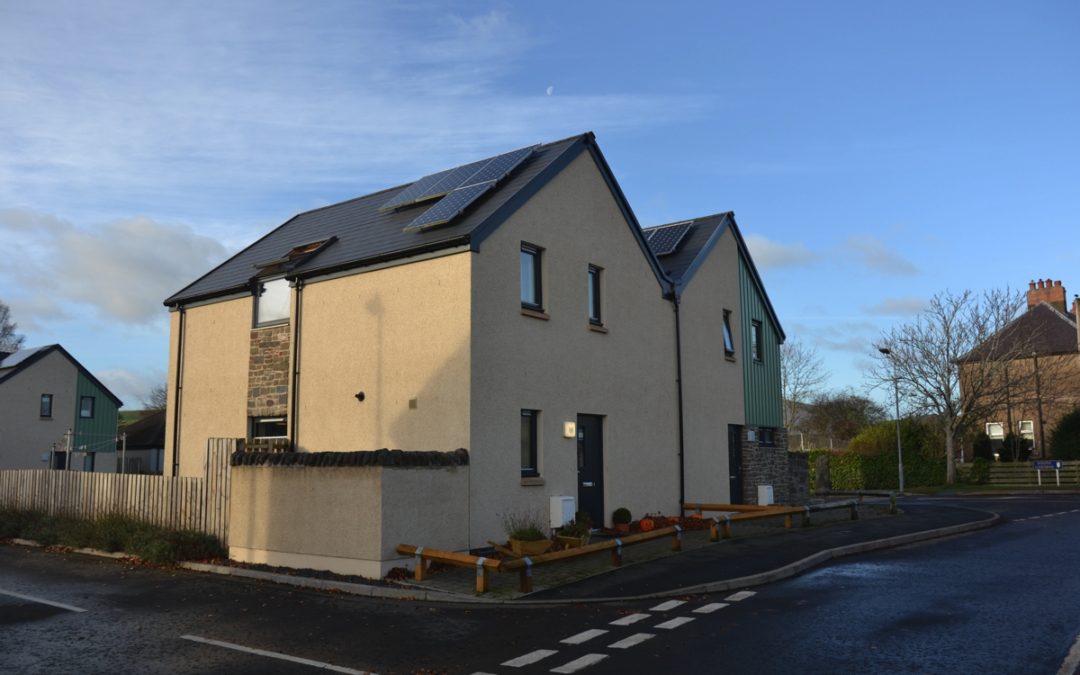
Eildon Housing Association commissioned Assist Design Ltd to design 12 homes for affordable rent on the site of the former Lauder Primary School. The school had lain derelict after a new school was built in 2009 and was beginning to create an eyesore in what is a very picturesque and well-preserved ancient Scottish Royal Burgh town.

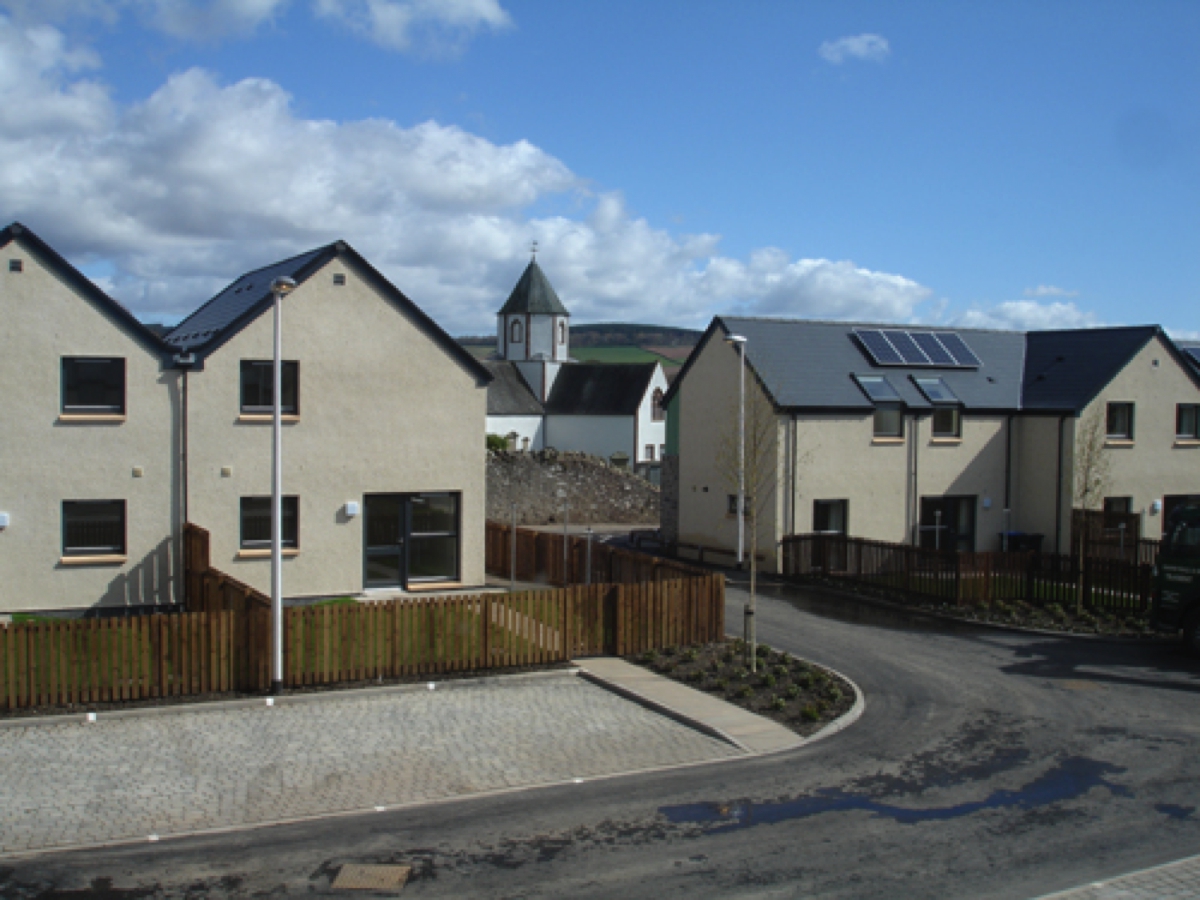
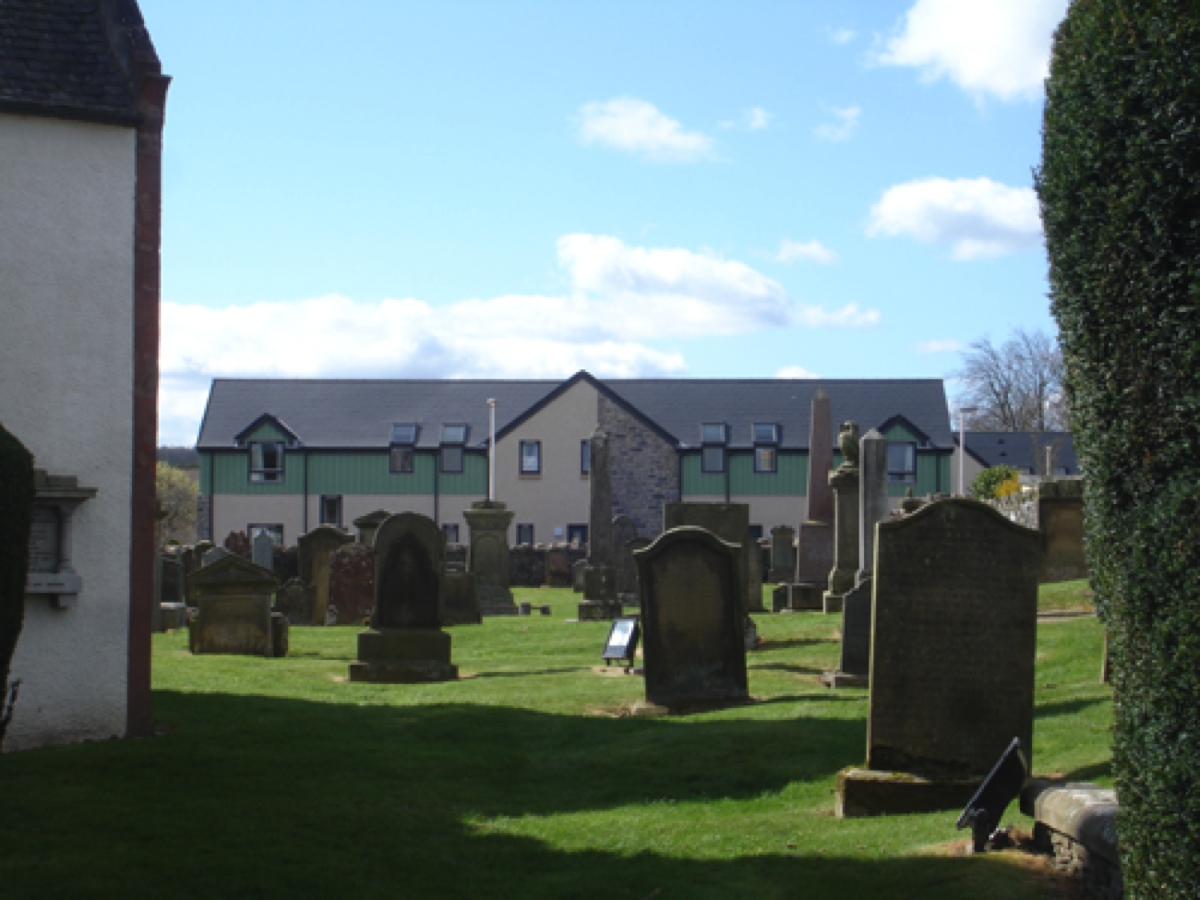
The importance of successfully inserting a new social housing scheme into the fabric of Lauder was clear from the beginning. Taking cognisance of the site’s visibility across the graveyard from the town centre, the form and materials were carefully developed to create a distinctive character whilst striving to produce a design which complimented the architectural quality of this Border town.

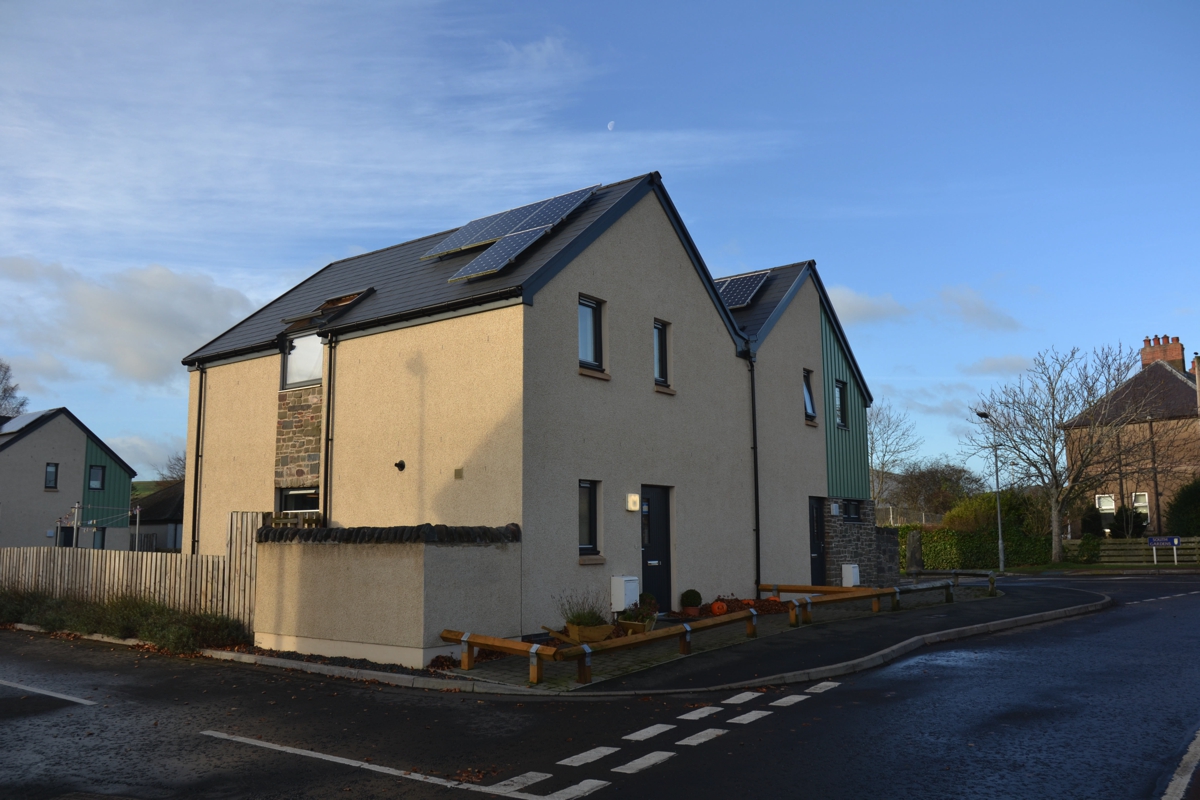
The houses on Crofts Road form a true boundary to the street and include gable features to create a strong profile, both of which respect and relate to the existing vernacular along this street. Small windows are orientated to Crofts Road to maintain privacy whilst the main living spaces overlook the internal court and parking to maintain passive surveillance. A key strategy for visually integrating the new housing into the local area was the re-use of the whinstone from the demolition of the school building which is included at prominent points along the street elevation. The datestone from the rear of the school building has also been saved and integrated into the central court landscaping as a reminder of what stood on the site previously.

A simple sustainable design strategy of well insulated homes has been developed to meet the long term sustainable expectations of C02 reduction targets set by the Government. All principle elements are designed to achieve U-values in excess of 2011 SBS standards through enhanced thermal insulation and each house has a roof mounted Photovoltaic Array to augment power supply, reduce the Carbon footprint and generate FITs.

2014 HOMES FOR SCOTLAND AWARDS Commendation.

Affordable Housing | Peebles

Affordable Housing | Peebles

Projects

AFFORDABLE HOUSING, PEEBLES

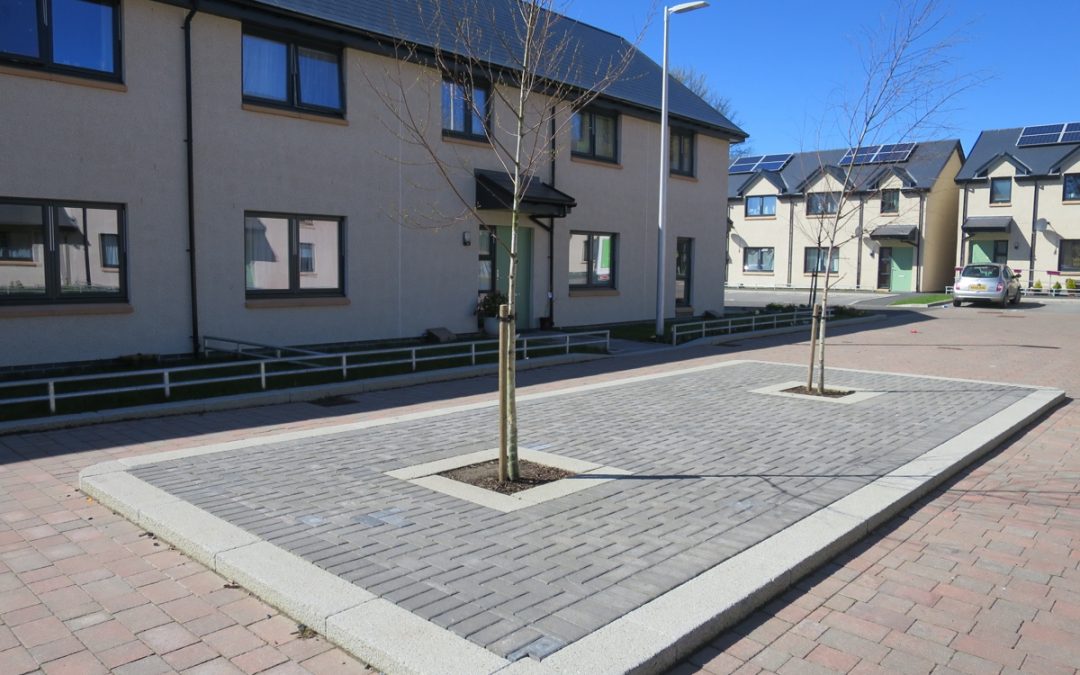
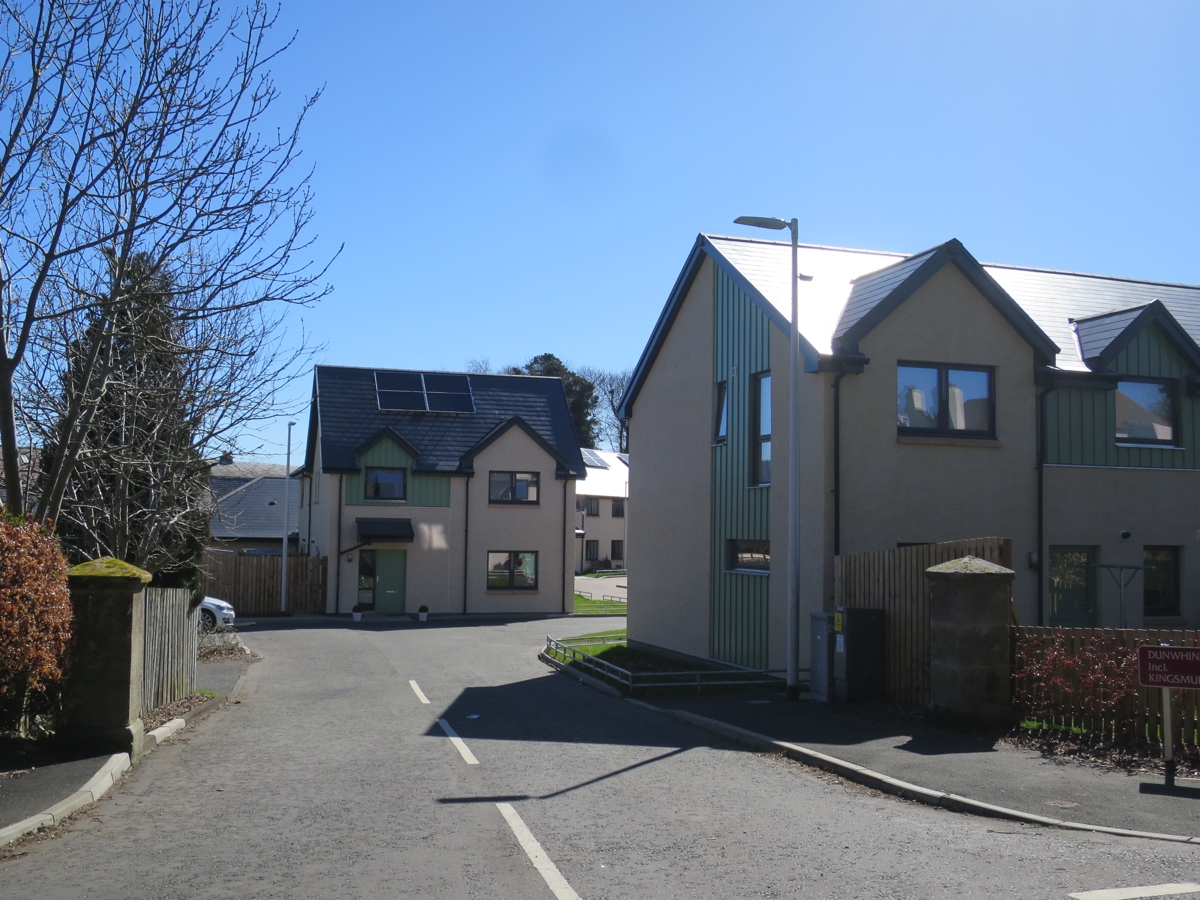
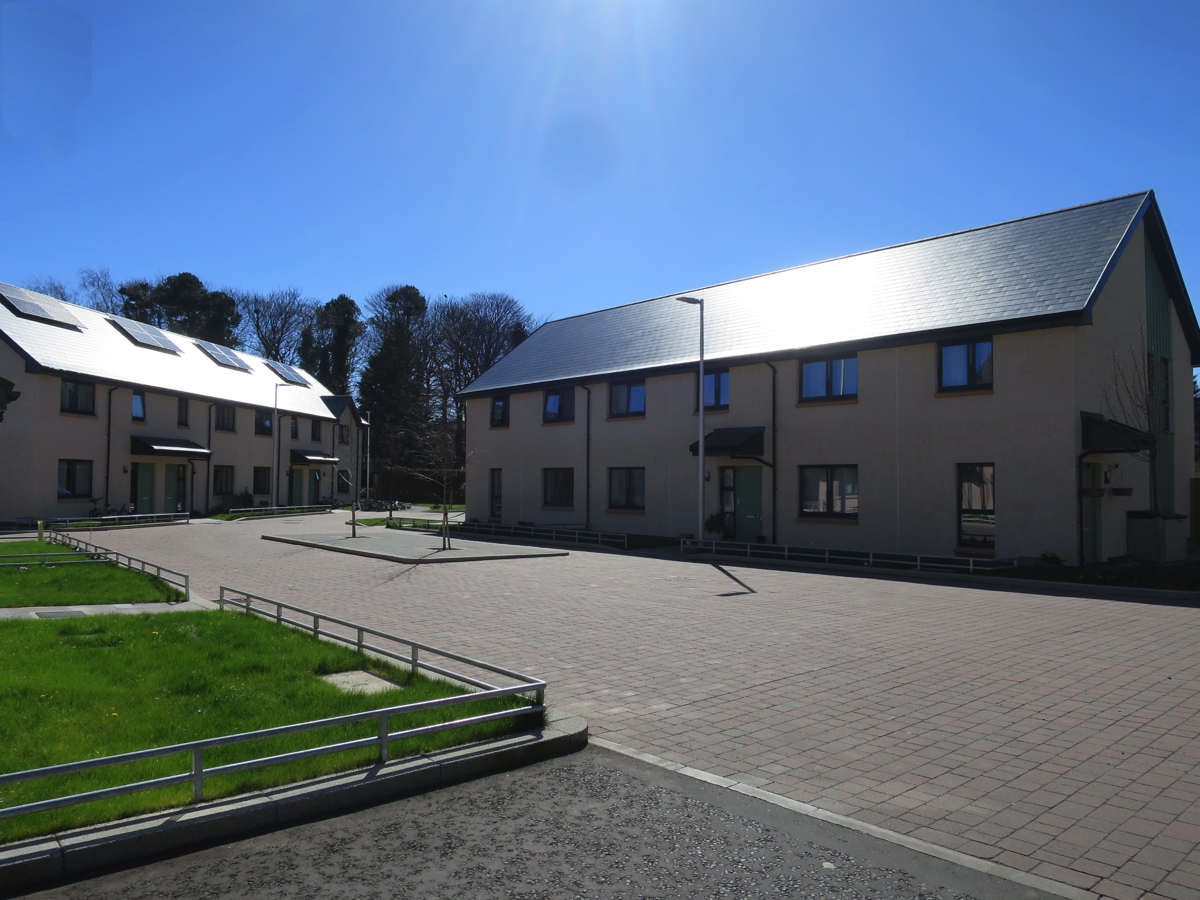
Brownfield and land-locked site to the south of Peebles town centre with an existing pedestrian route across site used by school children to access nearby High School. Access onto site was restricted to one point by Highways. Key driver was being able to maintain school link whilst creating a safe and private housing scheme.

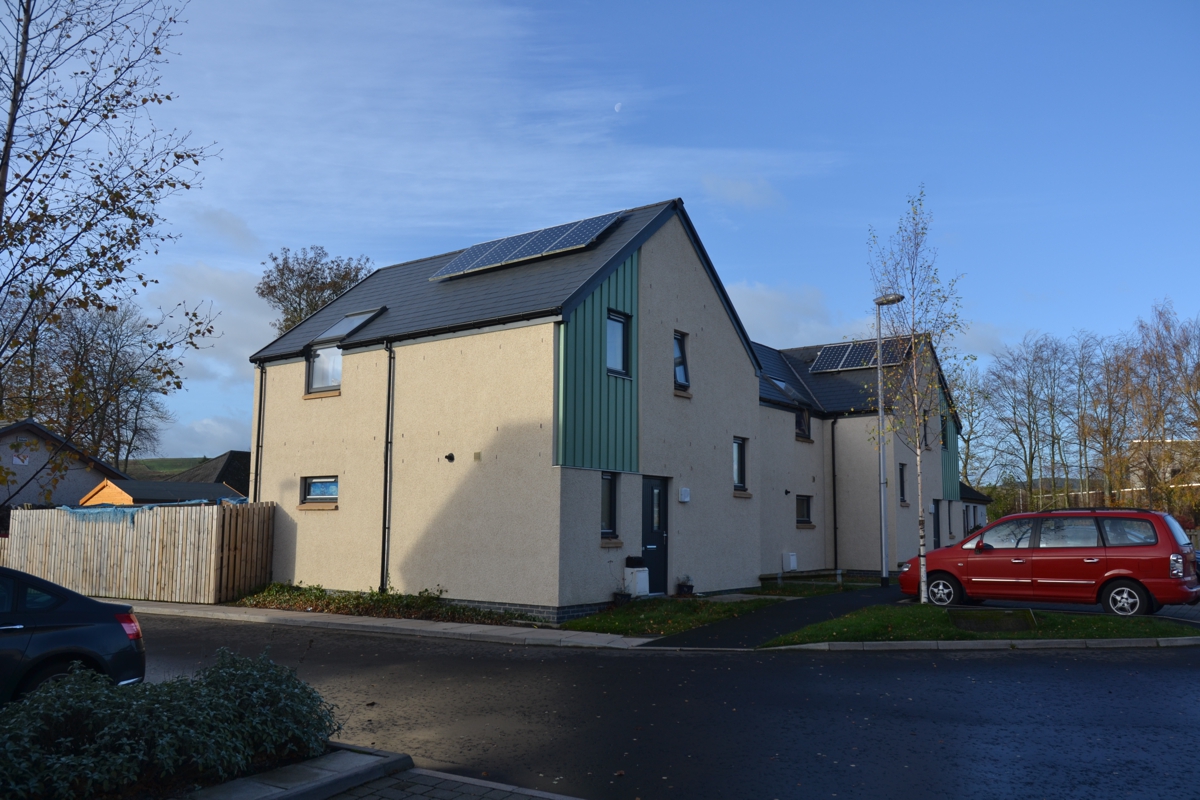
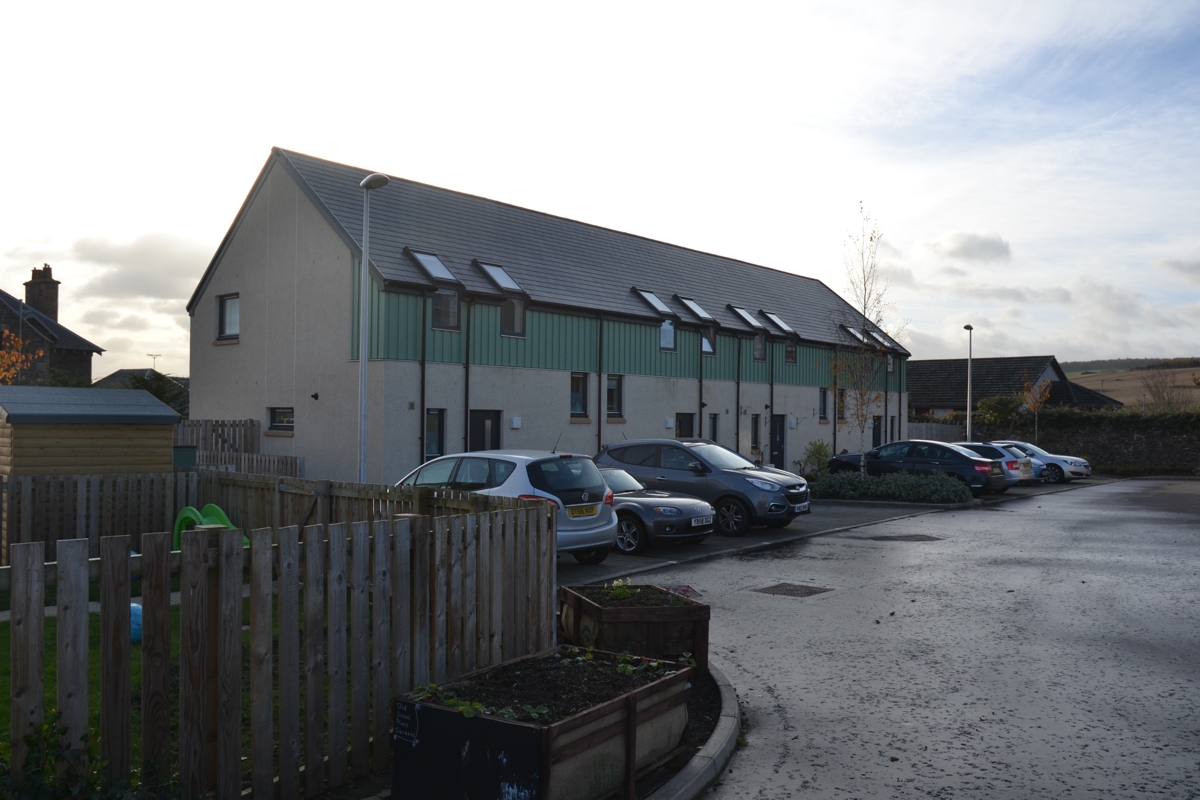
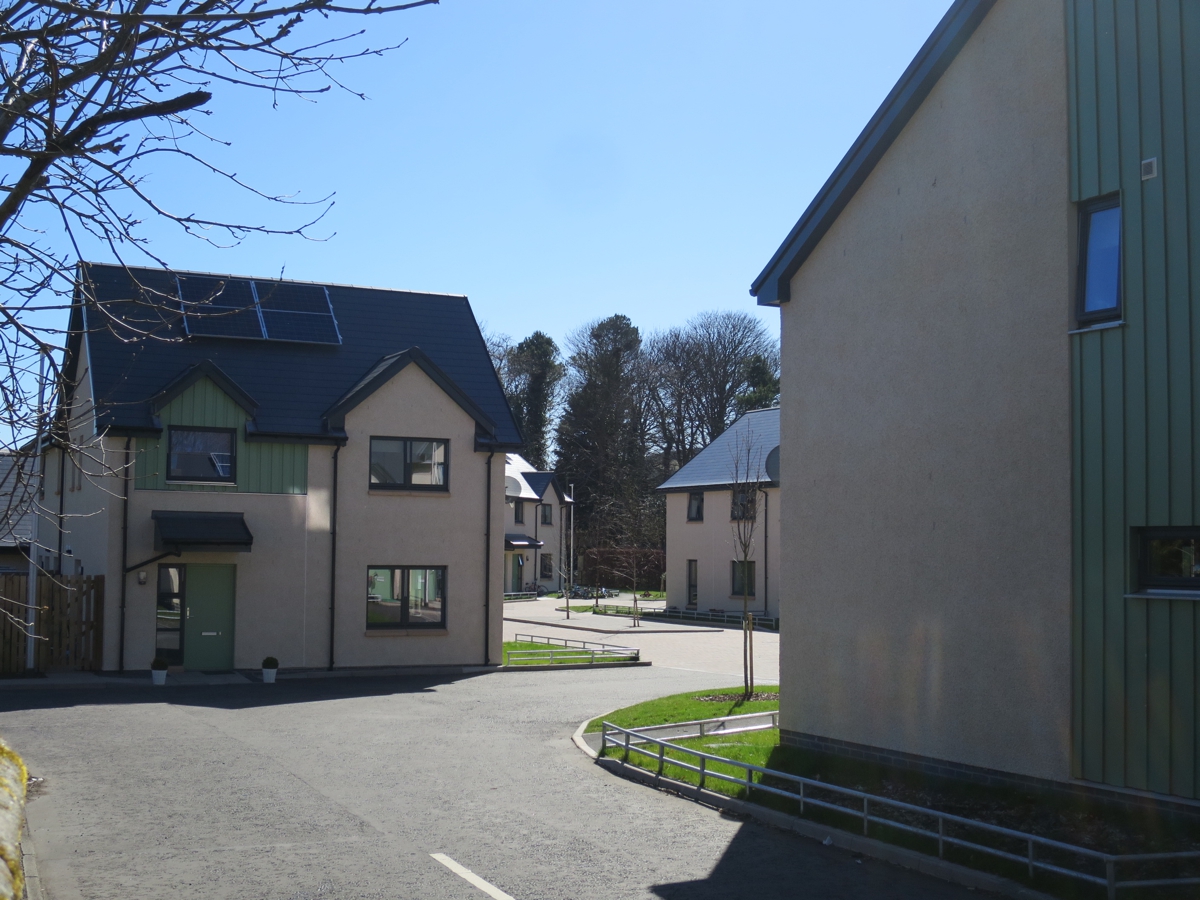
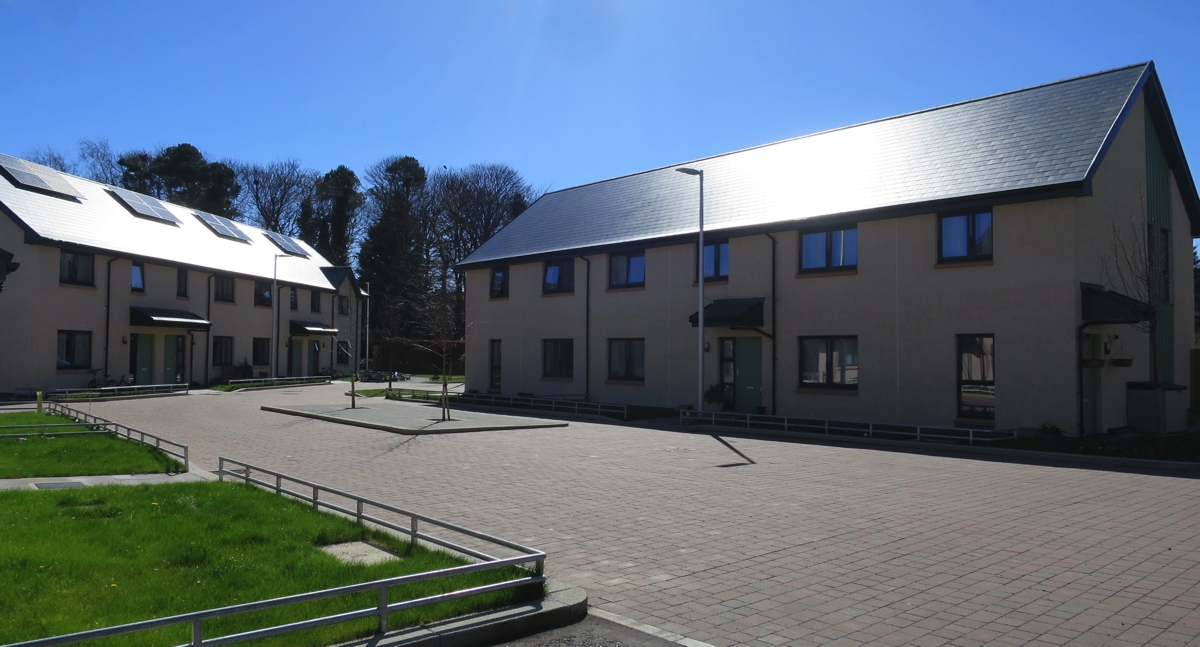
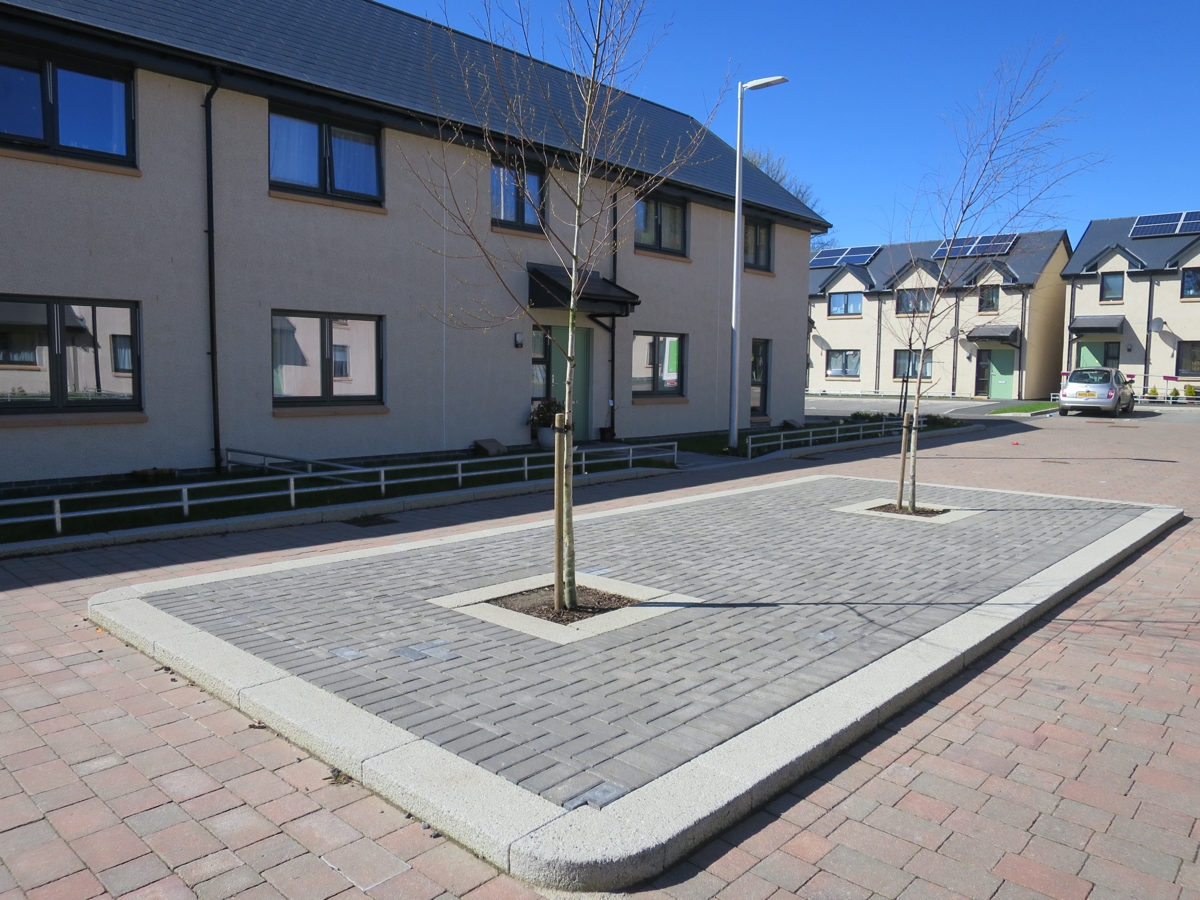
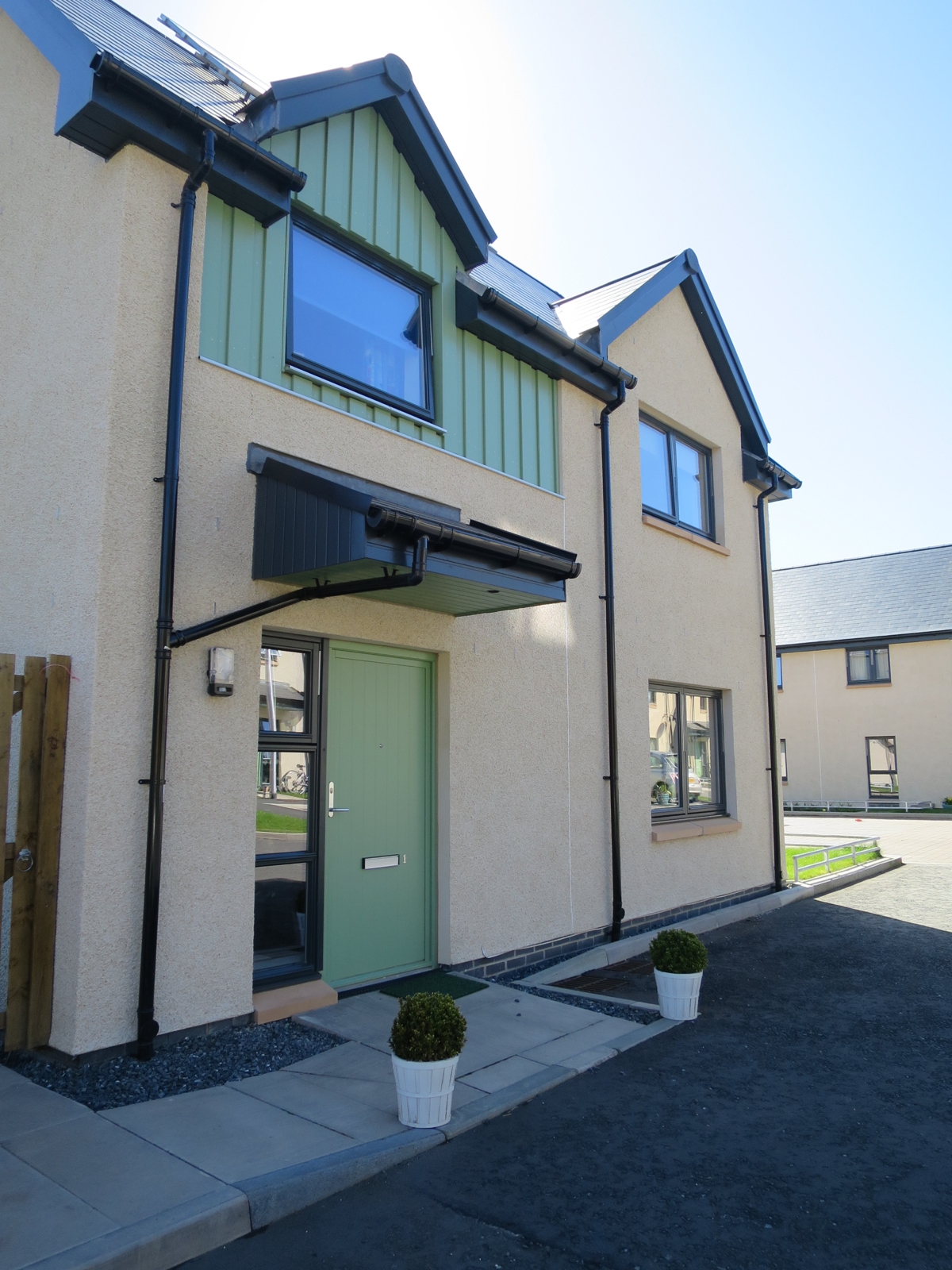
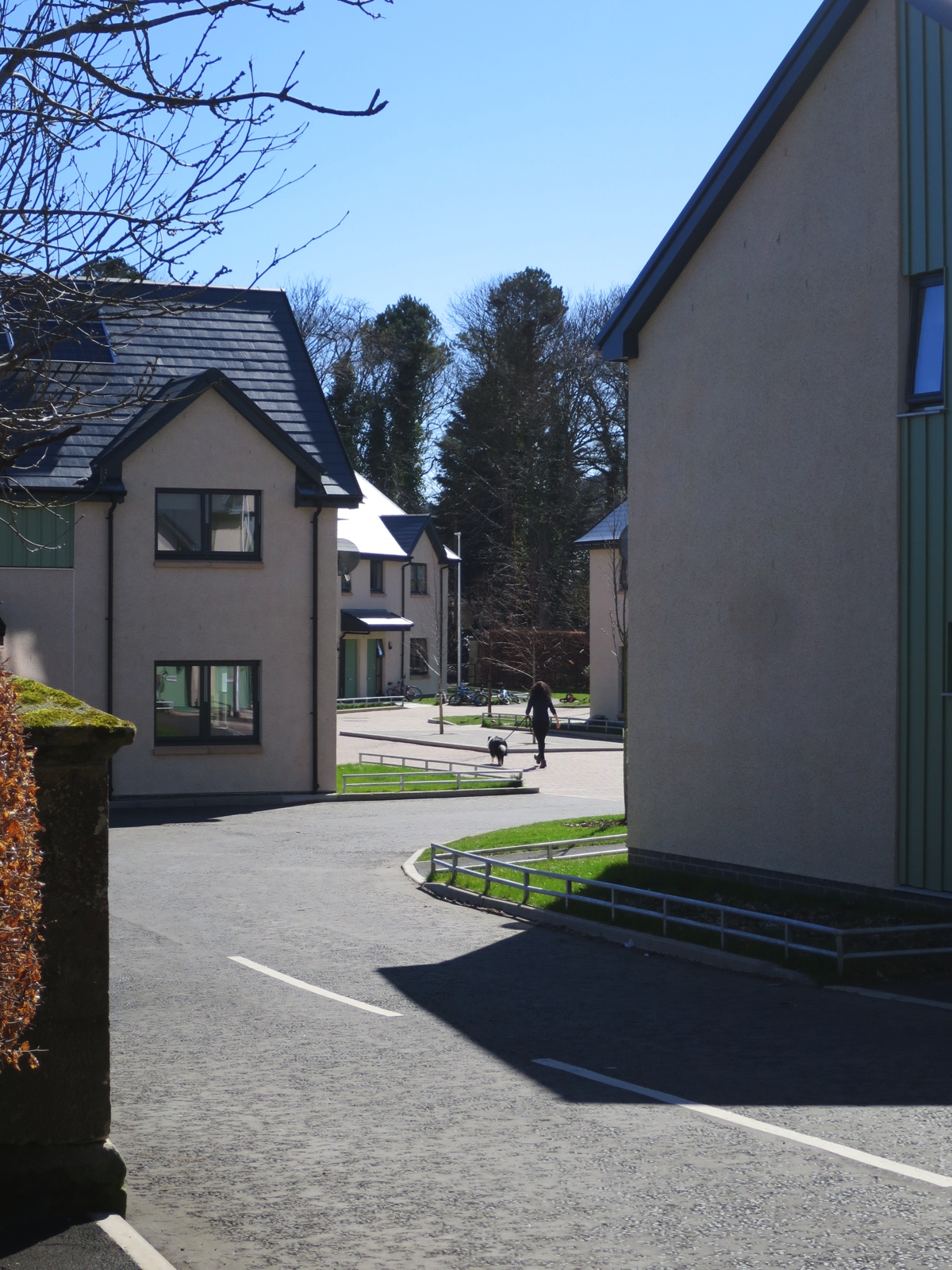
ASSIST developed 15 large family homes and one wheelchair bungalow, carefully designed to achieve a high-quality place-making and sustainability standard; the properties meet Silver Active sustainability levels with PVs and Passive Flue Gas Heat Recovery Devices fitted throughout. Our starting point was the challenge of successfully combining vehicular access, a pedestrian through-route and maintaining community safety, all of which addressed through basic principles of place-making. Rear gardens are enclosed and protected, front gardens are reduced to privacy strips and open out onto the shared surface courts within the site and soft landscaping creates a pleasant environment for movement through the site.

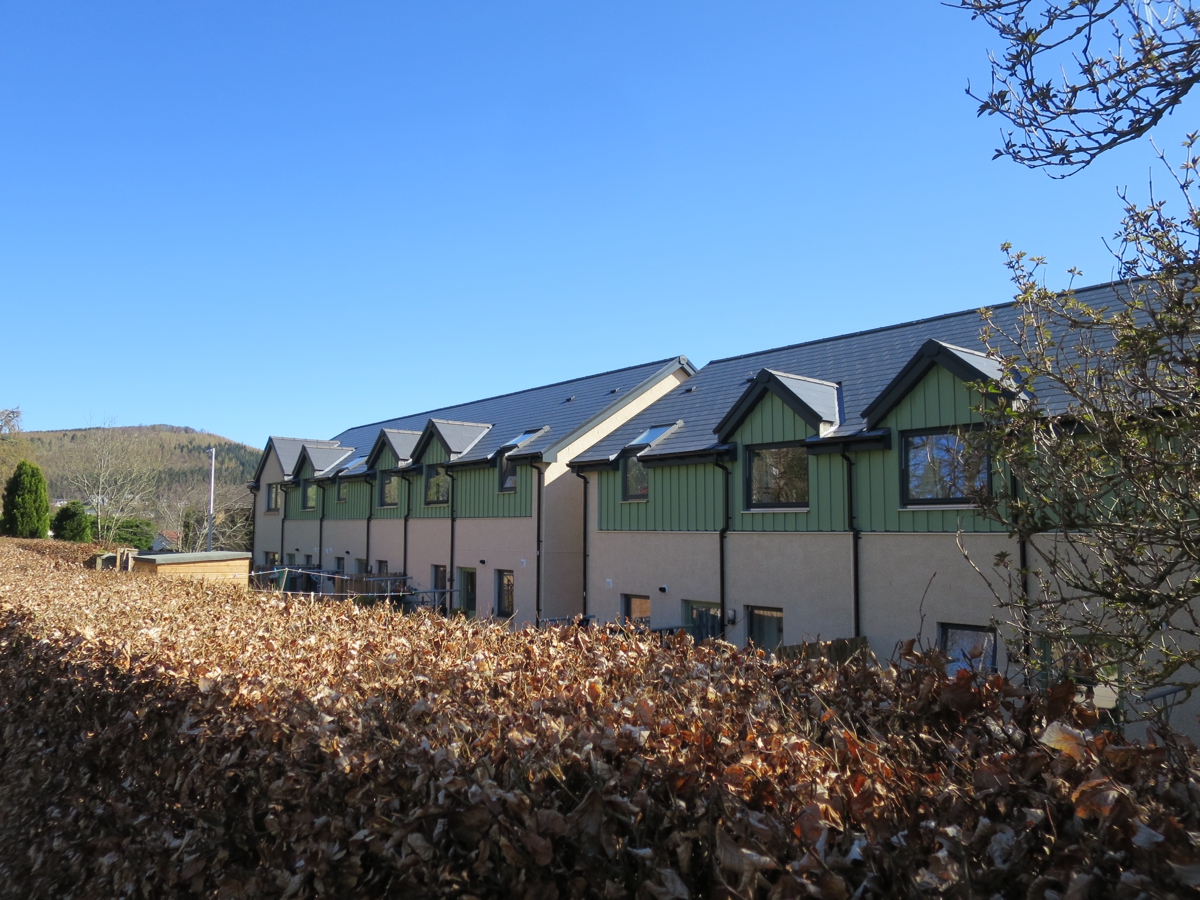
In close consultation with the local Urban Planner and Heritage Officers, the layout developed to combine a sense of arrival, a high quality hard-landscaped central court and a pedestrian route through the heart of the scheme. Whilst the majority of the houses are two storeys, special care was taken to address the impact of the housing as viewed from Kingsmuir Drive which have been reduced to 1.5 storey with dormer features. Active edges were orientated to the site entrance, central area and pedestrian link to help define the spatial movement through the site and provided simple passive surveillance for both tenants and pedestrians traversing the site.

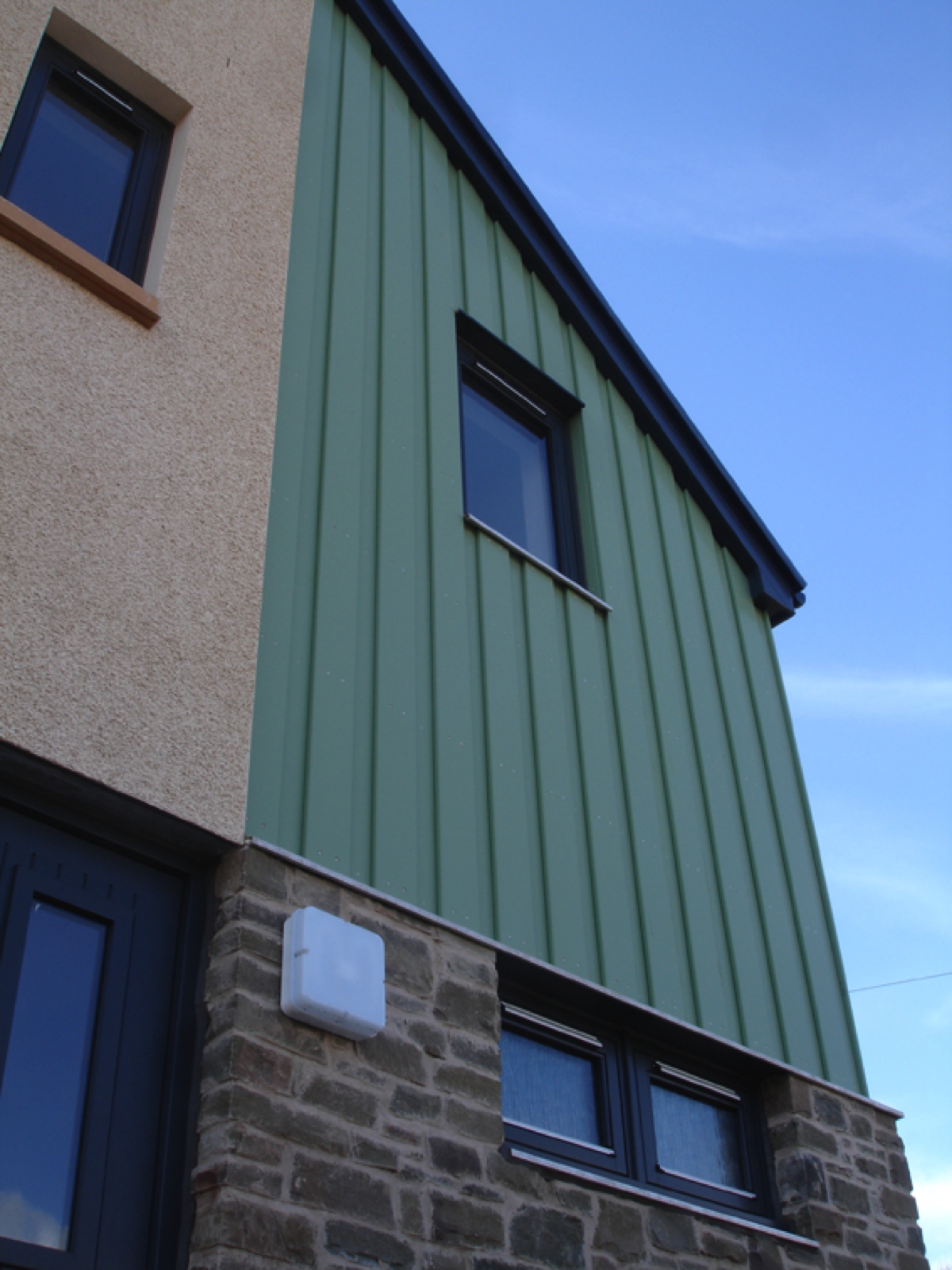
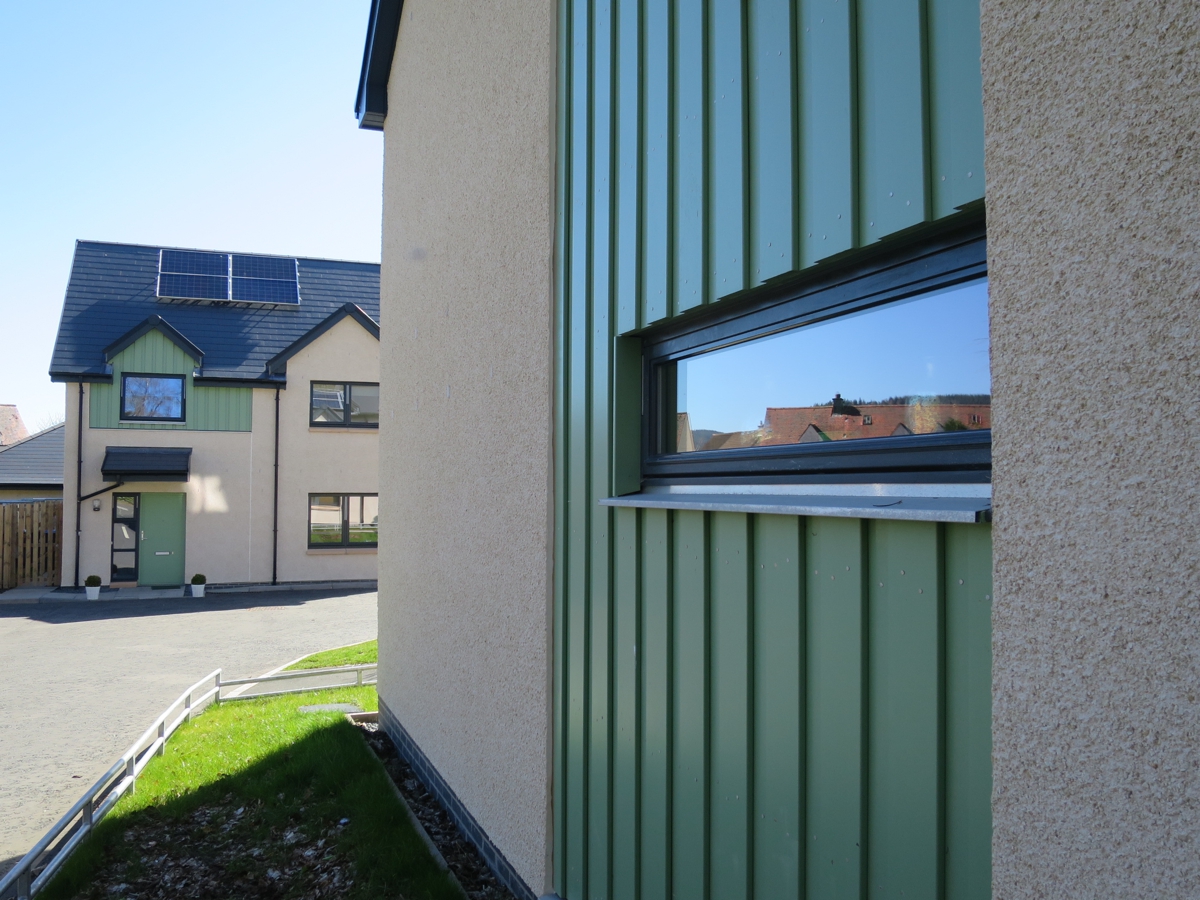
A cream wetdash render was used throughout with roofs clad in Marley Eternit Garsdale fibre cement slates which feature a detailed textured surface and crisp square edge and are more like natural slate in both profile and aesthetic. Slim verge details have also been included.  Accoya timber cladding was used to mark key vistas, elevations and focal points, guiding the visitor through the site. Existing stone piers were used to mark the site entrance and a high-quality, durable hard landscaping palette was designed to make the spaces between the houses feel open and inviting but limit the potential for loitering or unnecessary maintenance.  Windows are of dark grey painted timber whilst the doors match the timber cladding.
This project won the 2015 Winner: Homes for Scotland –Best Medium Development award.