Affordable Housing | Ormiston

Affordable Housing | Ormiston

Projects

AFFORDABLE HOUSING – ORMISTON, EAST LOTHAIN COUNCIL  

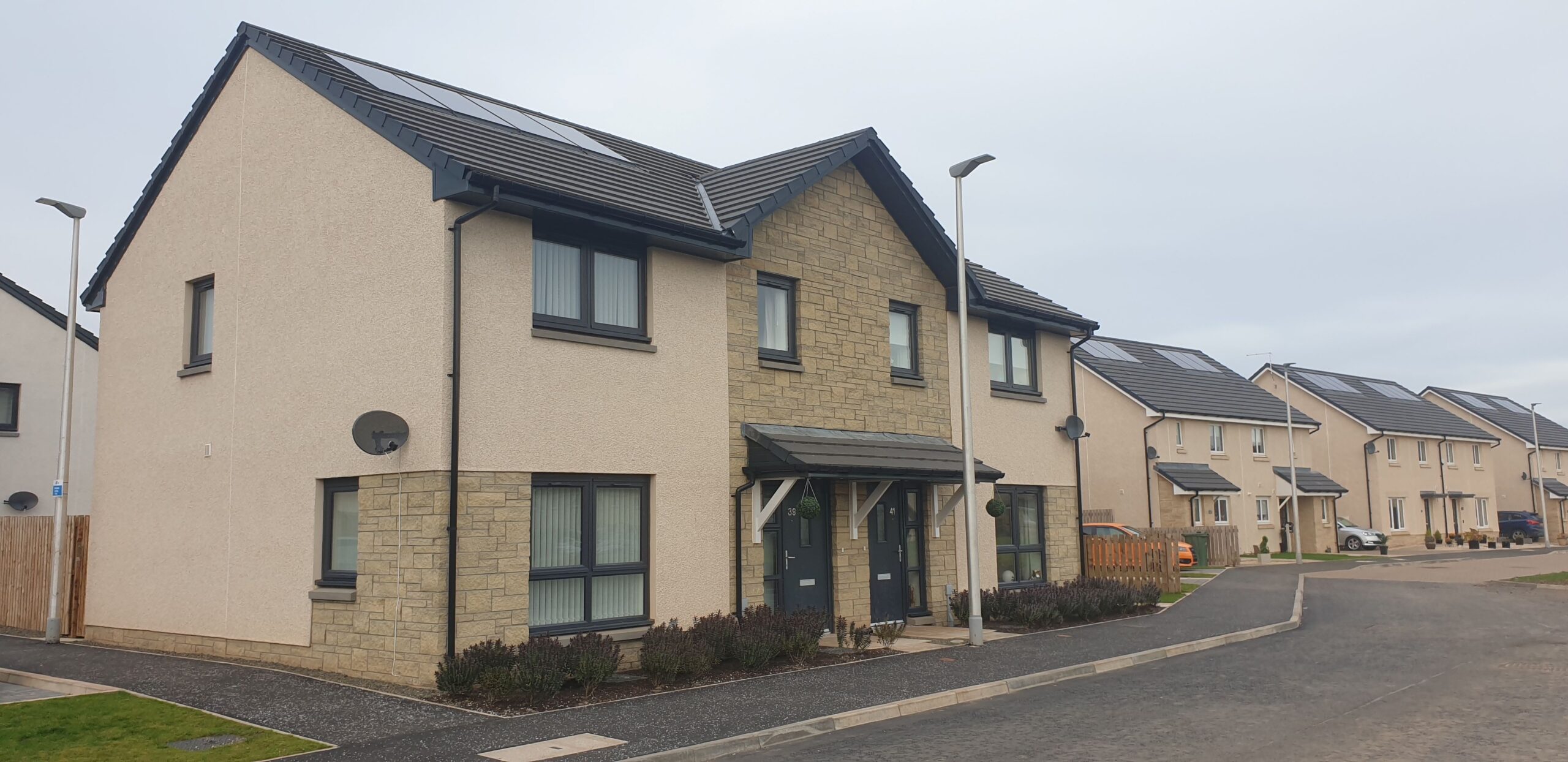
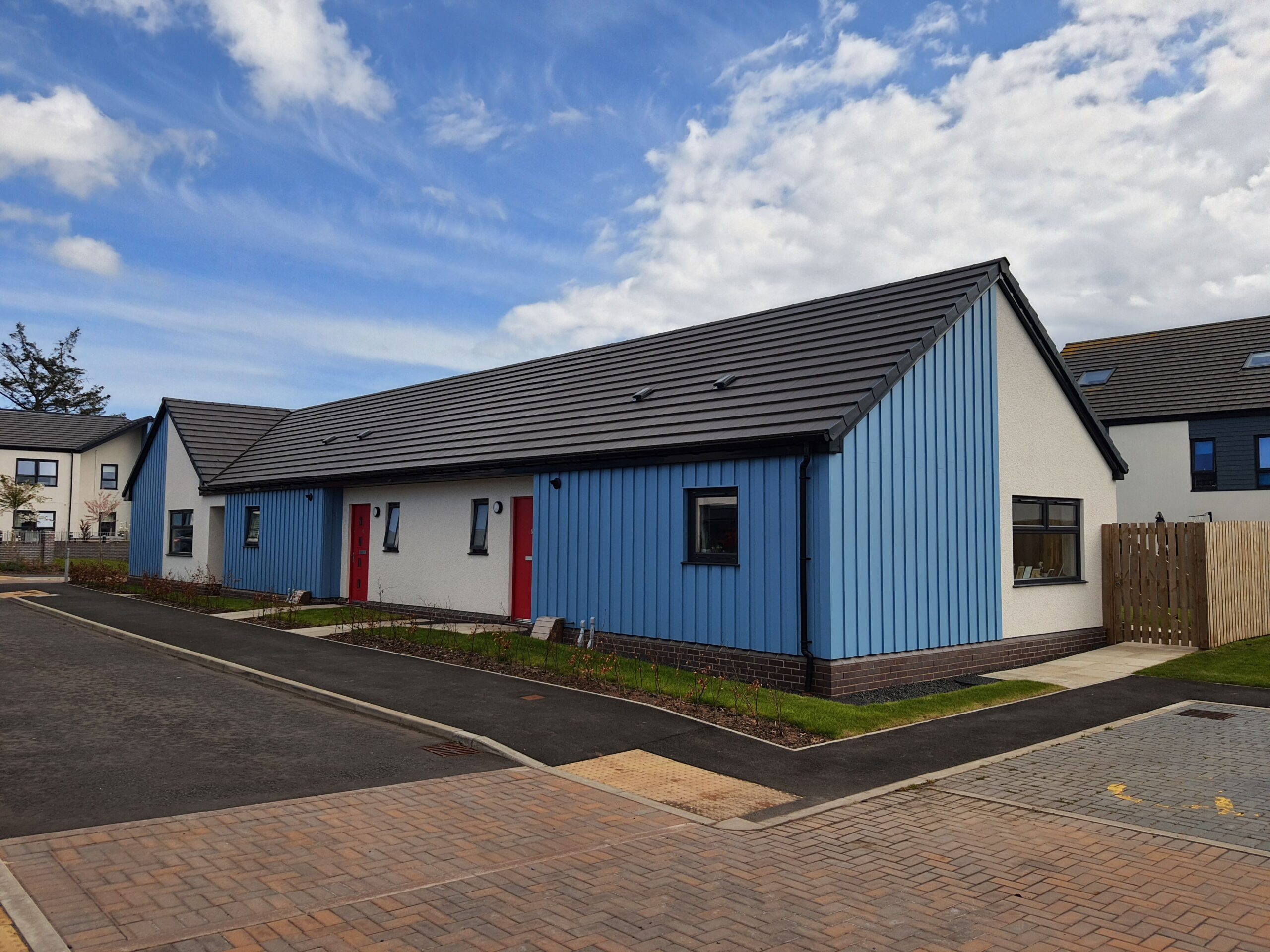
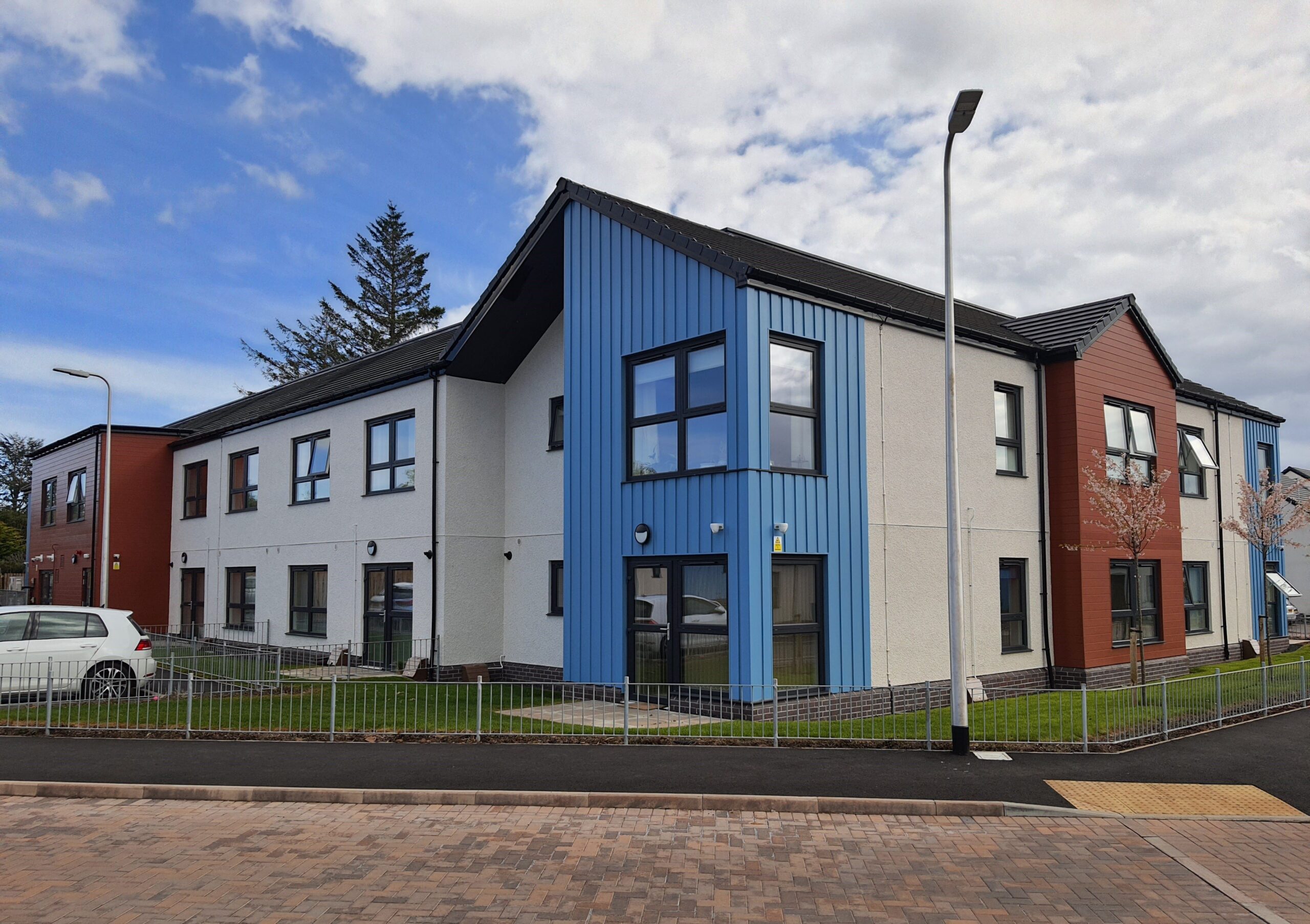
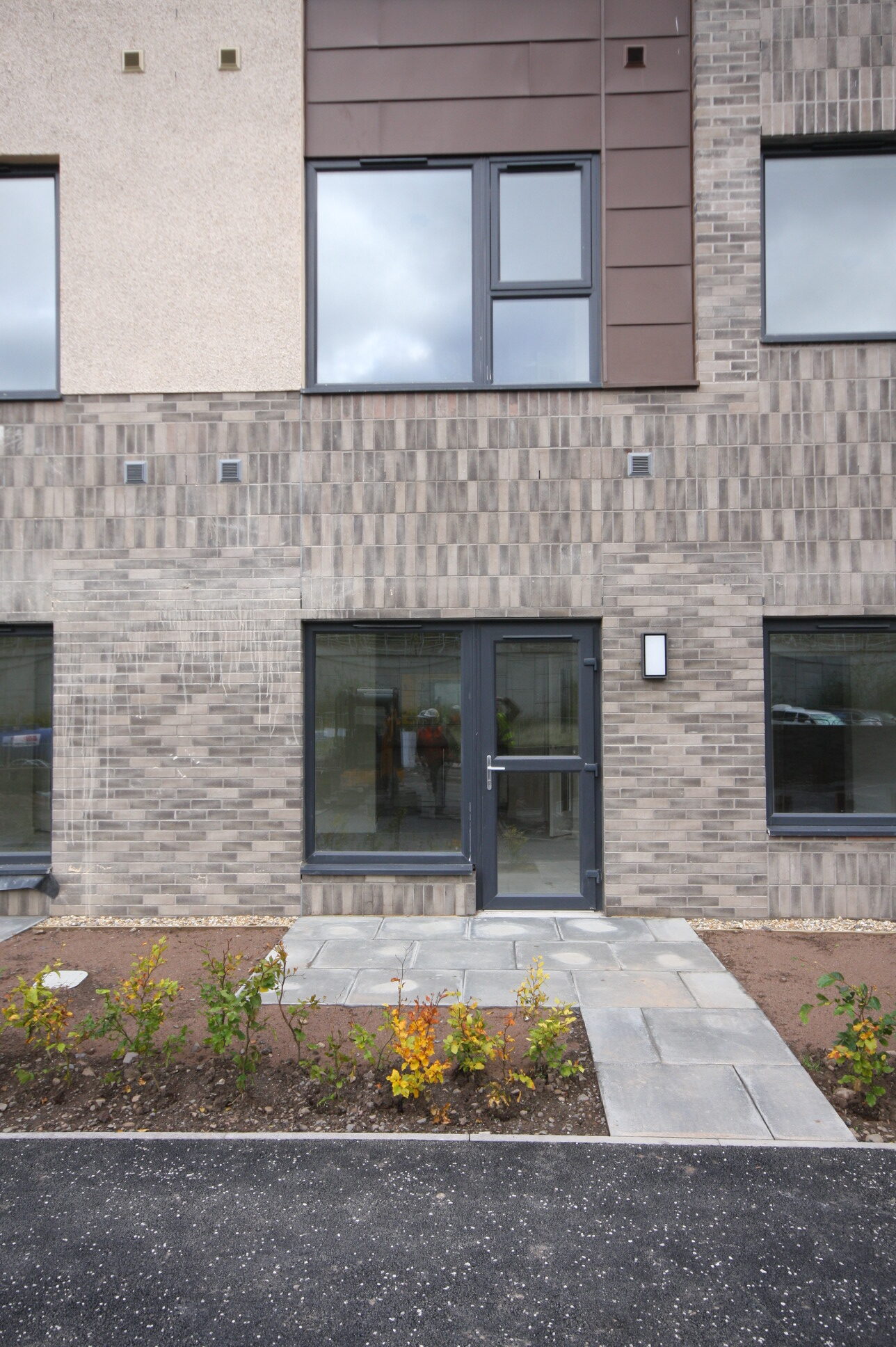
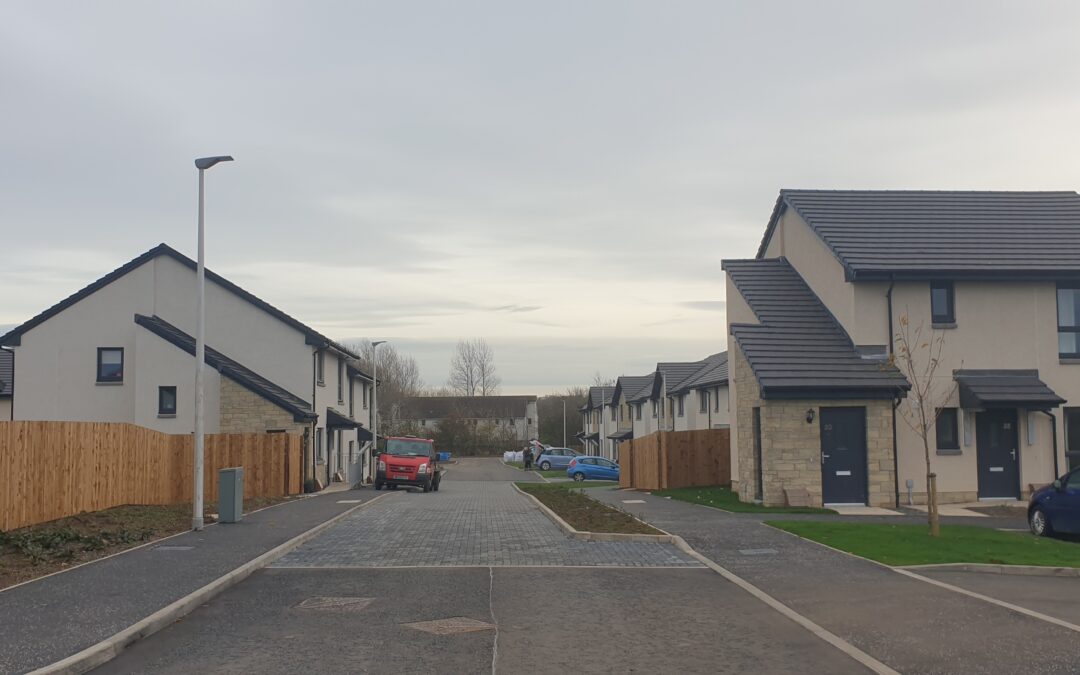
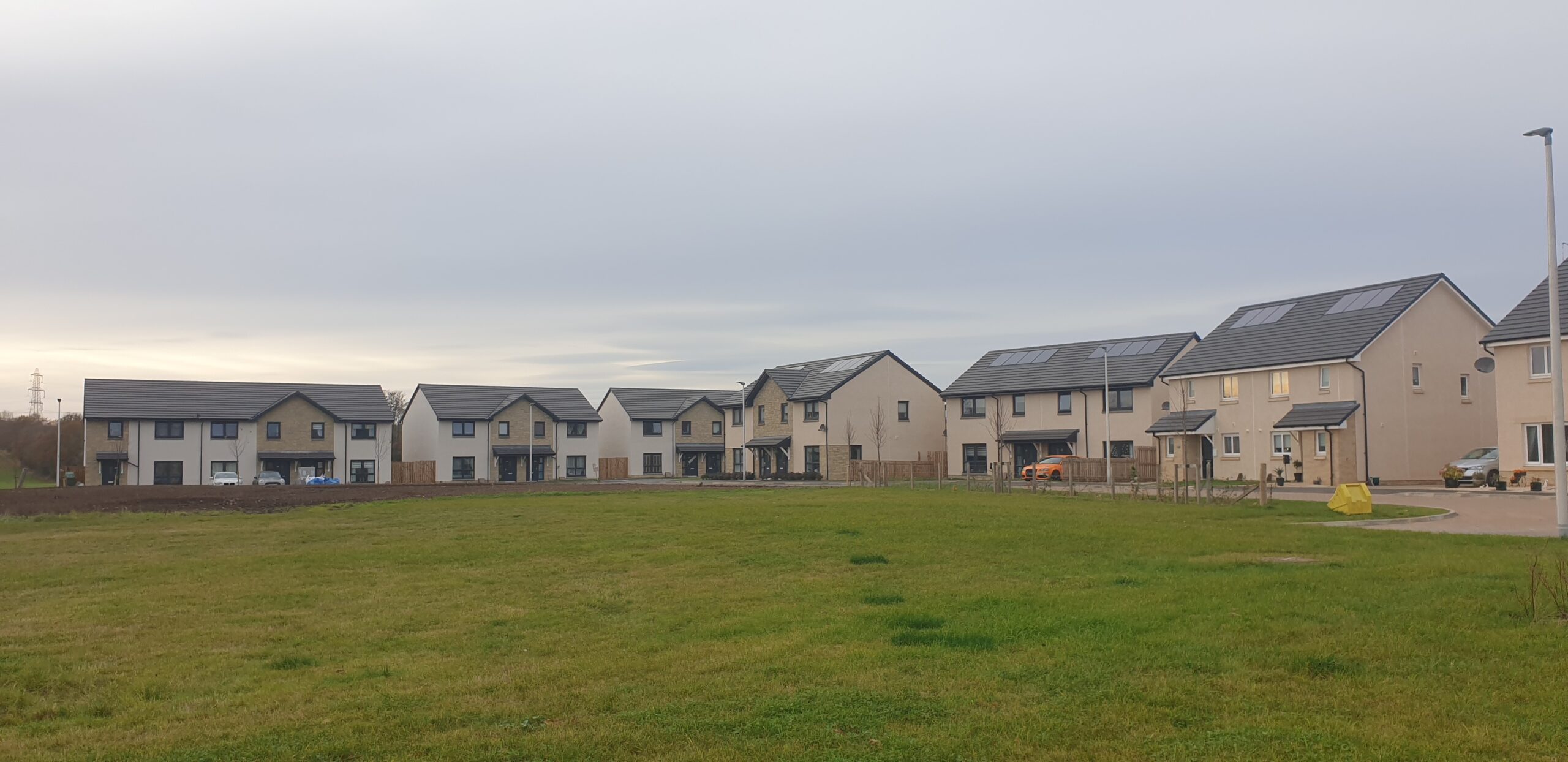
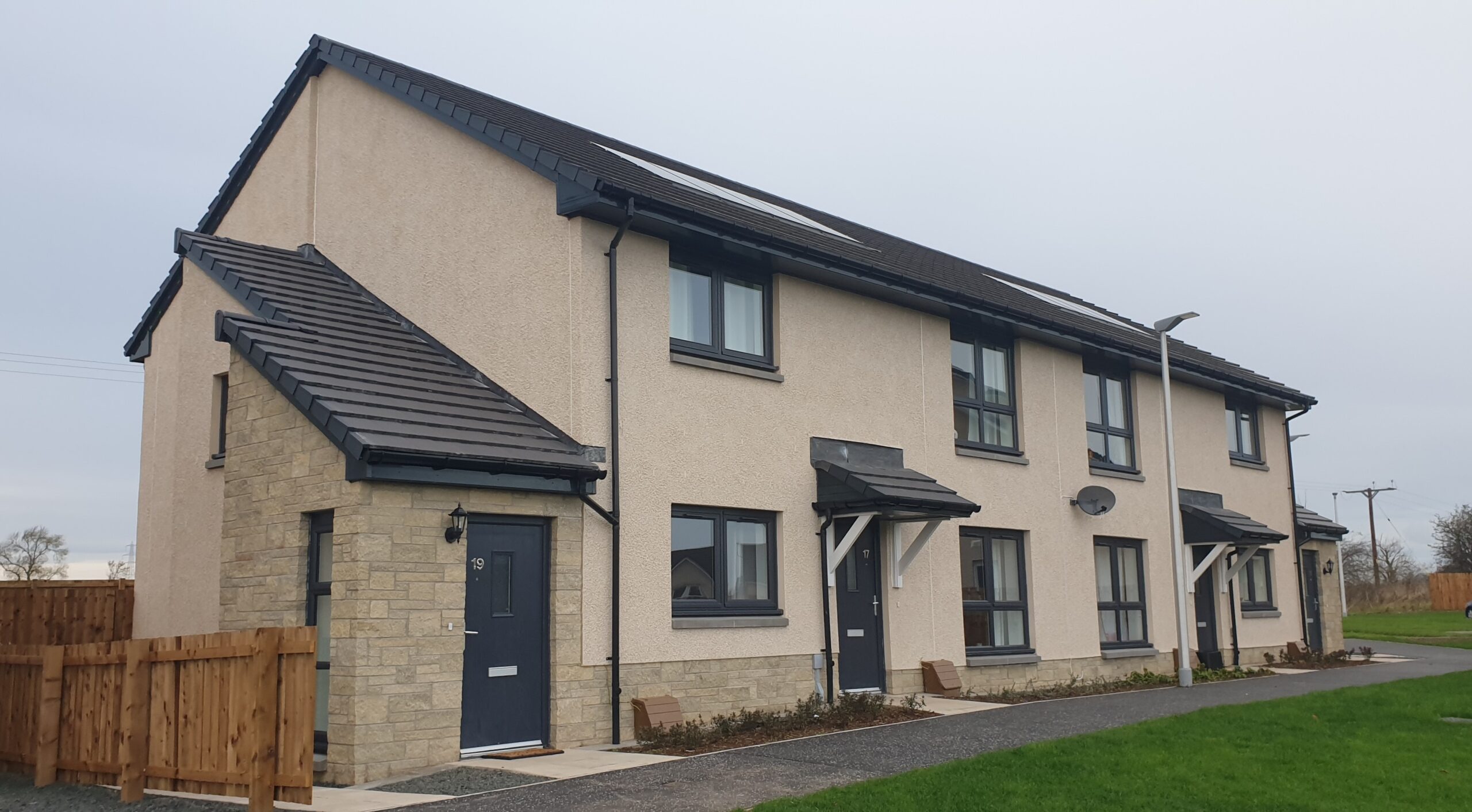
Commissioned by East Lothian Council, this project delivers 37 high-quality affordable homes for social rent, including two wheelchair-accessible bungalows. ASSIST Design acted as Design Team Leader, Architect, Principal Designer, and Energy Assessor, providing continuity from concept through delivery under a Design & Build contract.

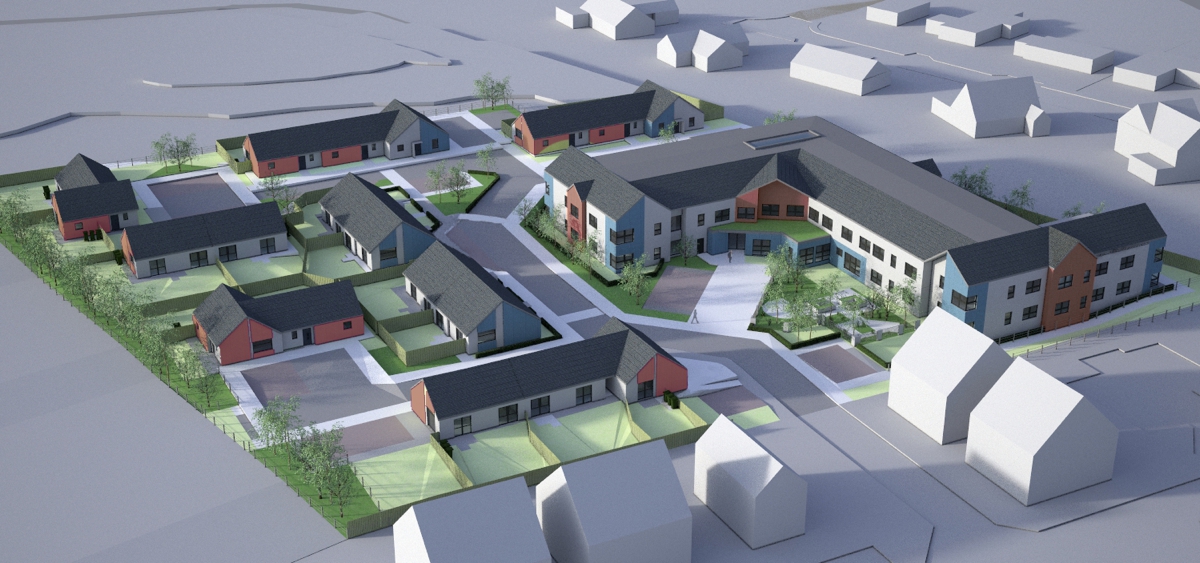
The development is arranged around shared surface courts and a central green, creating a strong sense of arrival and encouraging safe, pedestrian-friendly movement through the site. A key design driver was balancing vehicular access with a pedestrian through-route linking the surrounding community to the countryside beyond, while ensuring privacy, security, and passive surveillance for residents. Enclosed rear gardens, reduced front privacy strips, and carefully considered soft landscaping contribute to a calm, sociable environment.

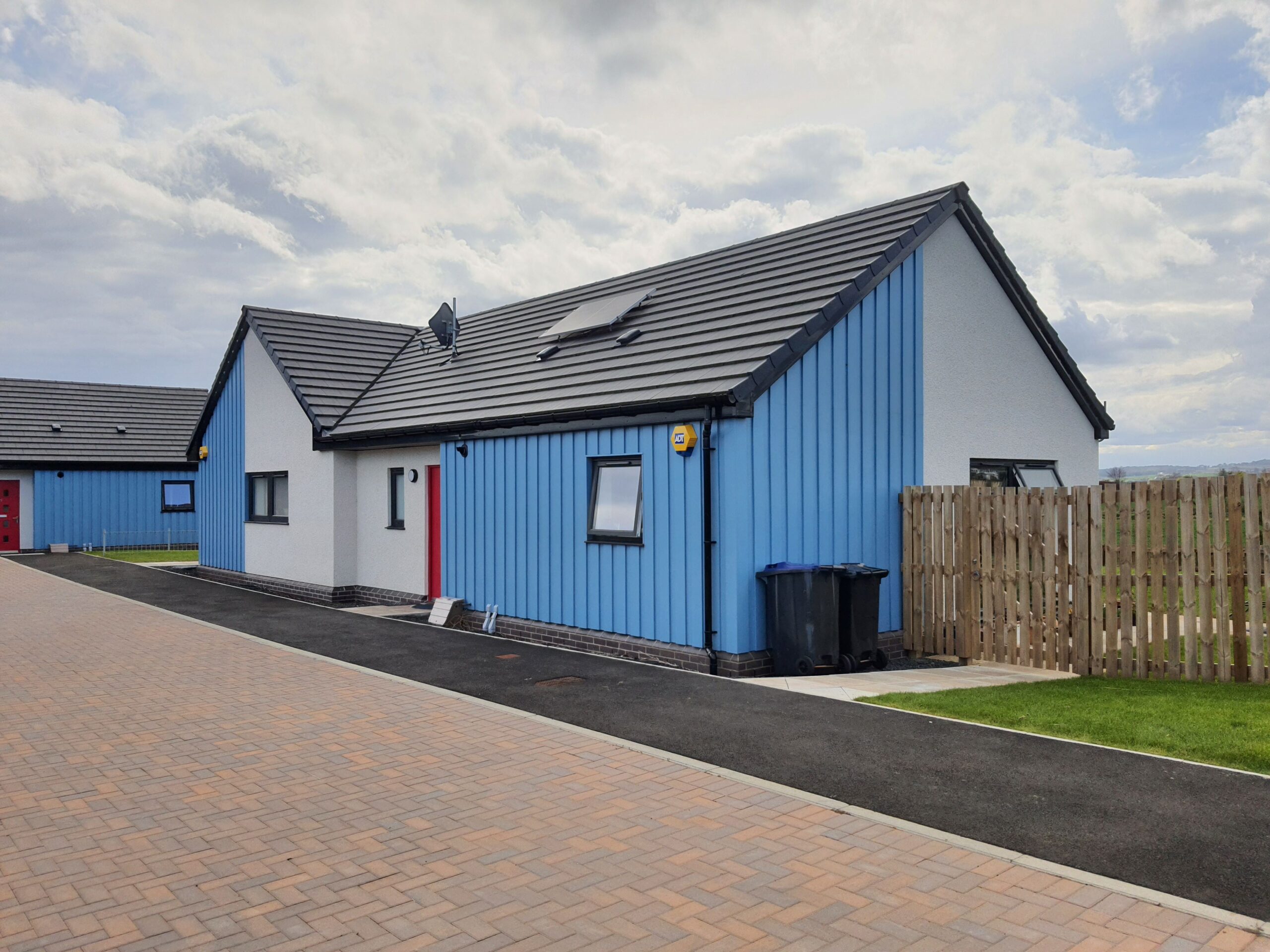
Architecturally, the scheme uses a restrained and durable palette that responds to the local context. Cream wet-dash render is complemented by stone cladding at key vistas and focal points, while roofs are finished in fibre cement slates with slim verge detailing. Dark grey painted timber windows and doors provide contrast and coherence across the development, supported by a high-quality hard landscaping strategy designed for longevity and ease of maintenance.

All homes are designed to barrier-free and Lifetime Homes standards, with future adaptability built in. Living spaces are predominantly oriented north–south to maximise daylight and passive solar gain, with flexible layouts that accommodate home working. Sustainability was central to the design, with super-insulated building fabric, enhanced airtightness, low-energy ventilation, and roof-mounted photovoltaic panels contributing to reduced energy demand and carbon emissions. The development achieved Silver Active Standard, exceeding Scottish Building Standards for thermal performance.

Delivered on budget despite programme challenges during the Covid-19 pandemic, the project demonstrates ASSIST Design’s experience in delivering robust, sustainable, and well-designed affordable housing that supports long-term social value.
GALLERY
Extra Care Housing | Duns

Extra Care Housing | Duns

Projects

EXTRA CARE HOUSING, TODLAW, DUNS

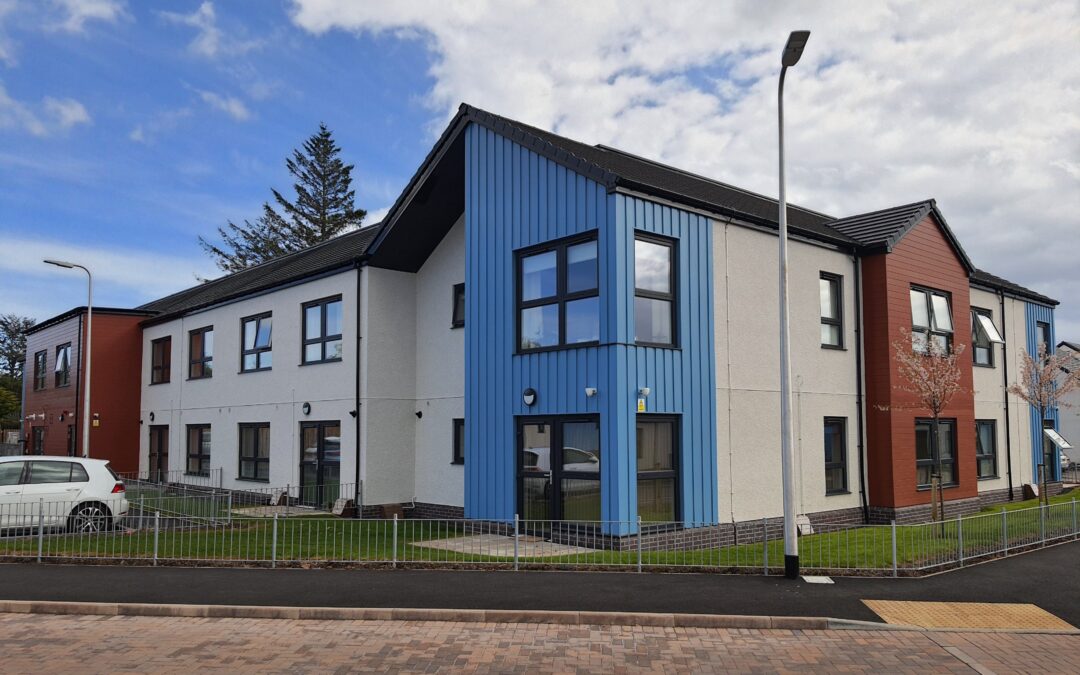
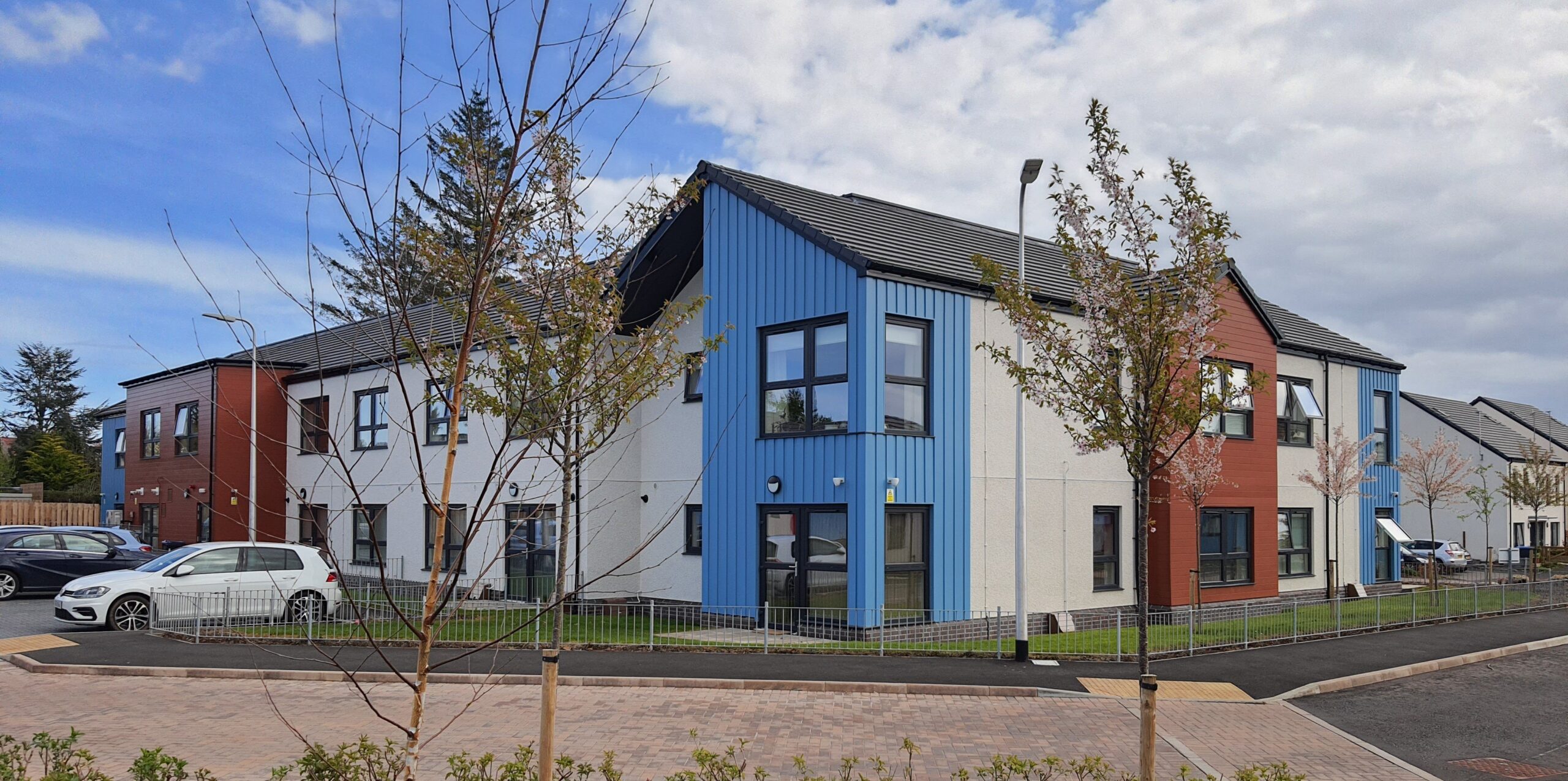
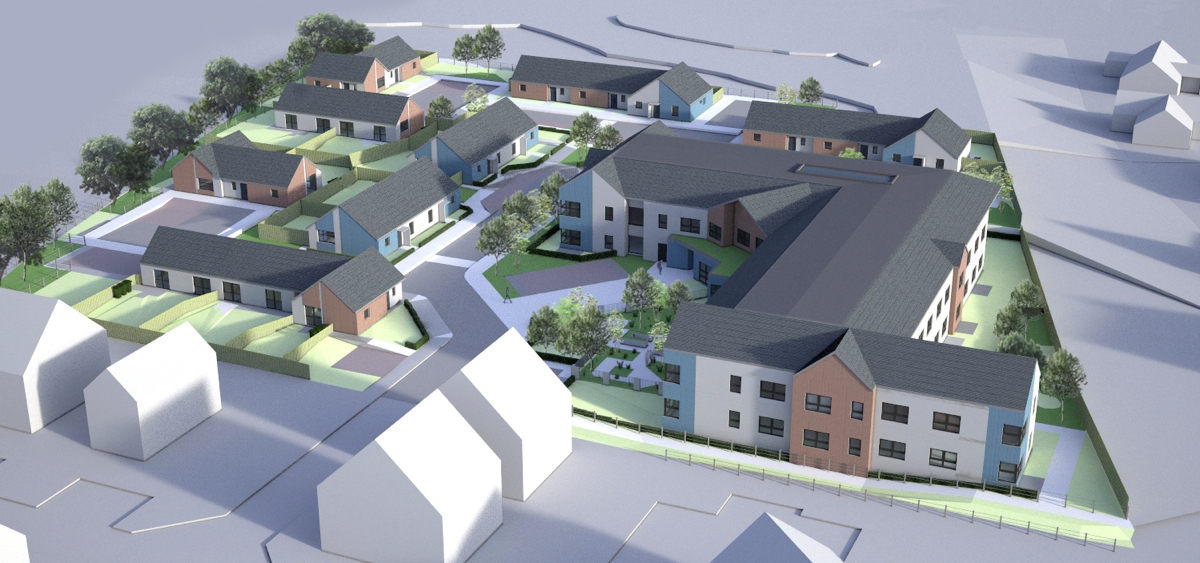
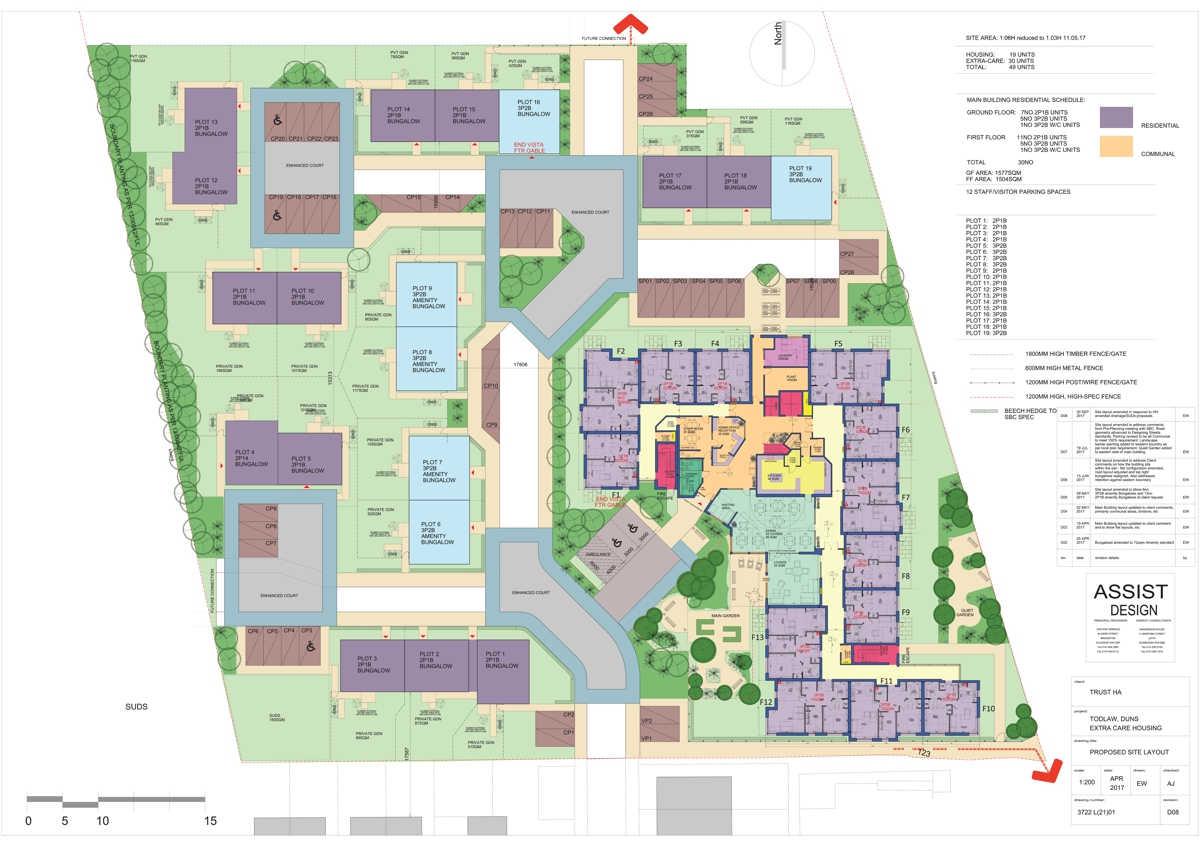
Commissioned by Trust Housing Association, our proposal is for mix of 30 extra care flats and communal facilities plus 19 amenity bunglows.

Extra Care Housing is a highly valued service model because of its ability to create and support independent living for customers who are frail and sometimes have significant health concerns. To achieve this, the care/ support is delivered in a flexible manner in the customers own home with staff based at the development. Staff are able to tailor care and support to the client in terms of the type of care and support delivered and when it is delivered. There is the option for care and support to be increased/ decreased to match the needs of customers at that time. Having the staff team based at the development enables staff and residents to connect with their communities both in the development and if they wish out with. And because staff are based at the development they get to know the customers and can often proactively deal with issues prior to the need for hospital admission. Meals are provided, ensuring customers receive nutritionally balanced meals and benefit from the social interaction a good meal can create.

Our proposals for each unit include:

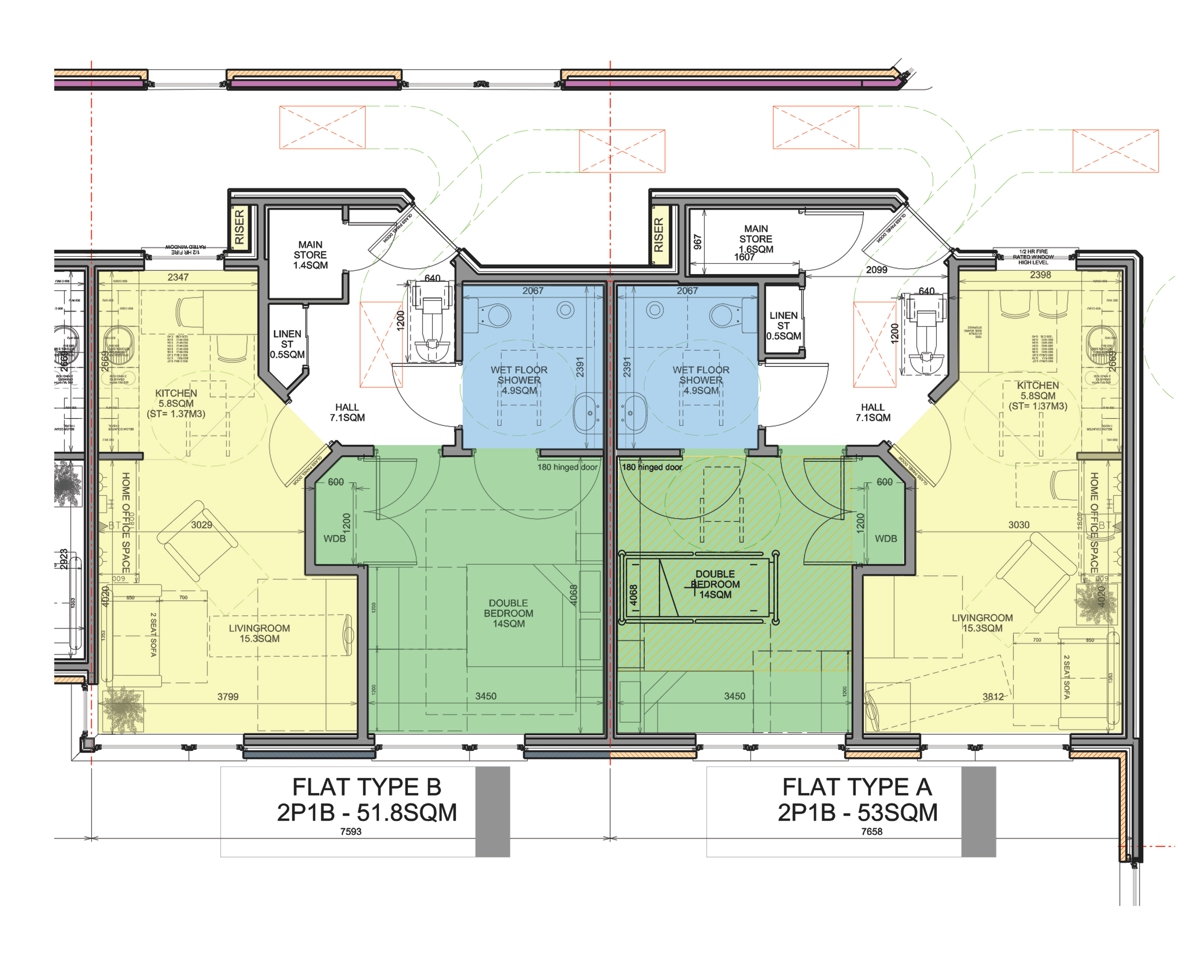
  • large double bedrooms capable of taking a hospital bed for palliative care with an integrated ensuite wet-floor shower room,
  • a compact food and drink preparation kitchen
  • a large, bright and airy south/east-facing living space

There is communal dining and lounge areas on the ground floor with access to a south-facing sheltered garden. Laundry and staff services are also located on the ground floor.

Careful consideration has been given to optimise the building layout based upon the specific tenant use requirements against the specific constraints and opportunities the site offers.

Affordable Housing | Greenock

Affordable Housing | Greenock

Projects

AFFORDABLE HOUSING, GREENOCK

22 mixed tenure flats for LINK Housing Association.

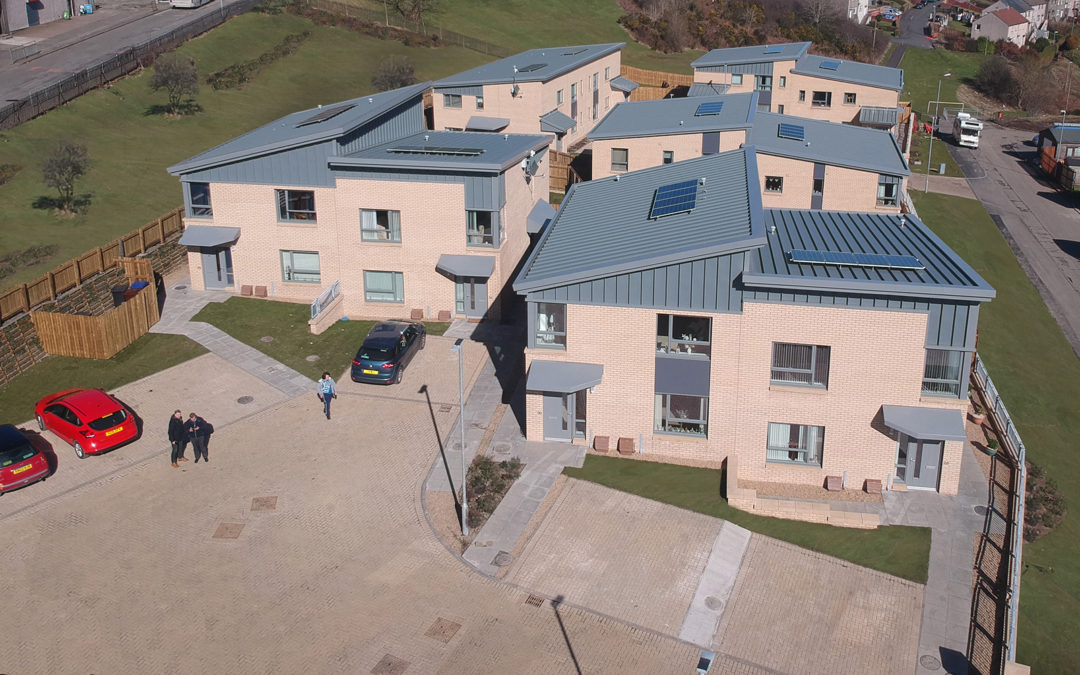
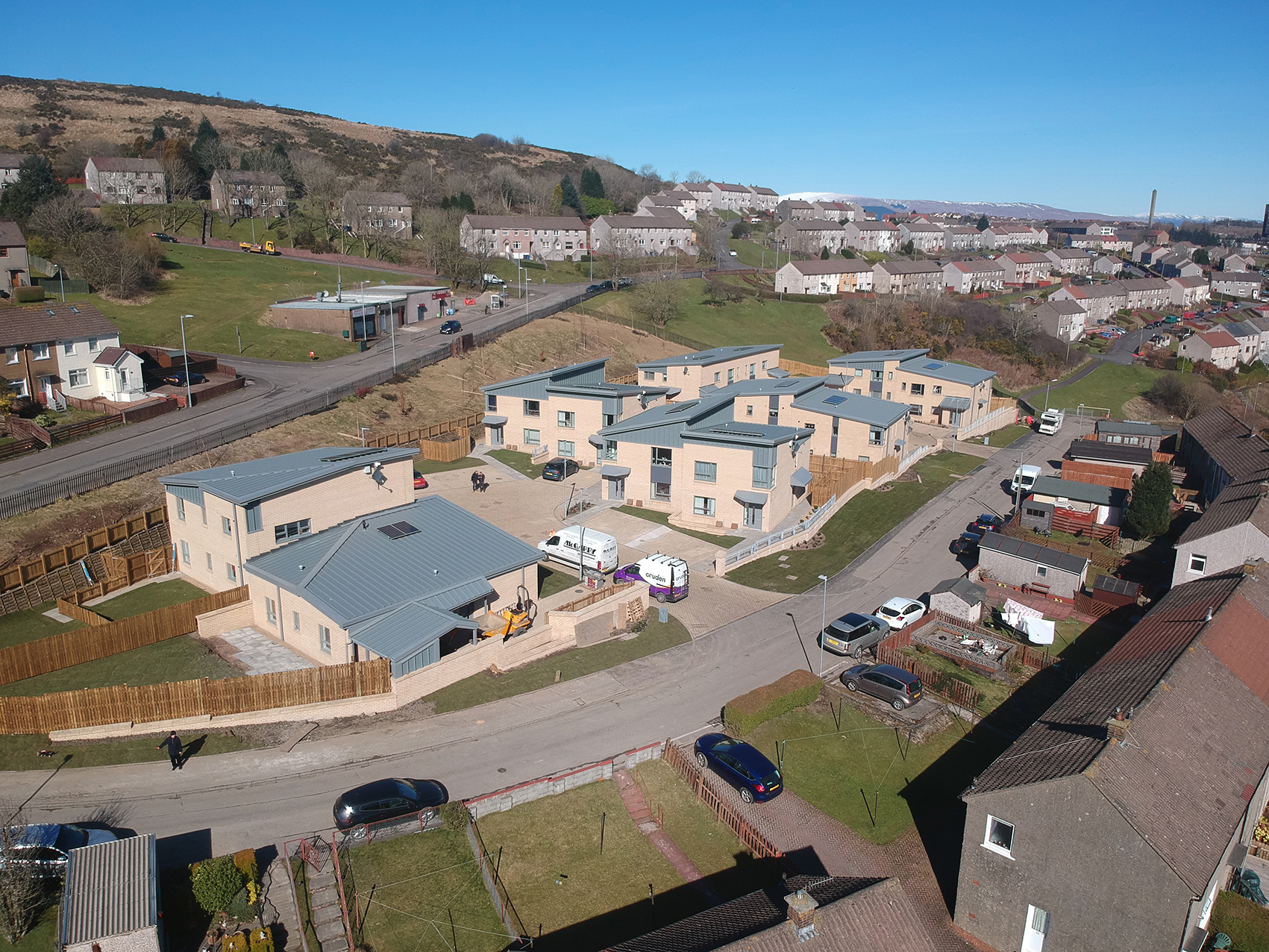
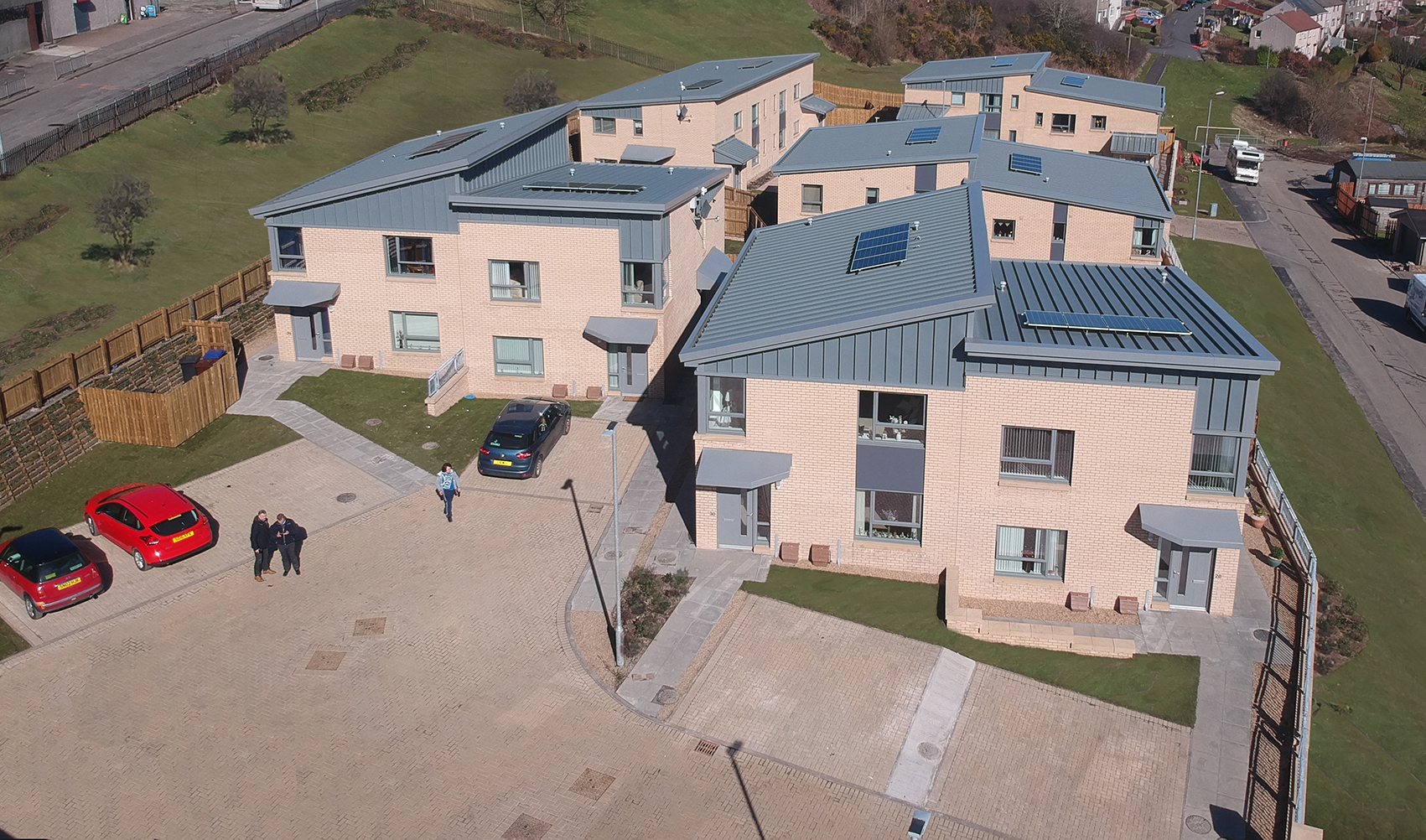
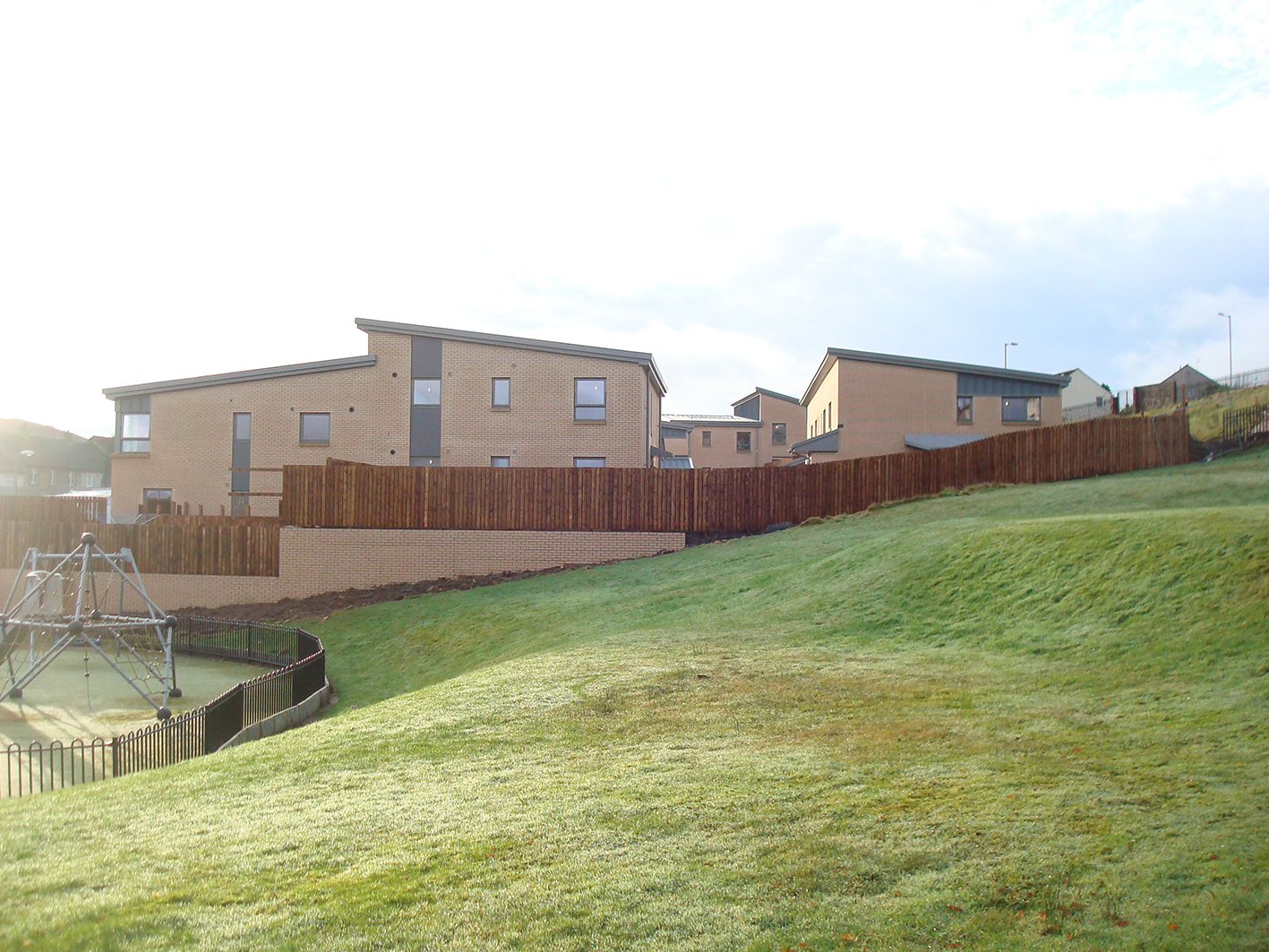
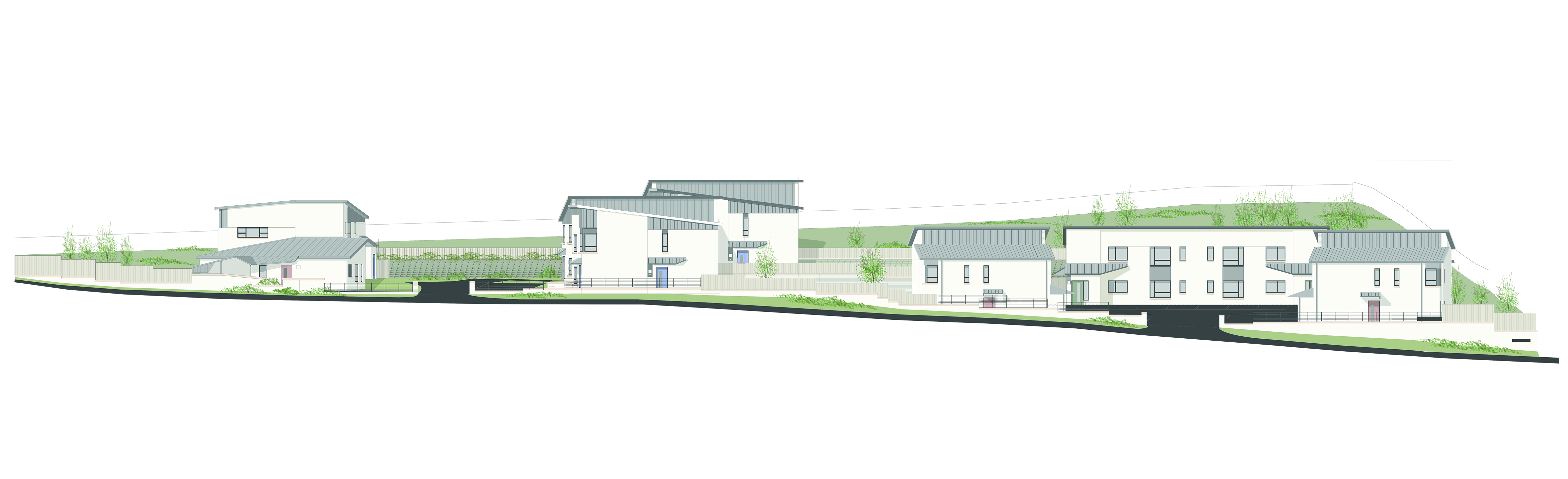
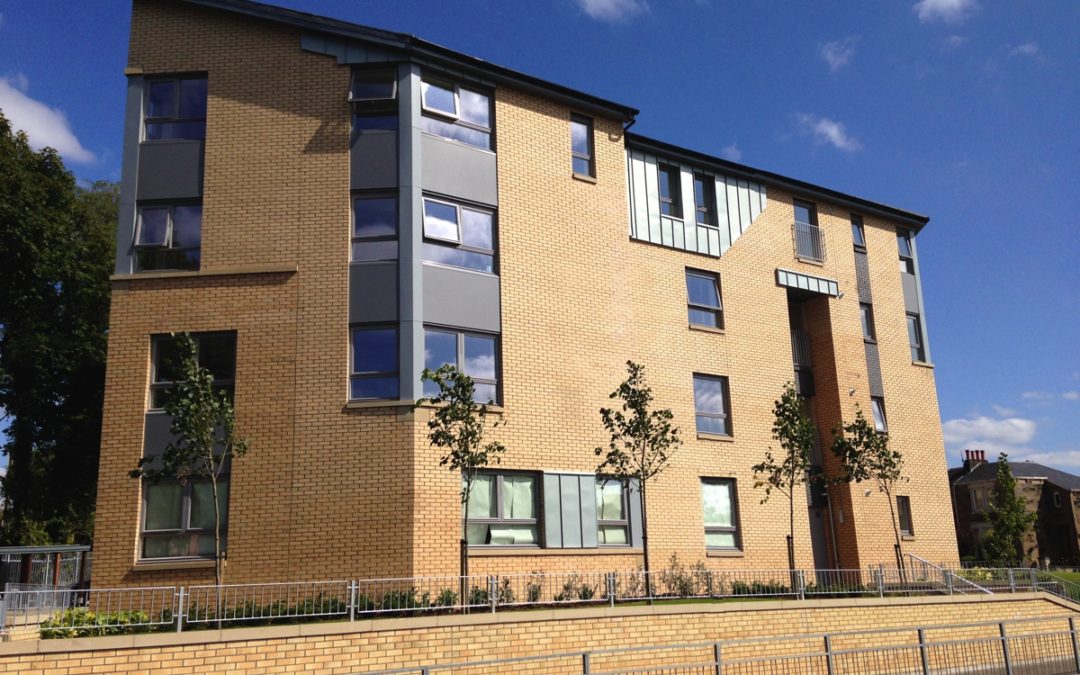
This development on the hilly outskirts of Greenock consists of 22 cottage flats and one wheelchair bungalow. The site’s challenging topography and geometry constraints initiated the stepped proposal, which avoids a costly retaining wall, a consequence of which would have been a severe and bleak backdrop to houses on the site’s lower side. The massing arrangement is a clear tiering sequence typical of the local townscape – descending from the existing houses on Braeside Road, down to our development to the north side of Juno Terrace and the lower houses on its opposite side of the street. Barrier free access is provided to all ground floor properties, with the flats arranged around two pedestrian courtyards.

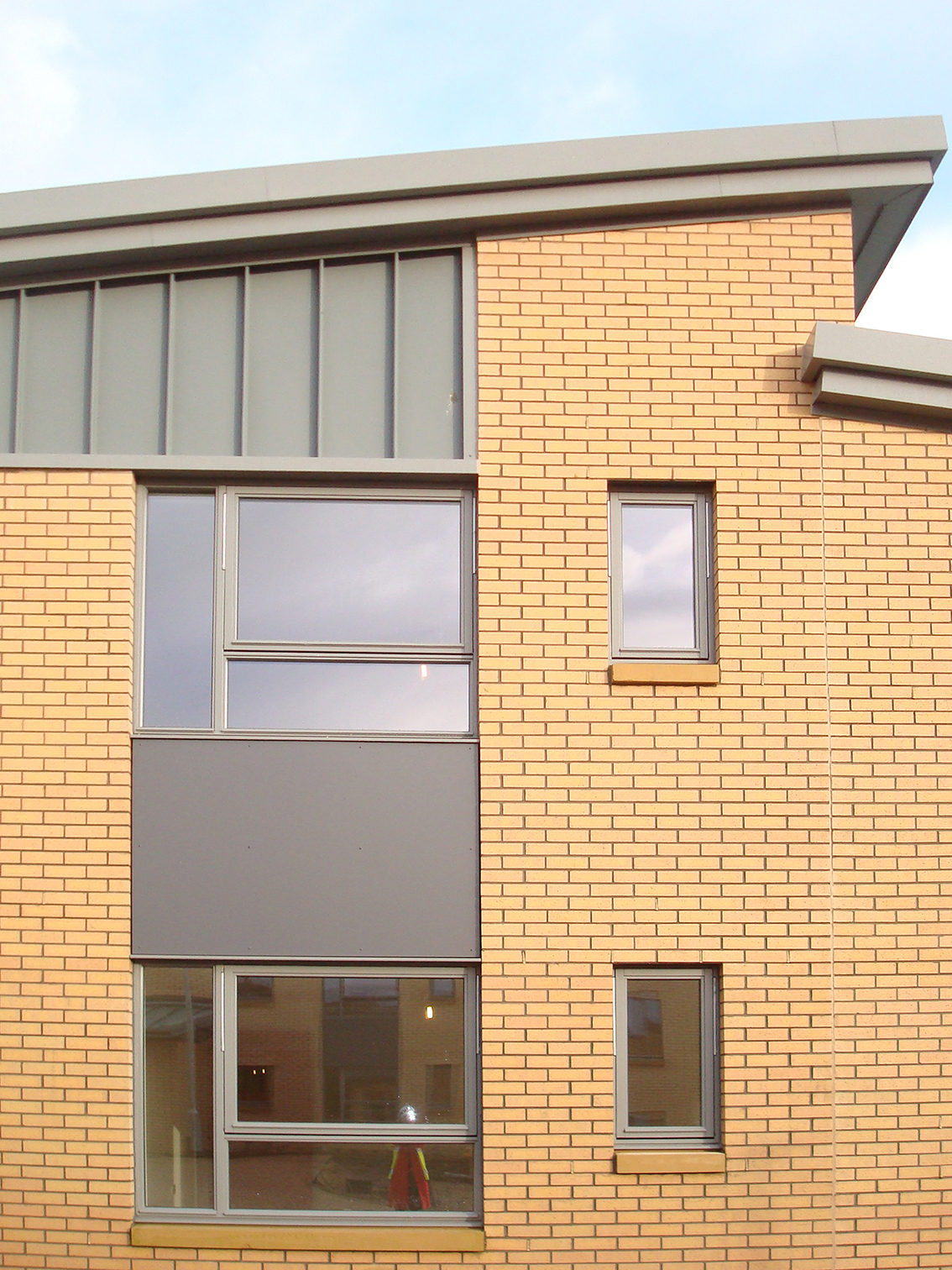
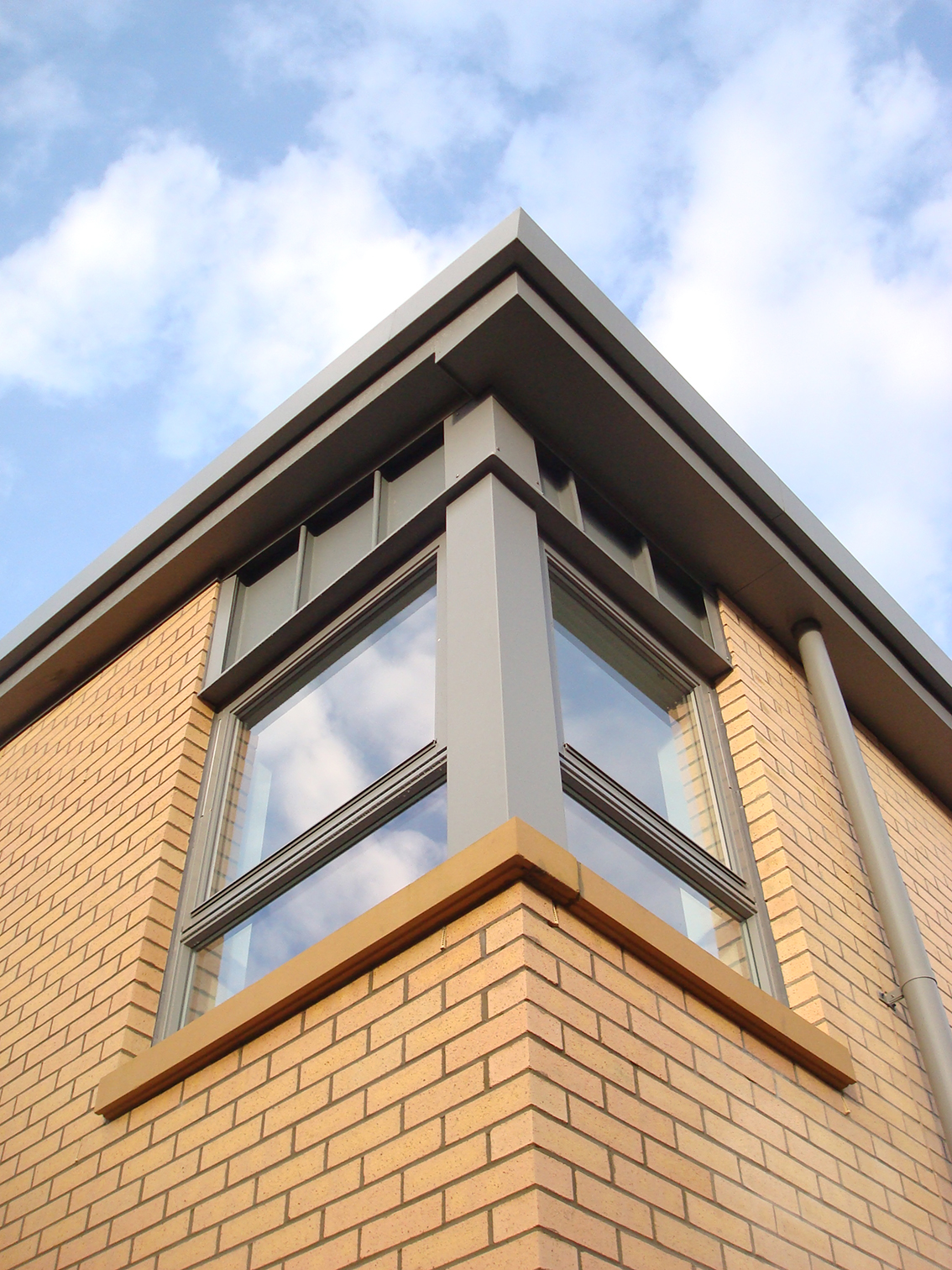
The stepped nature of the site derived a series of stepped elevations and gardens. Materials were limited to buff brick and cast stone elements with mid-grey coated zinc roofs and cladding panels. A planted timber crib wall and sloping landscaped wedge stretching the whole length of the site provide a simple and enhancing backdrop to the houses. Internally space standards are enhanced with large windows to principal rooms to maximise passive solar gain.

Extra Care Housing | Galashiels

Extra Care Housing | Galashiels

Projects

EXTRA CARE HOUSING, LANGHAUGH, GALASHIELS

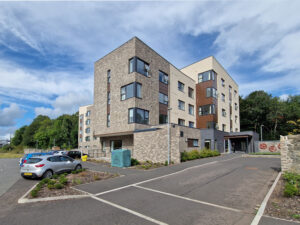
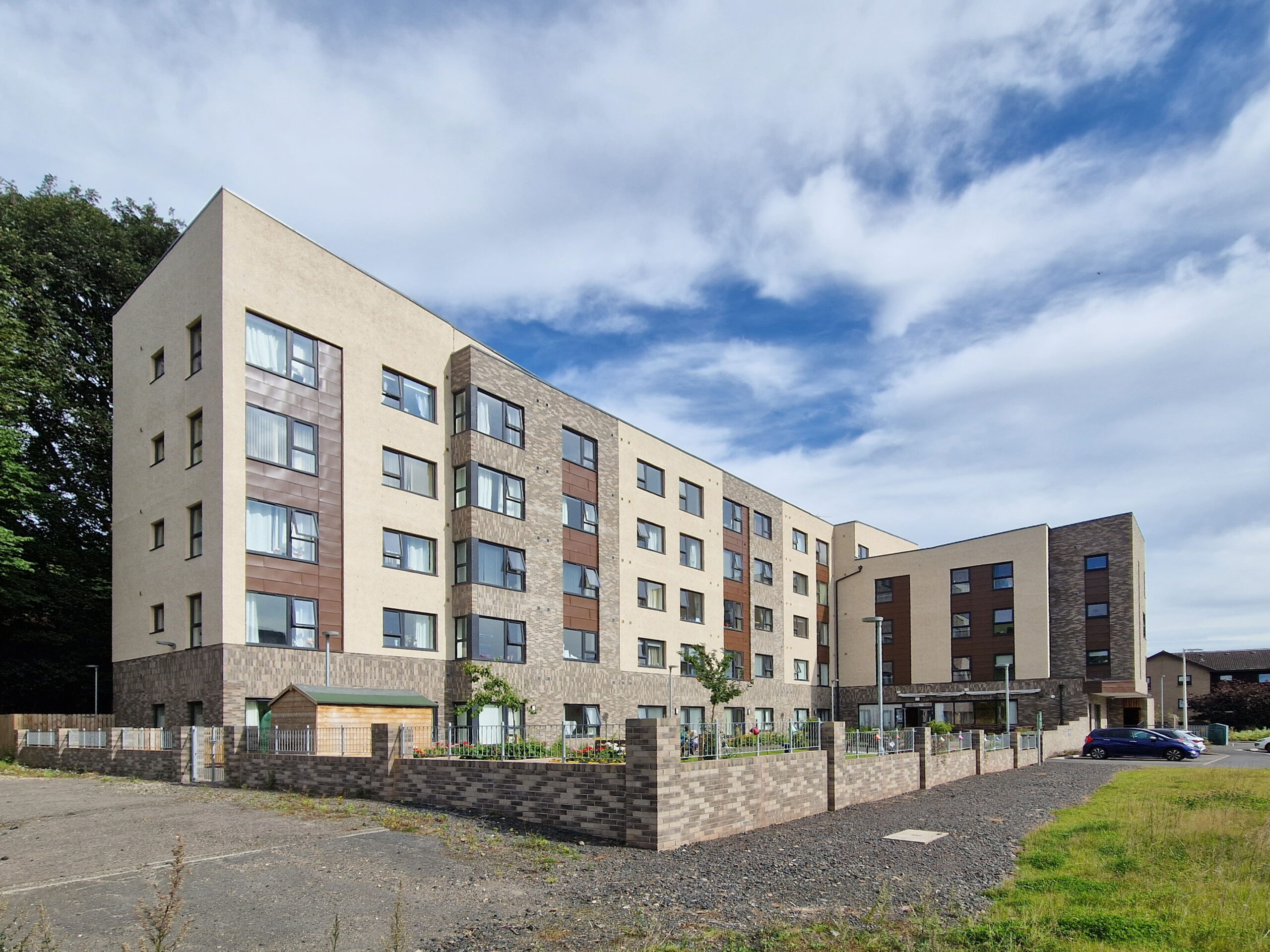
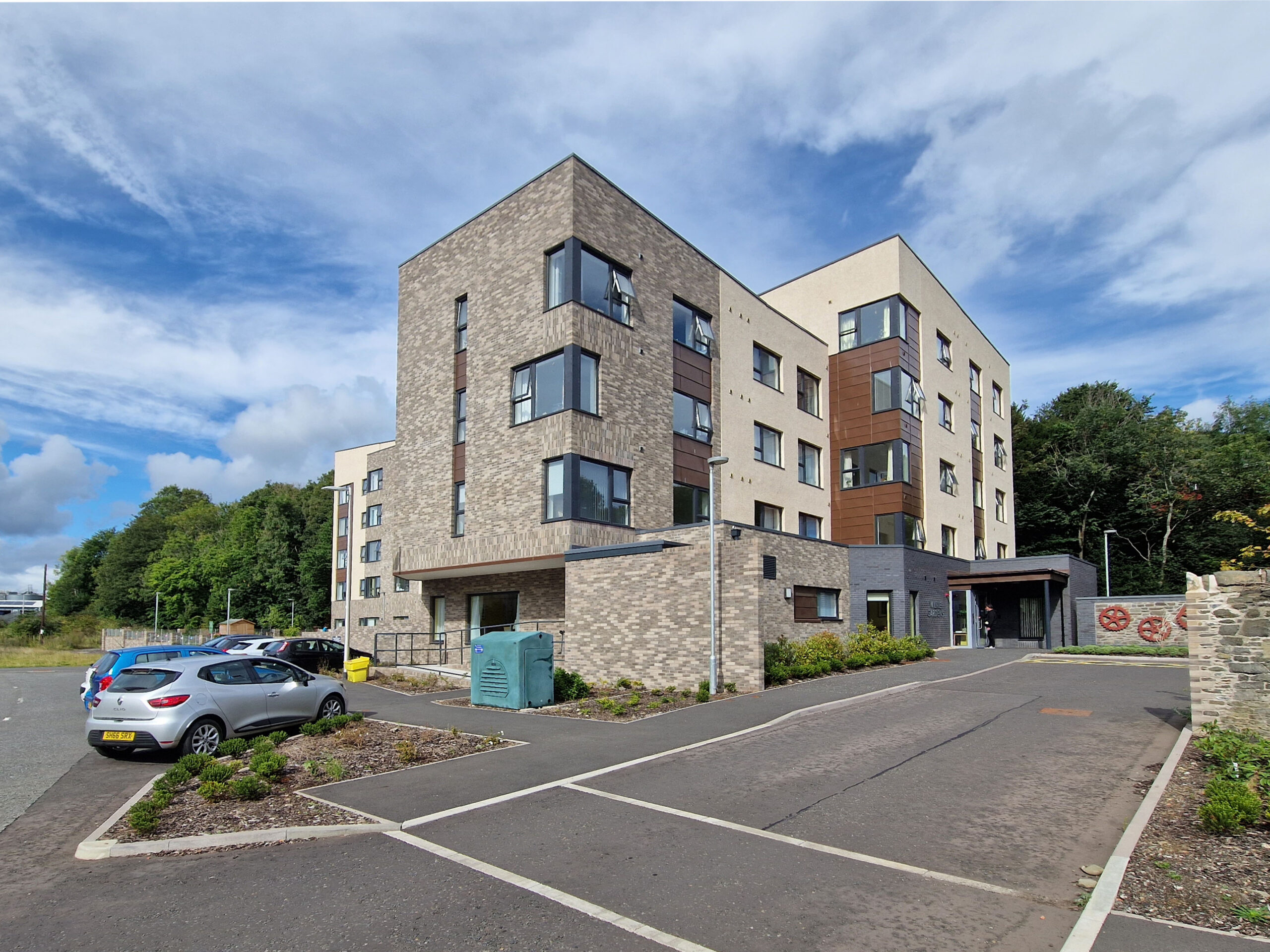
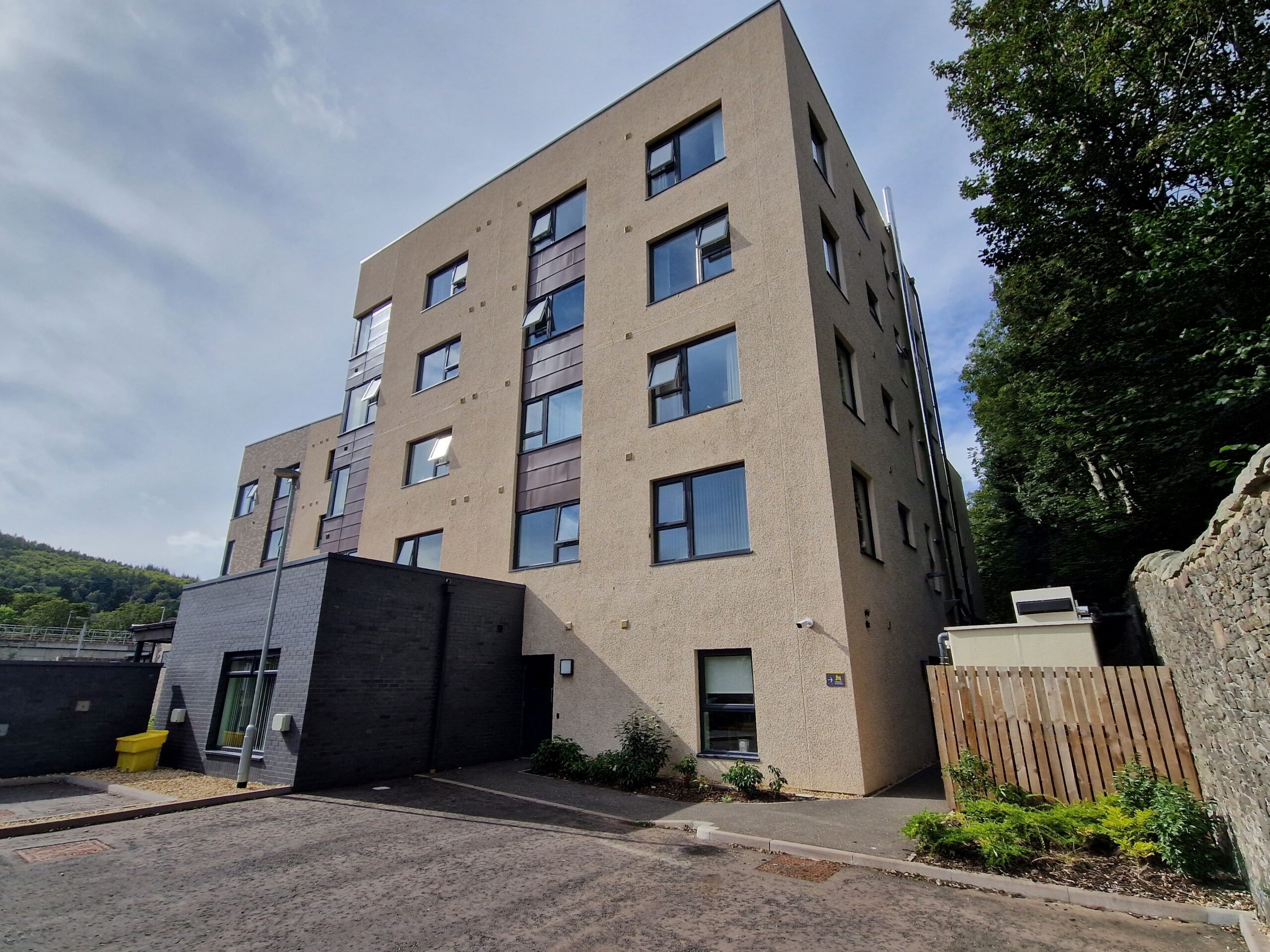
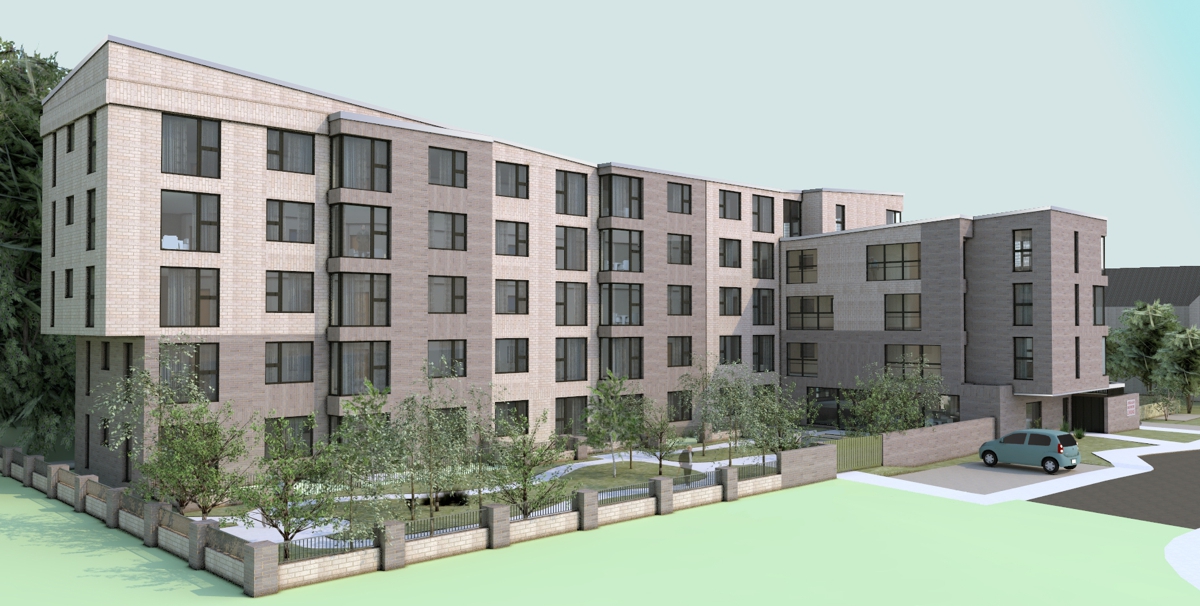
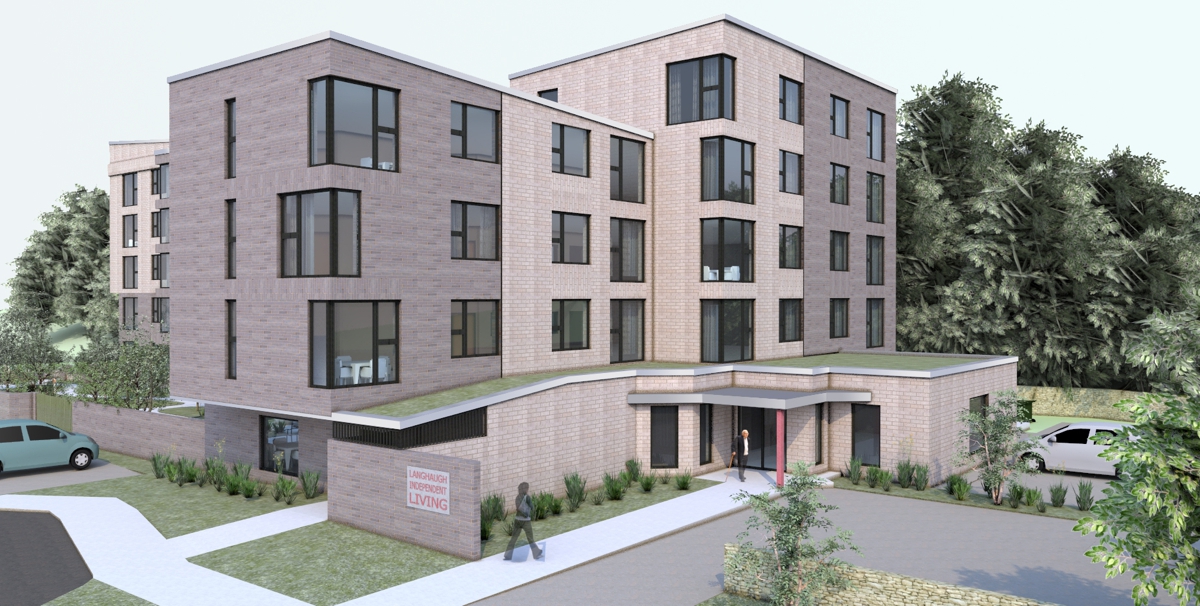
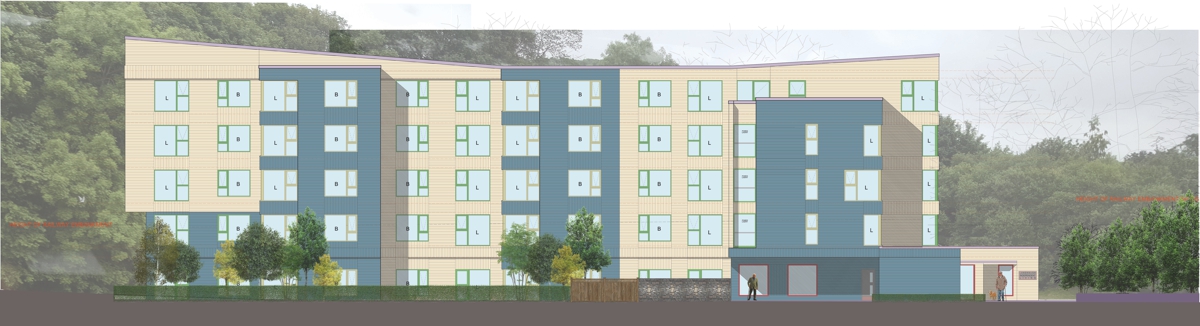
Commissioned by Eildon Housing Association, our proposal is for mix of 39no 2P1B and 3P2B extra care social rented flats and communal facilities arranged in a south-facing, L-shaped, 4 and 5-storey building.

Extra Care Housing is a highly valued service model because of its ability to create and support independent living for customers who are frail and sometimes have significant health concerns. To achieve this, the care/ support is delivered in a flexible manner in the customers own home with staff based at the development. Staff are able to tailor care and support to the client in terms of the type of care and support delivered and when it is delivered. There is the option for care and support to be increased/ decreased to match the needs of customers at that time. Having the staff team based at the development enables staff and residents to connect with their communities both in the development and if they wish out with. And because staff are based at the development they get to know the customers and can often proactively deal with issues prior to the need for hospital admission. Meals are provided, ensuring customers receive nutritionally balanced meals and benefit from the social interaction a good meal can create.

Our proposals for each unit include

  • large double bedrooms capable of taking a hospital bed for palliative care with an integrated ensuite wet-floor shower room,
  • a compact food and drink preparation kitchen
  • a large, bright and airy south/east-facing living space

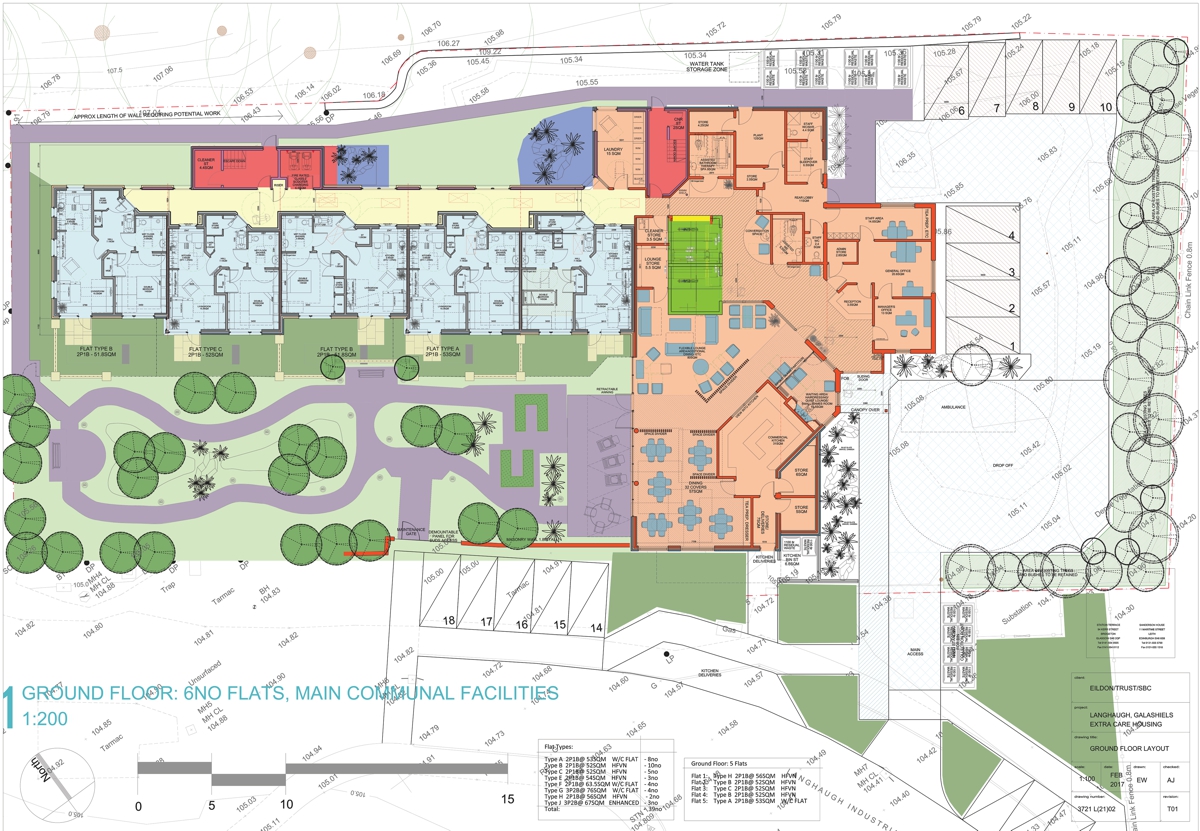
There is communal dining and lounge areas on the ground floor with access to a south-facing sheltered garden. Laundry and staff services are also located on the ground floor. Careful consideration has been given to optimise the building layout based upon the specific tenant use requirements against the specific constraints and opportunities the site offers.

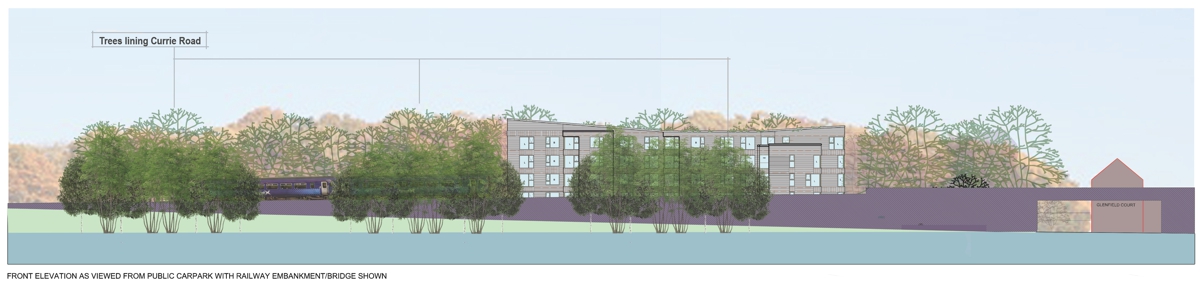
All flats face south or east with the communal hub located as the main reception to the building. Vehicle and staff parking are located to the east with the building set back to ensure limited noise intrusion from the railway and to generate an attractive south-facing communal garden accessed from the communal lounge/dining area. Ground floor properties benefit from private patios. And the lounge and dining facilities have been located such to benefit as much as possible from natural sunlight as well as linking naturally into the common garden space – this includes raised planters, sensory planting, a garden shed/greenhouse and workspace/allotment areas to promote outdoor activity.

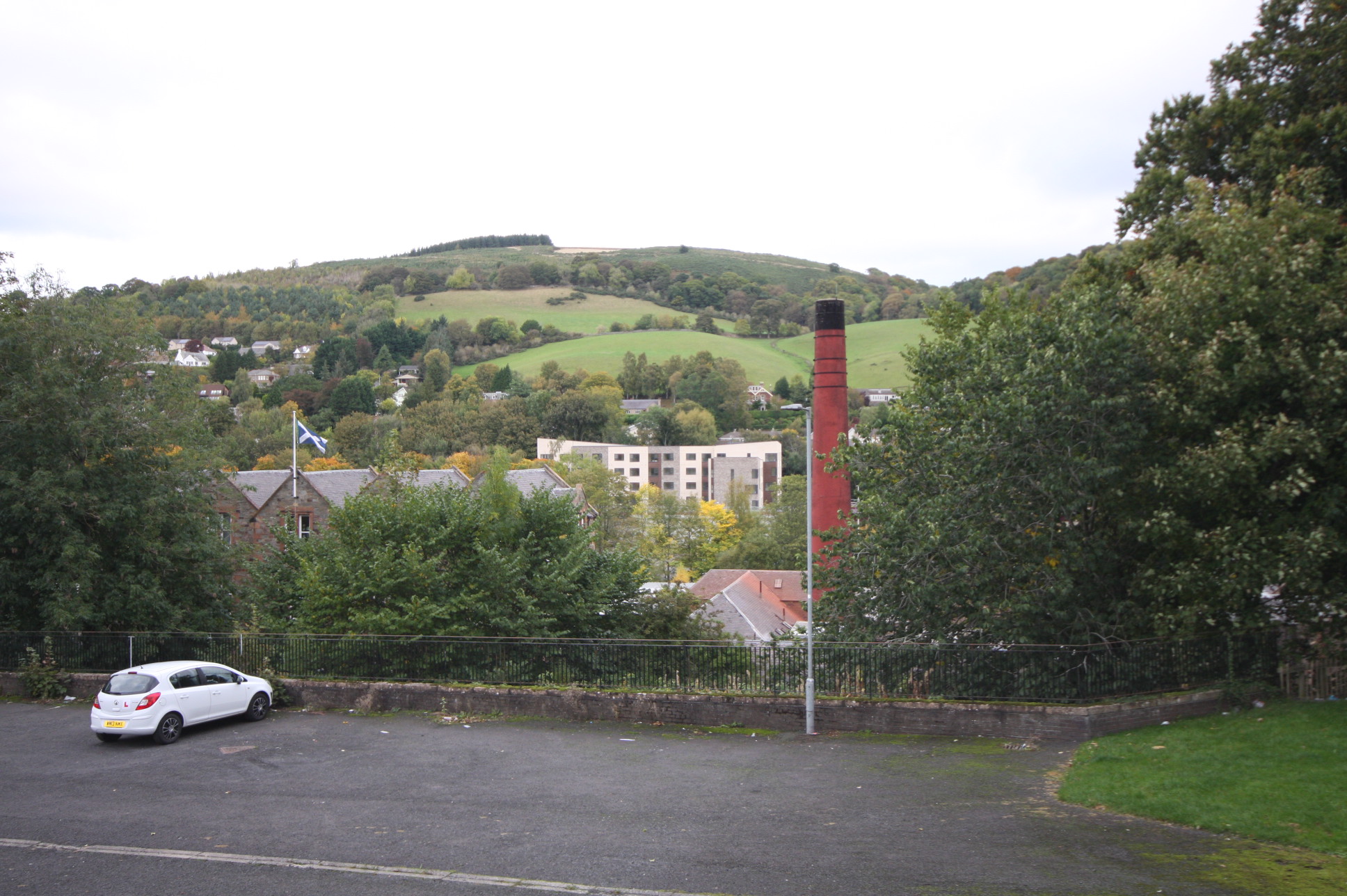
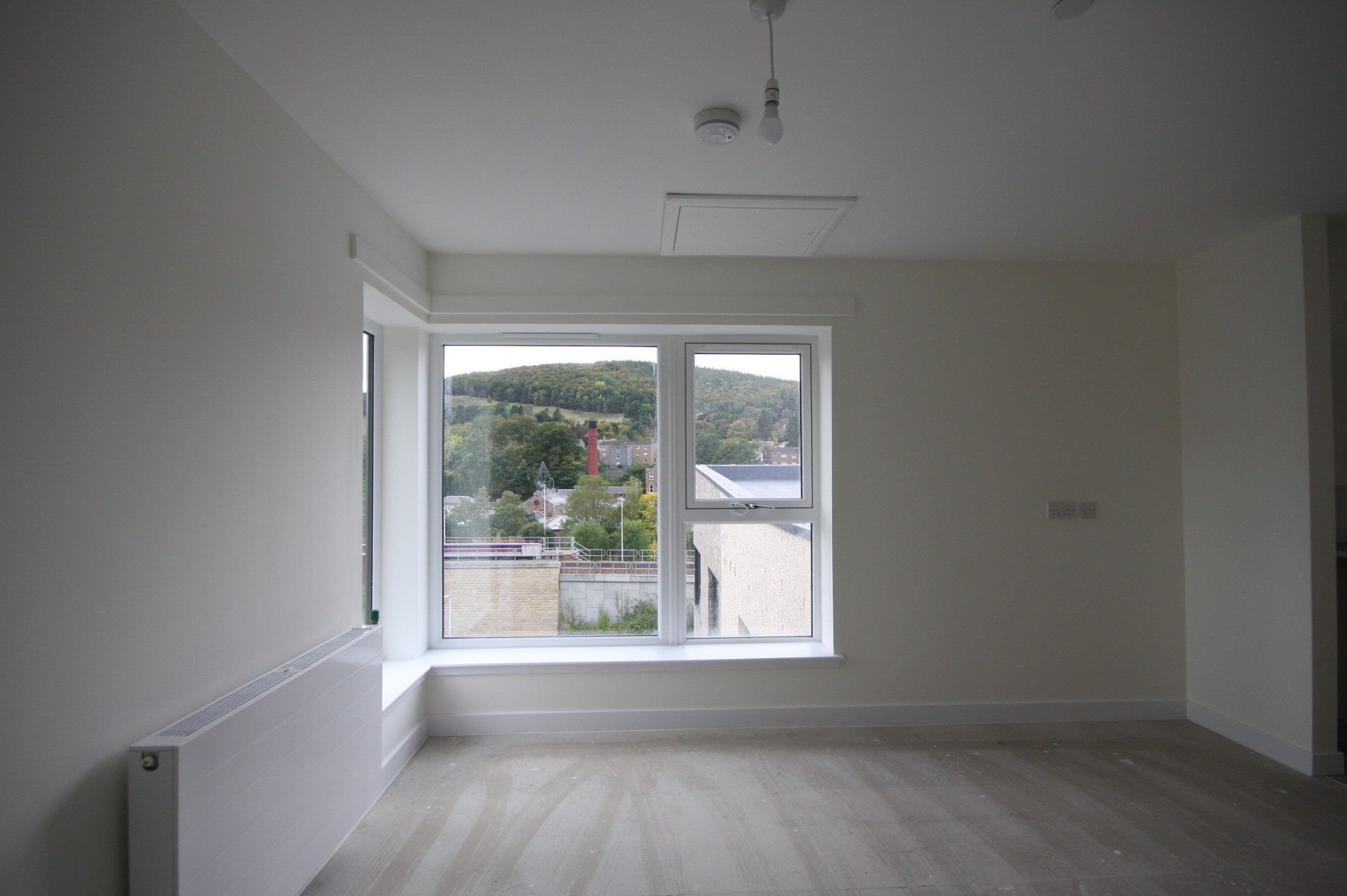
Through views have been designed within the flats to generate airy and bright interiors with the tree-lined bank to the north acting as a strong natural boundary. With regard to the existing sandstone and whinstone building, dark blue/grey long clay brick has been specified to acknowledge the whinstone with the blonde long clay brick highlighting the contrast and also making reference to the existing Hanover housing adjacent.  A shallow angled roof profile draws reference from the inclined railway embankment to the south which rises to cross Currie Road at the site entrance.  Windows are large and focus on the communal garden at ground floor, the railway line at first floor and then across the Gala Water valley on the upper floors.

Urban Infill | Glasgow

Urban Infill | Glasgow

Projects

URBAN INFILL, MANSE BRAE, GLASGOW

40 mixed tenure flats for McTaggart Construction Ltd and Southside Housing Association.

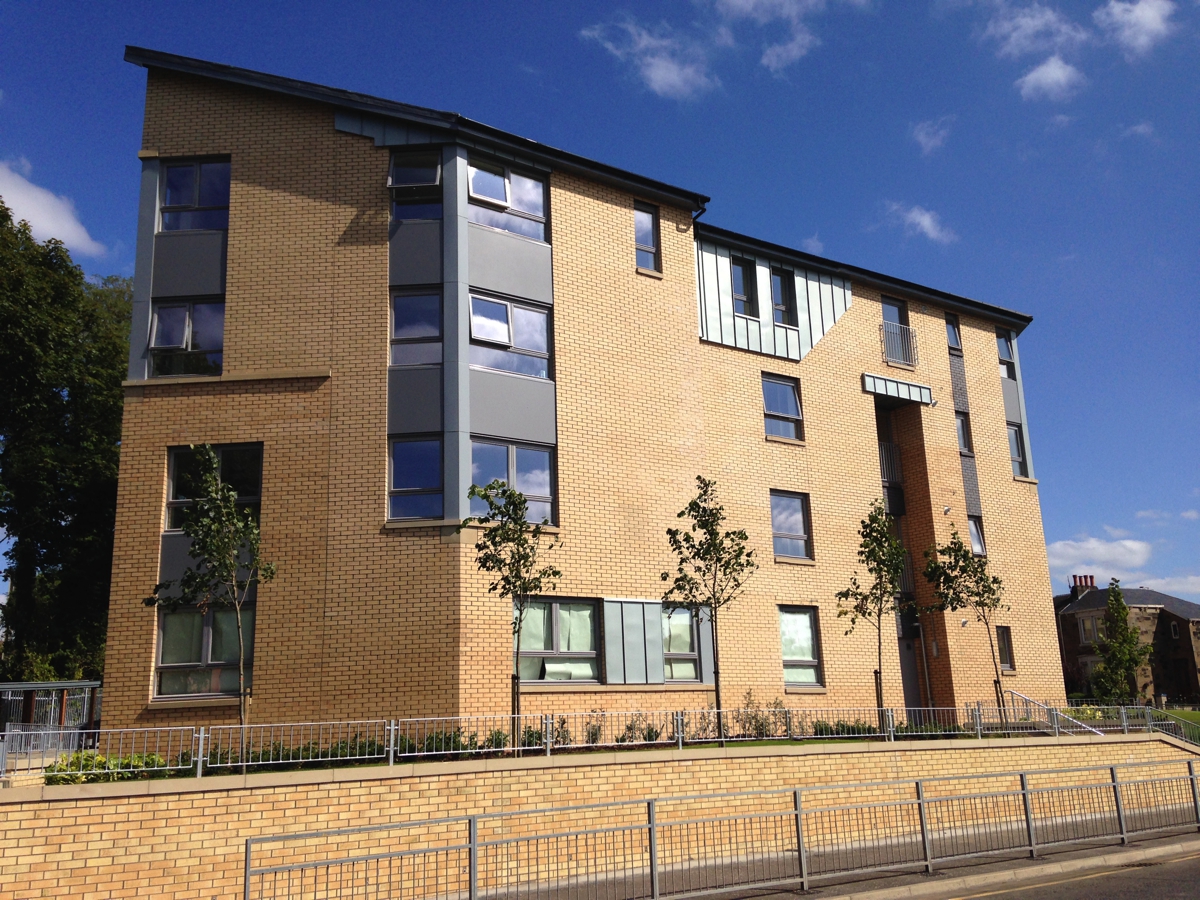
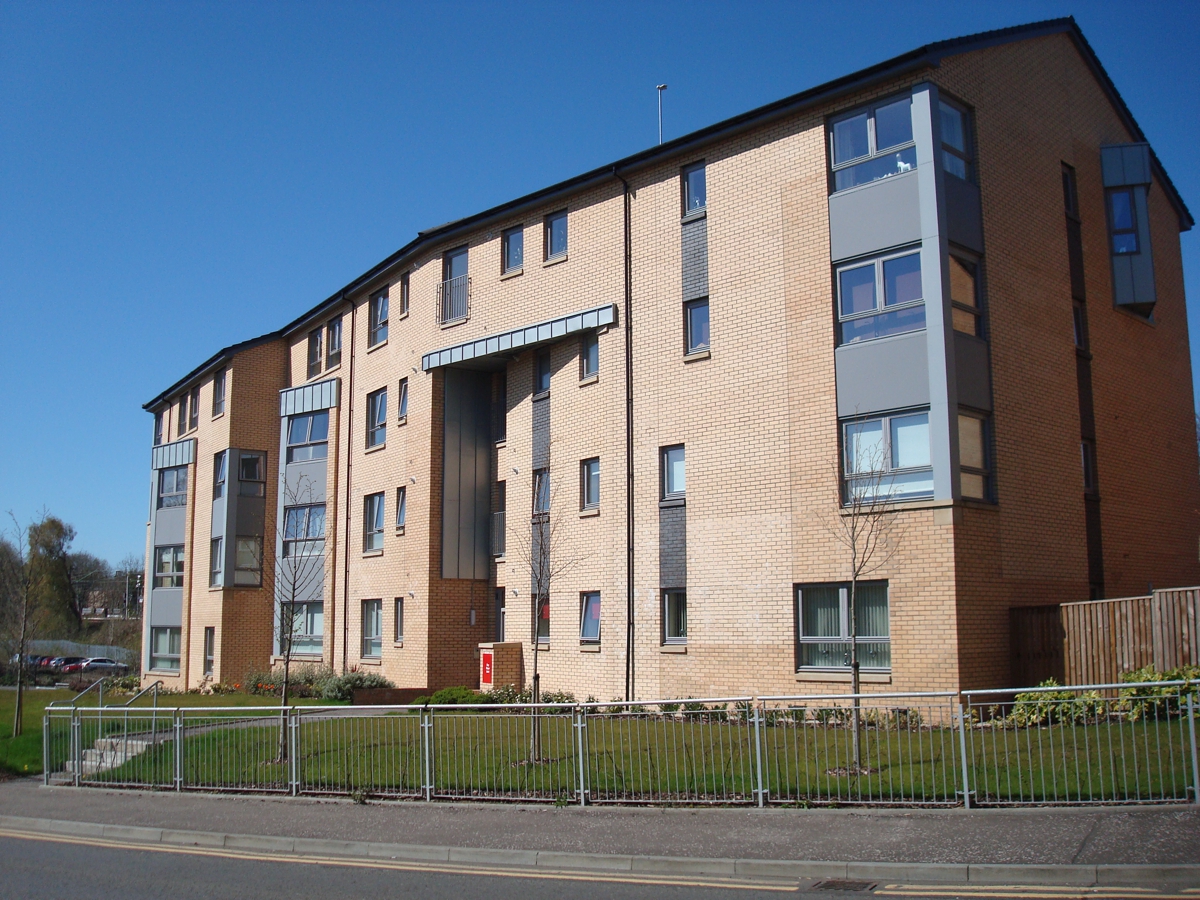
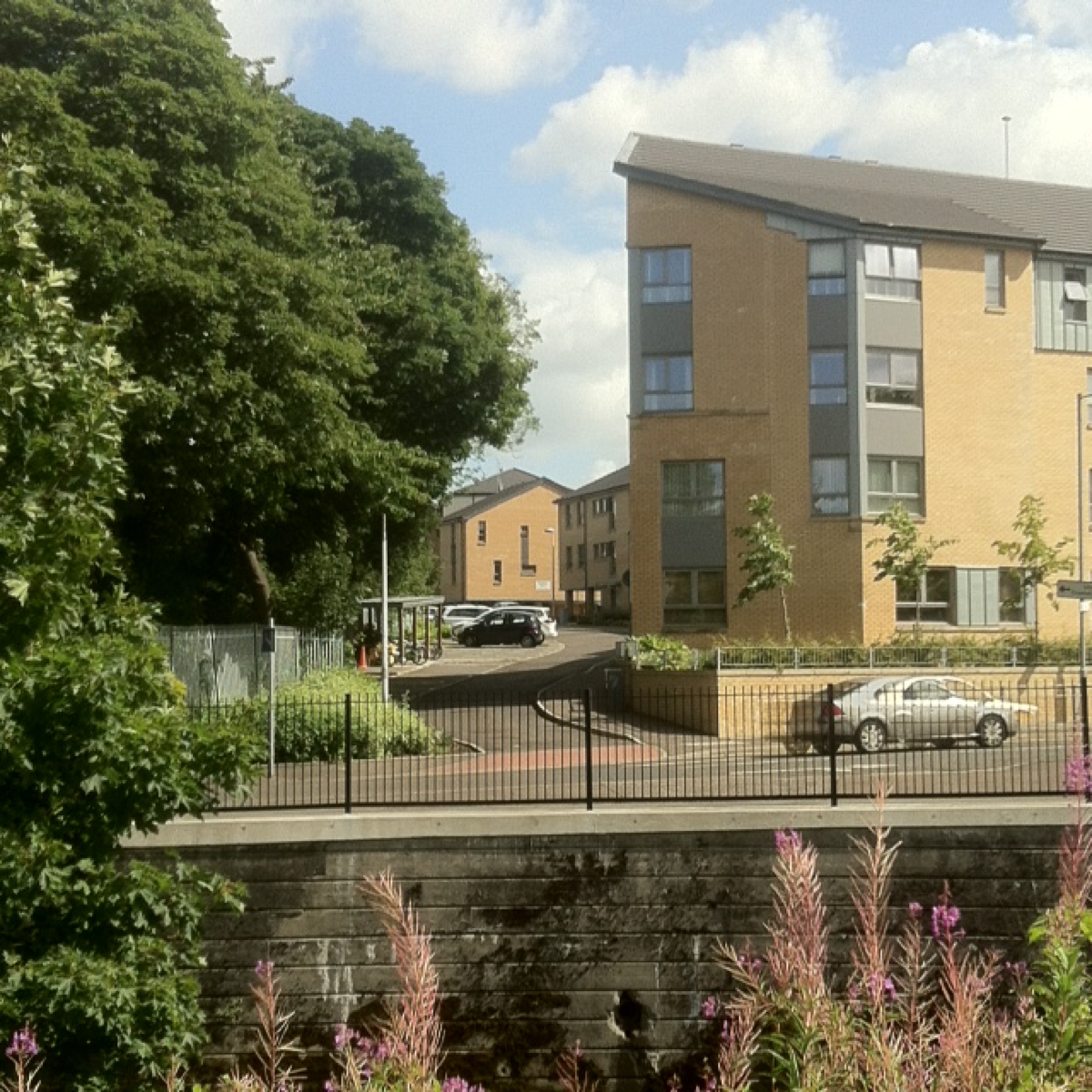
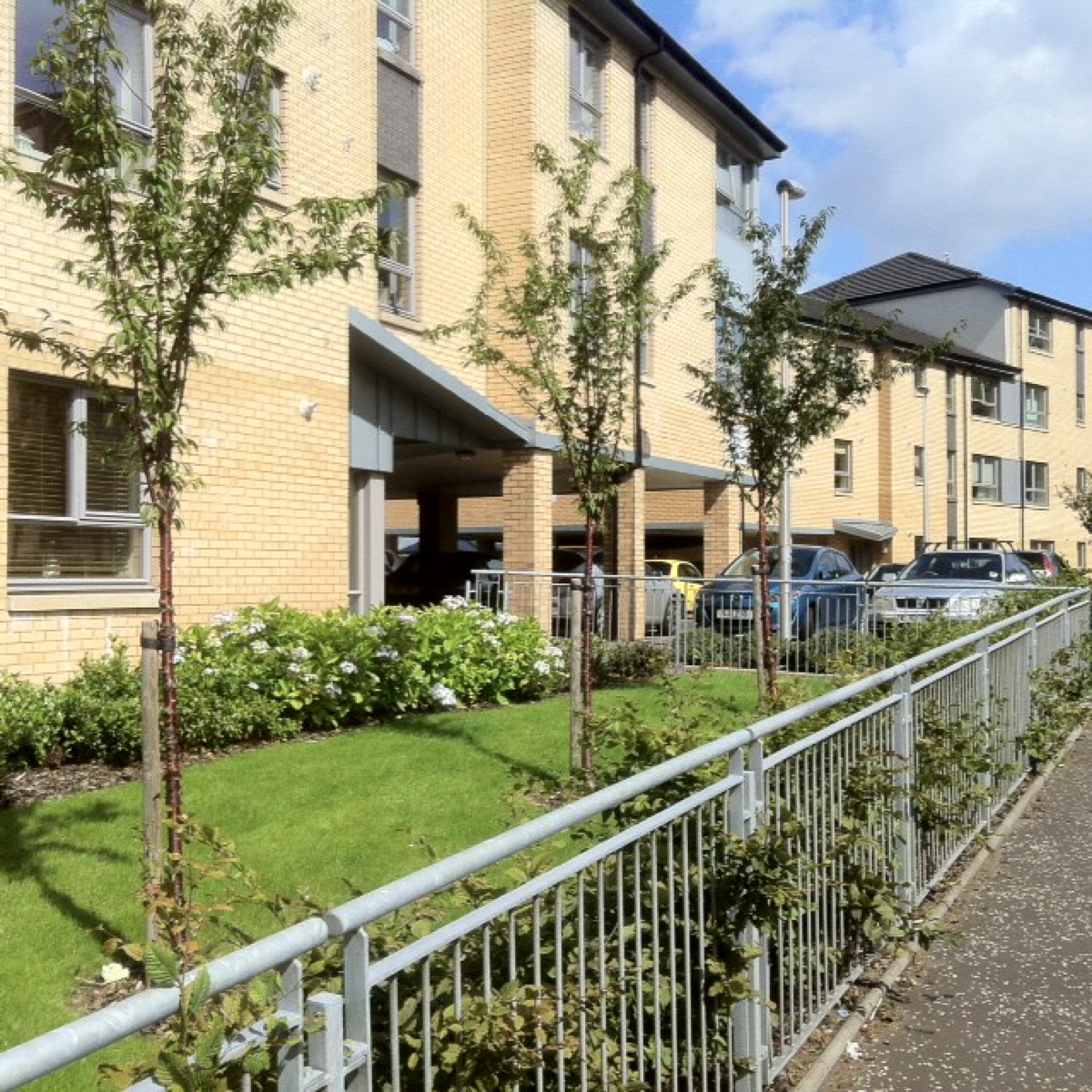
This former petrol station and car showroom site is sandwiched between a railway line and a busy road, being triangular in shape and adjacent to the river Cart. Several challenges were overcome to enable development of 40 flats on the site. Contamination was naturally significant, with petrol tanks required to be removed and remediation undertaken to the site. The proximity of the slow branch railway line from the nearby Cathcart station plus the proximity of the main road required that we utilise our design skills to optimise the building positions to minimise aggravated noise pollution from either. Careful consideration of internal layouts plus the specification of baffled acoustic vents and the inclusion of a service void to avoid puncturing the wall construction ensured that compliant internal db ratings were met. A third consideration was the adjacent river Cart; at the time of design, the river’s flood prevention and defences had not been fully designed so we were required to undertake a 1:500 year flooding analysis on the site. This resulted in the building being constructed on a 1.3m plinth and dictated the construction methodology of solid masonry to this point and timber kit above. Working with specialist environmental consultants, the site’s proximity to a wildlife corridor required endangered species surveys to be undertaken. Balancing the need for car parking with the recommendations of the report we were successful in integrating landscaping which enhances the existing green space.

Detailed Stakeholder management and community consultations were essential in securing local support for the large number of units on the site which in turn delivered an economically viable solution to the client. The site is surrounded by semi-detached Victorian villas and traditional tenements, and the scale of the new development varies between 3 and 4 storeys to reflect this with the blocks suitably staggered and fragmented to reflect the broken rhythm and diversity in scale of the site’s context. Key negotiations included siting the group of buildings to achieve an acceptable set-back distance from the street to maintain adequate privacy levels to neighbouring homes, whilst accommodating car parking, bin stores and bike shelters, as well as drying areas and general landscaped amenity space to the rear. Materials were also carefully selected to compliment the blonde sandstone of the adjacent villas.

Designed completely as tenure-blind, this range of apartment types required that we work collaborative as an integrated team to maximise the benefits for a number of different stakeholders, developing a variety of fully HFVNs, Lifetime Homes and NHBC compliant homes, which are easily adapted to provide layouts for additional needs and varying life styles, accommodating a broad range of local tenant needs identified by the client. Equally, with such a variety of designs to incorporate there lies the potential for costly building layouts and forms, unique to these units. Thus we worked especially hard to standardised design outputs to deliver Lean Construction principles across the whole scheme.

On this particular site there were complex existing H&S issues regarding live services and the proximity of a Network Railway. As SMAS Worksafe Consultant members, and using our expertise in Risk Management, we worked proactively with the other team members to explore options and design out risks to mitigate against costly and time consuming solutions. Liaising with the CDMC we ensured that a logical and efficient construction methodology was proposed which met the contract programme, removed risks from the project build and provided a robust and maintenance-free building for the client.

GALLERY